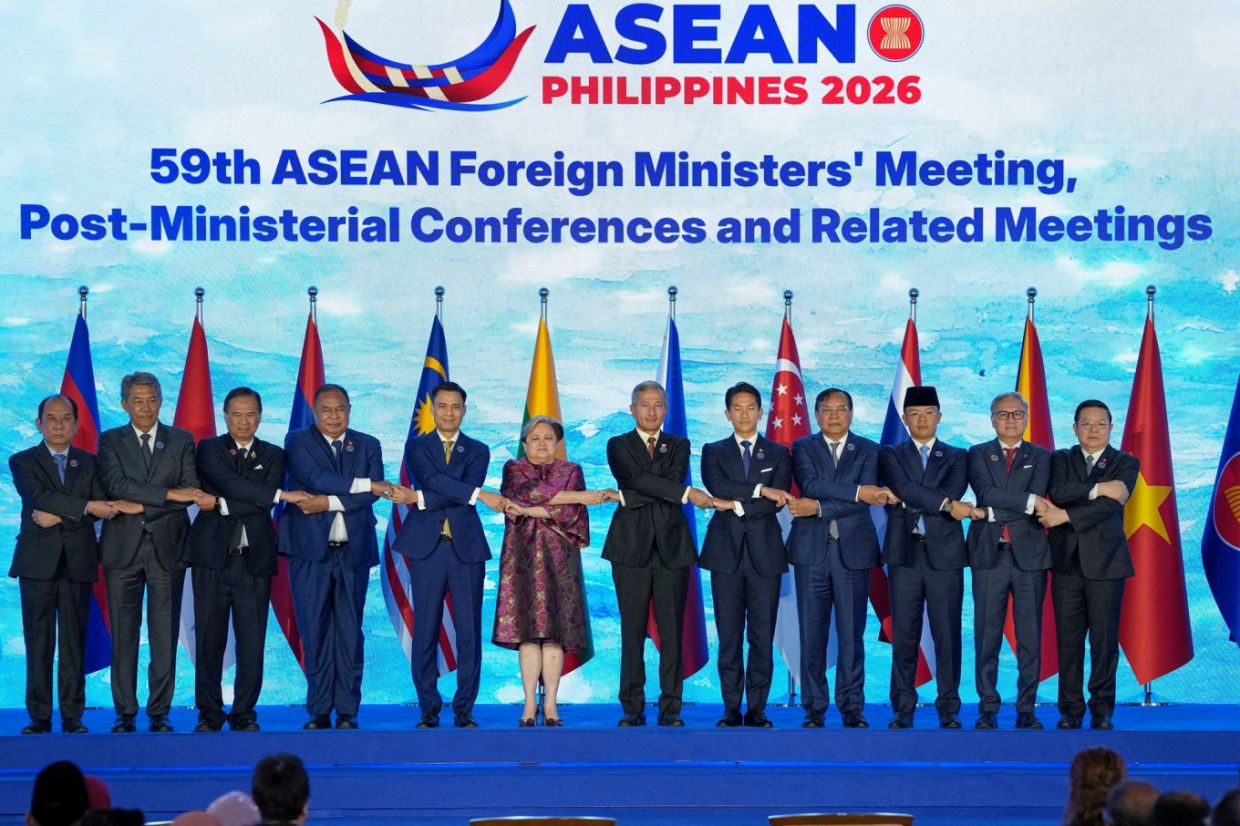
Indonesia has issued a stark warning to Asean that the regional bloc must now move beyond declarations and deliver concrete results, arguing that mounting international crises have created an unprecedented test of the organisation's credibility and institutional resilience. The challenge came as foreign ministers from all 11 Asean member states converged in Manila for a pivotal round of diplomacy, with Indonesian Foreign Minister Sugiono framing the moment as critical to determining whether Asean can live up to its founding principles during an era of heightened geopolitical turbulence.
The timing of this exhortation carries particular weight given Asean's recent institutional expansion. Just months earlier, the bloc had demonstrated an unusual capacity for reform by amending its charter to welcome Timor-Leste as its 11th member at the May summit—a move that signalled adaptability at a moment when cohesion appeared uncertain. Yet this expansion, while symbolically important, has also raised expectations about Asean's ability to translate structural changes into substantive policy breakthroughs. Sugiono's pointed question—"Can Asean deliver on its promises?"—reflects a growing frustration that the organisation continues to excel at issuing statements while struggling to achieve tangible outcomes on its most pressing challenges.
The Middle East conflict has emerged as an unexpected but powerful accelerant for regional anxieties. Beyond the immediate humanitarian concerns, the disruption to shipping through the Strait of Hormuz has exposed fundamental vulnerabilities in Asean's energy security and economic resilience. Ministers acknowledged in their joint statement that the crisis threatens the livelihoods of nationals abroad, disrupts critical supply chains, and amplifies existing socio-economic fragilities—concerns that resonate deeply across a region where energy costs directly affect competitiveness and poverty reduction efforts. For Malaysia, Singapore, Indonesia, and Vietnam, which collectively represent significant petroleum-importing economies, the conflict's ripple effects are already materialising in supply chain adjustments and rising input costs.
Moreover, the energy disruption has created an uncomfortable strategic paradox for Asean's negotiating position vis-à-vis Beijing. Trade data reveals that the Philippines alone has more than doubled its solar panel imports from China during the first half of this year compared to the previous period. This shift, while pragmatic in the short term, demonstrates how external shocks can subtly alter the regional balance of economic leverage. As member states scramble to secure alternative energy supplies and renewable infrastructure components, China's role as a supplier becomes more entrenched, potentially weakening Asean's collective bargaining power on issues where Beijing holds sensitive interests—most notably, the contested waters of the South China Sea.
The stalled Code of Conduct for the South China Sea remains emblematic of Asean's execution deficit. Despite more than two decades of negotiations, the framework governing conduct in one of the world's most contested waterways remains incomplete. Sugiono's observation that "our people have waited 24 years for rules at sea" reflects a palpable frustration with the pace of progress. For maritime-dependent economies like the Philippines, Vietnam, Malaysia, and Singapore, the prolonged absence of binding rules creates ongoing uncertainty regarding freedom of navigation, resource access, and dispute resolution mechanisms. The implication of Sugiono's statement—that another year of delay is unacceptable—suggests Indonesian willingness to push for accelerated negotiations, though translating urgency into actual diplomatic breakthroughs has proven elusive in previous attempts.
The Myanmar dimension adds another layer of complexity to Asean's credibility challenge. The bloc's Five-Point Consensus, introduced to chart a pathway toward peace and democratic transition, has become a test case for whether Asean can move beyond consensus-based inaction when member states hold fundamentally divergent views about engaging the military junta in Nay Pyi Taw. Philippine Foreign Secretary Theresa P. Lazaro indicated that ministers have agreed to review how progress on the agreement is measured and consider possible reforms to the special envoy mechanism, signalling a recognition that existing approaches require recalibration. Yet these meta-level discussions about mechanisms and metrics, while potentially valuable, risk becoming another layer of procedural activity that masks the underlying strategic disagreement about whether Asean's engagement with Myanmar can genuinely influence the junta's behaviour or merely provide diplomatic cover for a deteriorating situation.
The retreat session devoted specifically to Myanmar underscores how this crisis continues to fracture Asean consensus. While Sugiono reported that member states offered "progressive" views, the persistent divisions among nations with varying strategic interests—from Thailand's proximity and security concerns to Indonesia's principled stance on democracy, to Cambodia and Laos's closer alignment with the junta—make unified action nearly impossible. For Malaysian observers, the Myanmar stalemate illustrates a broader pattern: Asean's architecture privileges consensus and non-interference, yet these principles increasingly constrain rather than enable the bloc's capacity to address transnational challenges that require binding commitments and enforcement mechanisms.
The dialogue with Asean's external partners scheduled for the following day—including the United States, China, and Russia—further illustrates the bloc's complicated positioning. Asean remains simultaneously a platform for great power engagement and a potential victim of great power competition. As Washington, Beijing, and Moscow pursue strategic objectives across Southeast Asia, Asean's utility to each power is partly conditional on the bloc maintaining internal cohesion and demonstrating independence. Yet the very crises that elevate Asean's strategic importance also expose the limitations of a consensus-based institution when member states face divergent pressures and opportunities from competing external actors.
Indonesia's intervention reflects Jakarta's traditional role as a normative anchor within Asean, attempting to steer the bloc toward principled positions on regional governance even as material incentives push member states toward more transactional relationships. The emphasis on rule-based order, contained in Sugiono's assertion that "a region governed by rules is stronger than one controlled by power," represents a carefully calibrated challenge to Beijing's approach to the South China Sea while also implicitly critiquing Asean member states that prioritise short-term economic gains over long-term institutional integrity.
The broader context illuminates why Indonesia has felt compelled to issue such a stark challenge. Asean's credibility, both internally and in the eyes of global partners, depends fundamentally on converting its stated values—regional stability, non-interference, peaceful dispute resolution—into institutions and practices that demonstrably shape state behaviour. The succession of unresolved crises, from Myanmar's political collapse to the indefinitely delayed Code of Conduct, creates a perception of institutional decline that threatens to undermine Asean's relevance precisely when geopolitical fragmentation makes regional frameworks potentially more valuable. Indonesian leadership on this issue signals Jakarta's commitment to pushing the bloc beyond its comfort zone of rhetorical consensus toward more demanding forms of collective action.
Yet the path forward remains constrained by structural realities that no amount of diplomatic exhortation can immediately overcome. Member states' divergent economic interests, geopolitical alignments, and views on governance create legitimate disagreements that consensus-based decision-making cannot easily resolve. The challenge facing Asean, then, is not merely whether it can "deliver promises," but whether it can fundamentally reconsider the institutional mechanisms through which it makes and implements decisions. Without addressing this deeper question, Indonesia's call for accountability risks becoming simply another addition to Asean's substantial archive of unmet aspirations.

