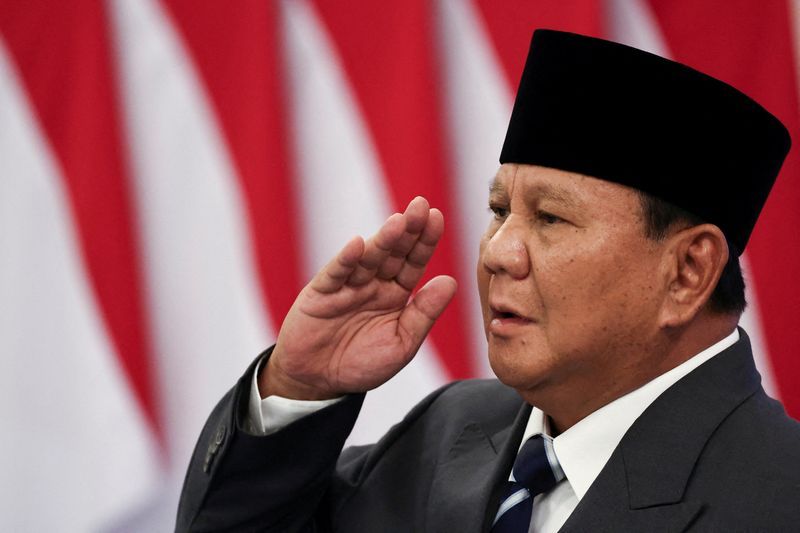
Indonesia's government is preparing to embed artificial intelligence across several flagship programmes in an ambitious bid to transform public service delivery and economic growth. A draft presidential regulation, awaiting signature from President Prabowo Subianto, charts a comprehensive roadmap for ministries and regional authorities to adopt AI technologies from 2026 through 2029. The initiative targets what officials describe as critical areas needing digital transformation, particularly the $15 billion free-meal scheme that has become a centrepiece of the administration's social agenda.
The strategic push reflects Jakarta's determination to catch up with more advanced Southeast Asian peers in the AI race. Singapore and Malaysia have already positioned themselves as regional development hubs, attracting billions of dollars in investment from global technology firms seeking to establish critical infrastructure for cloud and AI services. Indonesia's relatively slower progress in this domain represents both a challenge and an opportunity—the government sees AI adoption as a catalyst that could add approximately $366 billion to the economy by the end of the decade, a 12 per cent boost to gross domestic product.
Tech giants including Meta Platforms, IBM and Microsoft have contributed to shaping this regulatory framework, according to Wahyudi Djafar, a technology analyst who helped draft the regulation and serves on the government's AI task force. Microsoft alone committed $1.7 billion over recent years to expand its cloud services and artificial intelligence infrastructure throughout Indonesia, signalling confidence in the market's potential despite current structural limitations. The involvement of these multinational firms underscores how developing nations like Indonesia must increasingly partner with established technology leaders to accelerate digital transformation.
Within the free-meal programme specifically, the regulation envisions AI playing a multifaceted operational role. The technology would help design region-appropriate meal menus tailored to local dietary preferences and nutritional needs, monitor kitchen hygiene standards through automated systems, forecast food demand patterns, and flag irregularities in procurement or preparation. Beyond catering operations, AI would integrate health data inputs to provide early warning signals for potential public health emergencies. Such applications represent attempts to address longstanding vulnerabilities in the programme, which has faced persistent criticism over transparency failures and operational shortcomings.
The free-meal initiative has become emblematic of governance challenges that AI is expected to help resolve. Earlier this month, the programme's leadership was removed and arrested amid investigations into irregularities ranging from kitchen setup violations to inadequate safety protocols. Last year alone, tens of thousands of schoolchildren suffered food poisoning incidents, raising public concern about both programme integrity and bureaucratic accountability. These failures have intensified scrutiny around budgetary efficiency at a moment when Indonesia faces constrained fiscal space, making the case for AI-driven automation and cost optimisation particularly compelling to policymakers.
Beyond food programmes, the regulation extends AI applications to Indonesia's healthcare initiatives. The government intends to deploy artificial intelligence to analyse health screening results and improve tuberculosis testing protocols. Such applications align with broader ambitions to enhance preventive health capacity across the archipelago's vast population, though implementation challenges remain formidable. The regulation also prescribes a compliance framework requiring government agencies to report AI-related risks, including potential biometric misuse, intellectual property violations and deepfake creation—acknowledging that rapid technology adoption carries governance hazards requiring explicit oversight.
Yet scepticism about implementation capacity runs deep among Indonesian technology experts. Derwin Suhartono, an artificial intelligence professor at Bina Nusantara University in Jakarta, argues that Indonesia lacks the foundational infrastructure and human capital to become a genuine AI developer. The country suffers from semiconductor scarcity, inadequate cloud computing infrastructure, and critically, insufficient skilled workforce capacity in machine learning and data science. Suhartono's assessment is blunt: Indonesia risks remaining perpetually dependent on foreign-developed AI products rather than cultivating indigenous technological capability, a structural disadvantage that regulatory ambition alone cannot overcome.
The gap between policy rhetoric and operational reality represents perhaps the most significant obstacle. While the regulation provides structured timelines and explicitly identifies priority sectors, Suhartono cautions that past government technology initiatives have collapsed at the execution stage due to poor coordination, inadequate funding, and misalignment between ministry capacities and policy objectives. The regulation's framing of AI-driven automation as a mechanism for achieving remarkable efficiency and reducing operational costs, while theoretically sound, requires sustained institutional commitment and substantial investment that developing bureaucracies frequently struggle to maintain.
The regulatory framework incorporates several mechanisms intended to address these capability gaps. The government plans to establish a sovereign AI fund managed primarily through Danantara Indonesia, the country's newly created wealth fund, channelling capital toward AI development and infrastructure. The regulation also proposes fiscal incentives for AI researchers and targeted talent acquisition programmes designed to reduce critical skills shortages. These provisions suggest recognition that technological catch-up demands not merely regulatory instruments but sustained financial commitment and institutional development.
The regulation builds upon foundations laid by a white paper issued last year, indicating that AI integration has moved from exploratory thinking to operational planning. However, uncertainty persists regarding implementation timelines, with President Prabowo's office not yet confirming when the regulation will receive formal signature. This ambiguity, while common in Indonesia's bureaucratic cycles, leaves stakeholders uncertain about when ministries should begin preparatory work and capital allocation decisions for AI integration.
For Malaysia and other Southeast Asian neighbours, Indonesia's approach offers instructive lessons. A nation of 275 million people attempting to leverage AI for governance efficiency and economic growth must balance ambition with institutional realism. Indonesia's targeting of AI applications within high-visibility programmes like free meals and health screening reflects pragmatism—demonstrating early wins in politically salient areas could build momentum for broader adoption. Yet without addressing foundational infrastructure deficits, workforce development, and the reality that much of the ecosystem will depend on imported technologies, Indonesia may struggle to realise the transformative GDP impacts projected in policy documents.
Regional competition for AI primacy is intensifying, with stakes extending beyond technology leadership to broader questions of economic competitiveness and technological sovereignty. Indonesia's regulatory push, despite implementation uncertainties, signals that Southeast Asian governments increasingly recognise AI as essential to future competitiveness. How effectively Jakarta executes this strategy will influence not only domestic economic trajectories but also regional tech industry dynamics, investment flows, and the broader question of whether emerging markets can develop indigenous AI capabilities or must settle for managed dependency on developed-world technology providers.

