The Indonesian Attorney General's Office has expanded its investigation into what was meant to be a flagship nutrition initiative, announcing the arrest of two more suspects connected to alleged embezzlement within the free school meals scheme. This development significantly broadens the scope of a probe that began with the detention of three senior officials from the National Nutrition Agency just weeks earlier, signalling a systematic pattern of misconduct within the programme's administration.
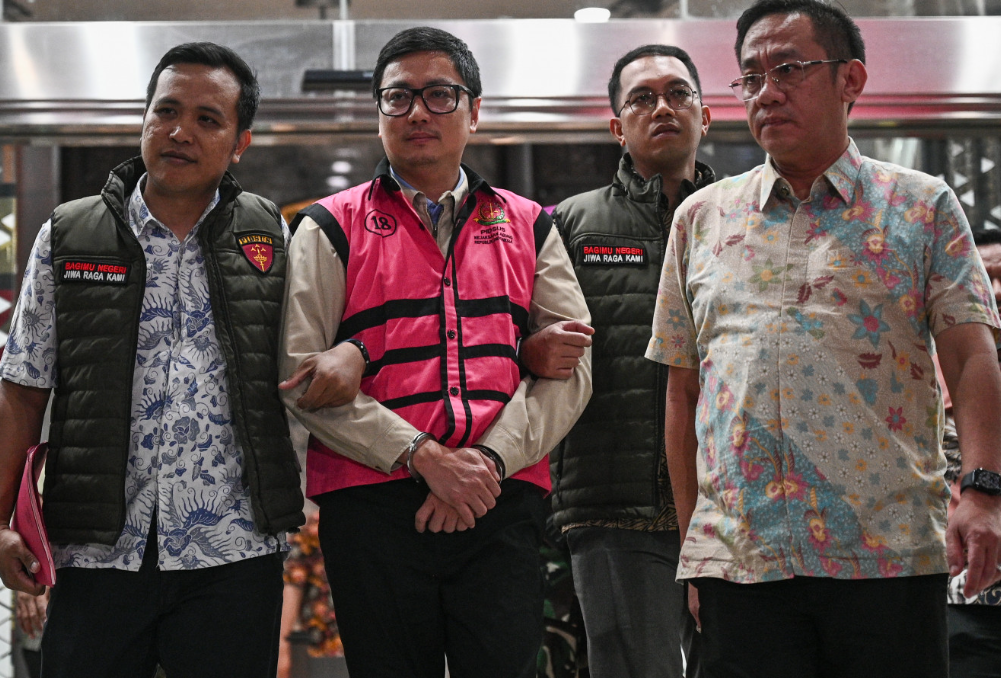
On Friday, June 12, investigators formally arrested Andri Mulyono, who holds a commissioner position at PT Yasa Artha Trimanunggal, a logistics company, following interrogation earlier that day regarding his involvement in the alleged kickback scheme. According to the investigation director Syarief Sulaeman Nahdi of the Office of Assistant Attorney General for Special Crimes, Mulyono manipulated procurement prices for more than 21,000 electric motorcycles intended for kitchen distribution across the nationwide network. These motorcycles, prosecutors allege, were priced to precisely meet the BGN's budget ceiling of Rp 1.03 trillion, equivalent to approximately US$58.2 million, allowing Mulyono and his associates to pocket the inflated difference.
The procurement of electric motorcycles has been a particular flashpoint of public controversy. In April, the purchase sparked considerable criticism from civil society and media observers who questioned whether two-wheeled transport constituted a legitimate priority for a nutrition delivery system. Finance Minister Purbaya Yudhi Sadewa subsequently announced that no additional motorcycle purchases would proceed in 2026, attributing the initial approval to what he characterised as internal miscommunication within his ministry. The explanation, however, has done little to restore public confidence in the programme's oversight mechanisms.
Paralleling Mulyono's arrest, investigators had apprehended Asep Yusuf Somantri, a businessman with connections to Sony Sonjaya, one of the three former BGN leaders detained earlier this month. Prosecutors contend that Somantri leveraged access provided by Sonjaya to compromise the verification process that was supposed to ensure only qualified organisations received contracts to operate meal distribution kitchens. This alleged interference allowed him to influence which establishments gained registration and even to shepherd applications through the system after formal registration periods had ostensibly closed, potentially opening the door for unvetted operators.
The three original suspects arrested on June 3, within hours of President Prabowo Subianto's dismissal of the entire BGN leadership, comprised Dadan Hindayana, the former agency head, and deputies Sony Sonjaya and Lodewyk Pusung. These arrests coincided with and immediately followed the presidential purge, suggesting that high-level political pressure accelerated the Attorney General's Office response. The broadening investigation now encompasses five individuals, with authorities signalling their intention to interview Sonjaya again as they evaluate his application for justice collaborator status, under which he would disclose the identities of more than 20 additional individuals allegedly implicated in the corrupt network.
The free meals programme itself represents an ambitious social policy initiative designed to combat childhood malnutrition by providing daily meals to over 80 million schoolchildren and pregnant women throughout the archipelago. Launched in early 2025, the scheme was conceived as a cornerstone of the government's efforts to reduce stunting and improve nutritional outcomes among vulnerable populations. However, since rollout, the initiative has been shadowed by operational crises including at least 33,000 reported cases of mass food poisoning attributed to unsafe food handling or contaminated ingredients, raising serious questions about quality control and oversight.
Public discontent with the programme crystallised into organised protest on Friday, June 12, when students mobilised under the hashtag #MenujuIndonesiaBangkrut, a phrase translating to "Indonesia heading for bankruptcy." Demonstrators criticised the initiative not merely for its corruption scandals but on broader budgetary grounds, characterising it as a misplaced priority given Indonesia's macroeconomic challenges, particularly the weakness of the rupiah against major currencies. The protests represent a significant erosion of the political consensus that had initially surrounded the meals scheme.
In response to mounting public pressure, Government Communications Agency head Muhammad Qodari issued a defence of the programme on Saturday, reaffirming the government's commitment to its continuation and emphasising its role in addressing stunting. Qodari acknowledged that implementation challenges and operational problems were inevitable aspects of any large-scale government initiative, employing a somewhat dismissive rhetorical flourish by suggesting that only dysfunction-free programmes would be executed perfectly. His framing sought to normalise the difficulties encountered as routine administrative friction rather than symptomatic of deeper structural failures.
The unfolding scandal carries significant implications for governance and accountability across Southeast Asia, where several neighbouring nations operate comparable nutrition and social assistance programmes. The Indonesian case illustrates how bureaucratic opacity and weak oversight mechanisms within procurement systems can create openings for systematic embezzlement, even within initiatives framed as developmental priorities benefiting disadvantaged populations. The involvement of private logistics companies and the manipulation of transport procurement specifically highlight vulnerabilities in supply-chain management that regional governments would be wise to examine within their own operations.
For Malaysia and other ASEAN economies, the Indonesian experience offers cautionary lessons regarding programme design and implementation architecture. Large-scale categorical assistance schemes require robust independent verification mechanisms, competitive procurement processes with genuine transparency, and separation of administrative authority between different levels of approval. The Indonesian case demonstrates that concentrating discretionary power within a single agency, particularly when that agency simultaneously manages procurement, verification, and distribution, creates acute corruption risks that even high-profile arrests and investigative efforts may struggle to remedy once patterns become entrenched.
The investigation's expansion signals that authorities may be uncovering a more extensive network than initially apparent, with the potential for additional charges and arrests in coming weeks. The Attorney General's evaluation of Sonjaya's justice collaborator application will prove crucial, as such cooperation agreements typically generate cascading revelations that identify previously unknown participants in corrupt schemes. Whether these enforcement actions ultimately strengthen accountability systems or merely shuffle the cast of detained officials while leaving underlying structural vulnerabilities unaddressed remains an open question that observers across the region will monitor closely.