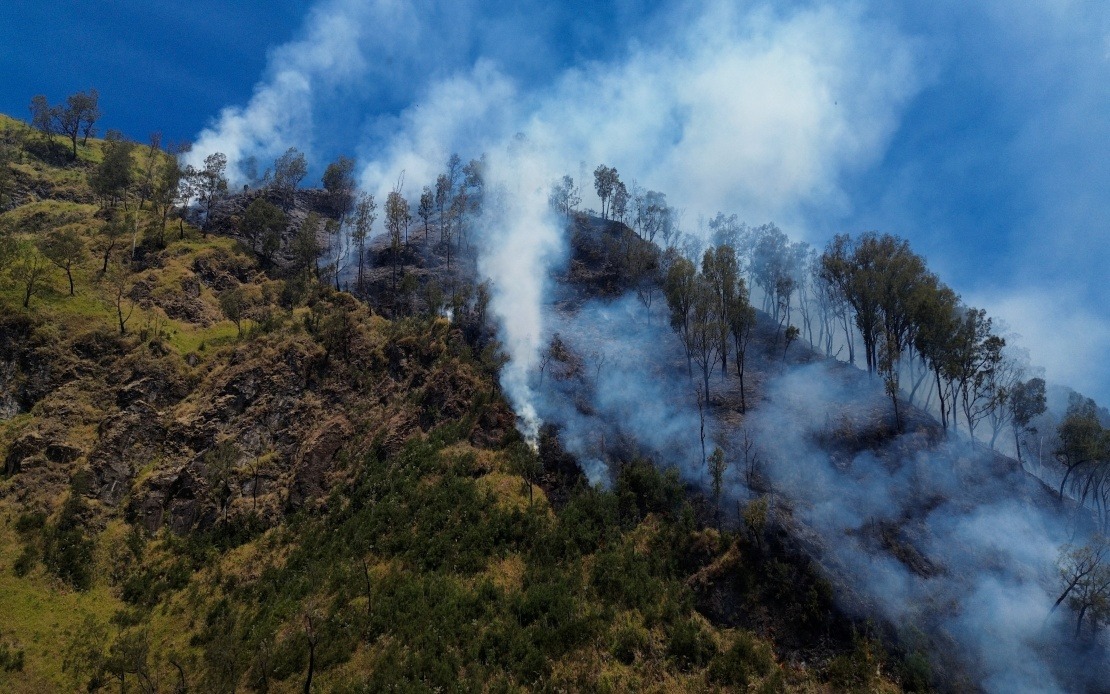
Indonesia's celebrated Mount Bromo volcano in East Java has been sealed off from visitors, with authorities suspending all tourism activities indefinitely as a destructive forest fire continues its relentless spread across the Bromo Caldera. The decision to close the iconic destination represents a significant disruption to the region's tourism sector and reflects the escalating severity of the wildfire situation that has gripped the area for nearly a week.
The Bromo Tengger Semeru National Park authority implemented the comprehensive closure starting Saturday evening at 10pm, affecting all five principal access points to the mountain. These entrances, located across multiple regencies in East Java, include Cemorolawang in Probolinggo Regency, Wonokitri in Pasuruan Regency, Jemplang and Coban Trisula in Malang Regency, and Senduro in Lumajang Regency. Park management emphasised that the decision prioritises firefighting operations and protects visitor safety during the emergency situation.
The scale of the destruction has become increasingly apparent as fire officials released damage assessments. The National Disaster Management Agency reported that the blaze, which ignited on Monday, has consumed approximately 176.20 hectares across Probolinggo and Malang regencies. The continuing threat remains palpable, with monitoring teams detecting active hotspots still emitting smoke even as of Saturday night. Moderate wind conditions have complicated suppression efforts, potentially accelerating fire spread across the volcanic landscape.
Indonesian authorities have mobilised substantial aerial resources to combat the conflagration. Two helicopters, each capable of delivering 1,000 litres of water per mission, have been deployed specifically to support ground firefighting teams. These aircraft represent crucial reinforcement for terrestrial crews working in the challenging terrain of the Bromo Caldera. The combination of helicopter water drops and ground-based firefighting represents a coordinated approach to containing the advancing flames before they consume additional vegetation and threaten nearby communities.
For tourists caught in the disruption, park authorities have implemented a visitor accommodation policy. Those who purchased advance tickets through online channels now have flexibility to reschedule their visits for a future date once the closure lifts, or to request financial refunds. This approach attempts to minimise financial hardship for international and domestic travellers who had planned visits to one of Indonesia's most photographed natural attractions.
The Mount Bromo situation is not an isolated incident across Indonesia's volcanic landscape. Simultaneously, authorities have been battling a separate forest fire at Mount Rinjani National Park in East Lombok Regency. That blaze affected the Sembalun Resort area and consumed approximately 30 hectares before being brought under control at approximately 1:30am on Saturday, having started around 8pm on Friday. The rapid succession of major fires across Indonesia's eastern regions suggests broader environmental and climatic challenges affecting the archipelago.
The investigation into both fire origins remains ongoing, with officials unable to confirm whether the blazes resulted from human activity, natural causes, or other factors. Understanding causation will prove essential for implementing prevention strategies and assigning responsibility, particularly if negligence or intentional activity contributed to the destruction. For a region dependent on tourism revenue, the temporary closure of Mount Bromo represents significant economic consequences for hospitality businesses, tour operators, and local communities that rely on visitor spending.
Mount Bromo's closure carries particular resonance for Southeast Asia's tourism landscape. The volcano attracts thousands of regional and international visitors annually, drawn by its spectacular landscape, distinctive sulfurous crater, and accessibility relative to many other major volcanic sites in the region. The forced shutdown demonstrates how natural disasters can rapidly disrupt tourism infrastructure and revenue flows across the wider region, affecting not just Indonesian operators but Malaysian travel agencies and tourists who frequently visit East Java.
The wildfire incident highlights ongoing vulnerability of Indonesia's forest ecosystems to seasonal conditions and land management challenges. As Southeast Asia faces intensifying environmental pressures and climate variability, similar incidents may become increasingly frequent across the region. The deployment of sophisticated aerial resources indicates governmental capacity to respond, yet the initial spread of the Mount Bromo fire over six days before achieving containment suggests challenges in early detection and rapid response protocols that may warrant regional cooperation and knowledge-sharing among Southeast Asian nations facing similar threats.

