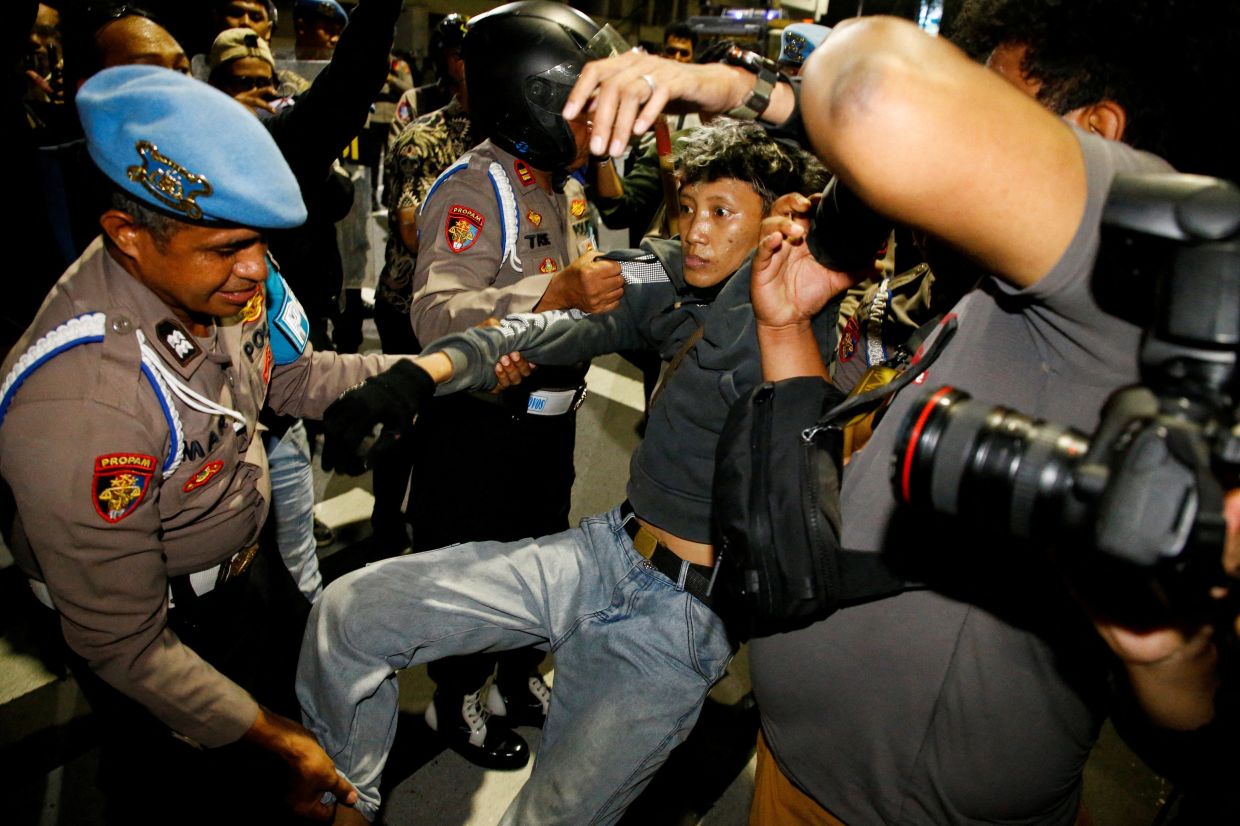
Indonesian police have pressed charges against four individuals in connection with an anti-government protest held in Surabaya, the country's second-largest city, marking a significant escalation in law enforcement responses to mounting public discontent. The incident occurred on Friday when approximately 100 demonstrators gathered near a government building, with officers subsequently taking what authorities characterised as "firm actions" to disperse the crowd.
The protest centred on two major grievances affecting ordinary Indonesians. The immediate trigger was the government's decision to increase prices for non-subsidised petrol by roughly 30 per cent, a measure designed to relieve mounting fiscal pressures amid global supply chain disruptions stemming from Middle Eastern conflicts. Beyond fuel costs, demonstrators also voiced strong opposition to a multi-billion-dollar free school meals programme that the administration has championed as a solution to child malnutrition, but which has become embroiled in controversy.
The meals initiative has proven deeply problematic for the government despite its stated humanitarian objectives. Critics point to numerous instances of mass food poisoning, with tens of thousands of people falling ill since the scheme's rollout, raising serious questions about food safety standards and quality control. Additionally, the programme has attracted widespread corruption allegations, with suspicions that resources intended for nutritious meals have been diverted through mismanagement and fraud. These combined failures have prompted authorities to temporarily suspend portions of the initiative, though it remains a flashpoint for public anger.
During Friday's demonstration, tensions escalated when some protesters began hurling objects at security forces, including firecrackers and rocks. According to Surabaya police chief Luthfie Sulistiawan, these confrontations justified the forceful police response. The four individuals now facing charges have been accused of property destruction and assaulting police officers, charges that carry potential legal consequences under Indonesian law.
The police operation initially resulted in the arrest of 24 people, but authorities subsequently released most without filing charges, reflecting a relatively measured approach compared to responses in other protest situations. However, six additional individuals remain under investigation after drug testing revealed the presence of controlled substances in their systems, suggesting the inquiry extends beyond the immediate protest incidents.
Surabaya's demonstration is emblematic of broader discontent sweeping across Indonesia, the region's economic powerhouse and an oil-producing nation that paradoxically remains a net importer of petroleum products due to heavy domestic subsidies. The government's attempt to trim fuel subsidies by raising prices on non-subsidised gasoline reflects a difficult balancing act between maintaining the political support of ordinary citizens and managing an increasingly strained public budget.
The fuel price hikes have provoked particularly strong reactions among younger Indonesians, with thousands of students in the capital Jakarta taking to the streets throughout the month to register their opposition. Student-led movements have historically played crucial roles in Indonesian political change, and their involvement signals that dissatisfaction extends beyond traditional labour union constituencies to encompass a broad cross-section of society.
The convergence of fuel price increases and the beleaguered meals programme creates a compound challenge for Jakarta's leadership. While the fuel adjustment addresses macroeconomic necessity, the school meals controversy undermines the government's broader social agenda and public health objectives. The food poisoning incidents alone have damaged institutional credibility, as ordinary Indonesians question whether state-run welfare initiatives can be trusted to operate safely and fairly.
For Malaysia and other Southeast Asian nations watching developments in the region's largest economy, these events underscore the delicate political equilibrium surrounding subsidised commodities and welfare provision. Indonesia's experience demonstrates how price-support mechanisms, while politically popular, create fiscal sustainability challenges that ultimately force unpopular adjustments. The regional implication extends to policy choices across ASEAN, where governments similarly balance populist support systems against macroeconomic realities.
The four charges against protesters occur within Indonesia's broader legal framework governing public assembly and civil disorder. The decision to prosecute specific individuals while releasing most others suggests authorities are attempting to target perceived ringleaders while avoiding the appearance of wholesale suppression of legitimate protest activity. This selective enforcement approach reflects the government's awareness of international scrutiny regarding freedom of assembly.
Looking forward, the situation in Indonesia illustrates persistent tensions between necessary economic adjustments and public welfare priorities. How Jakarta manages the political fallout from both the fuel price hike and the meals programme collapse will significantly influence public confidence in government competence and integrity during a period when regional economic pressures continue mounting.

