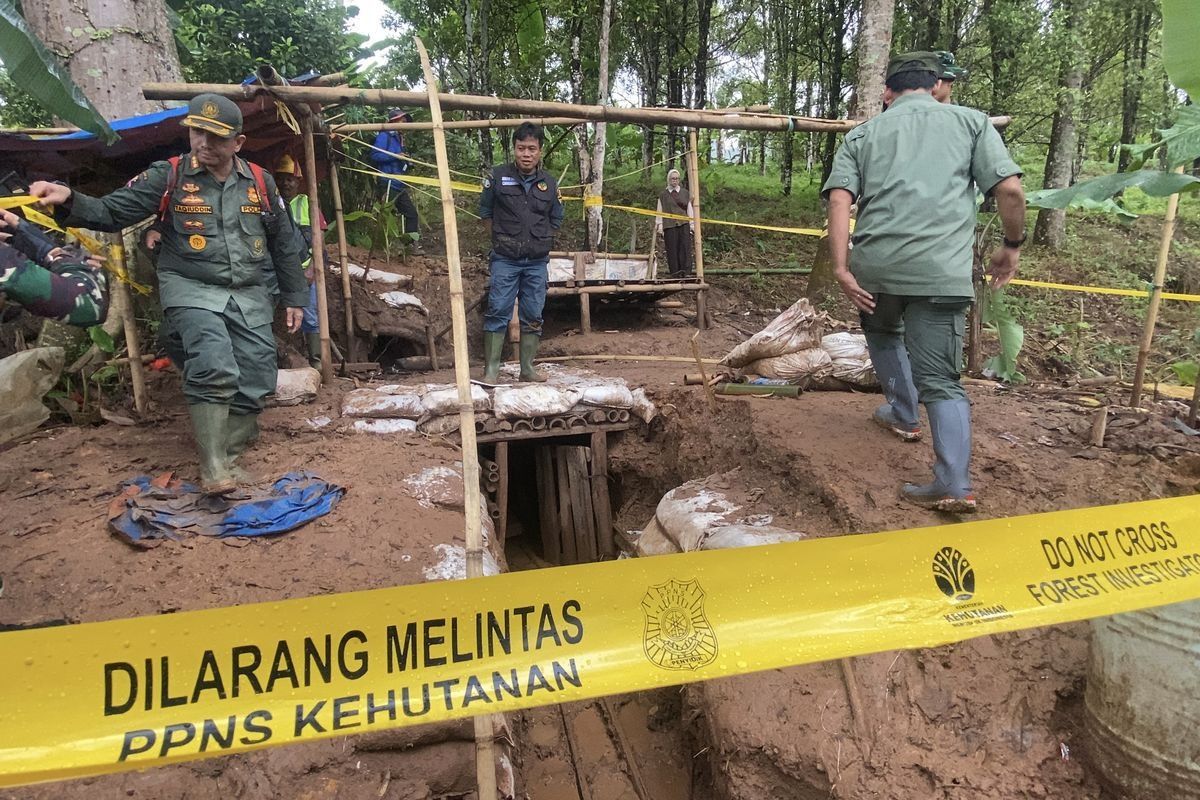
Indonesia has escalated its crackdown on illegal mining by formally charging 24 foreign nationals as criminal suspects connected to an unlicensed gold extraction scheme operating in the Maluku region. The development marks a significant enforcement action by the energy ministry, which announced the charges through official Jeffri Huwae on Thursday, signalling Jakarta's intensified commitment to combating resource theft in one of Southeast Asia's most mineral-rich nations.
According to ministry statements, the foreign suspects allegedly engaged in constructing and maintaining infrastructure specifically designed to facilitate the clandestine operation. Their activities centred on the Gunung Botak area in Maluku, where investigators determined they had established illegal access roads, processing facilities, and other installations essential for extracting and preparing gold for market. The scope of this infrastructure development suggests a sophisticated, organised operation rather than artisanal mining activity, indicating substantial investment and planning by backers seeking to exploit Indonesia's mineral wealth without proper licensing or regulatory oversight.
Under Indonesian law, those convicted of illegal mining face severe penalties. The energy ministry specified that violations carry maximum prison sentences of five years, a considerable deterrent intended to discourage foreign participation in such schemes. Beyond custodial sentences, perpetrators typically face asset seizures and substantial fines, adding financial consequences to criminal liability. These punitive measures underscore Jakarta's determination to enforce its sovereignty over natural resources and prevent foreign actors from illicitly profiting from domestic mineral deposits.
The ministry's statement did not disclose the nationalities of the accused, though news reports citing prior detentions suggested the defendants may include Chinese nationals working under sponsorship from a local company registered as PT Harmoni Alam Manise. The withholding of nationality details reflects diplomatic sensitivity surrounding foreign enforcement actions, particularly when enforcement involves major trading partners. Similarly, authorities did not release figures regarding gold volumes extracted or the operation's total production capacity, information that would illuminate the scheme's scale and economic impact.
Indonesian authorities have managed to apprehend and detain half of the accused foreigners within the country's jurisdiction. The remaining 12 suspects are classified as still at large and positioned outside Indonesia's legal reach, complicating prosecution efforts. This geographical dispersal creates investigative and extradition challenges, particularly if the fugitives have returned to their countries of origin or relocated to jurisdictions lacking robust extradition treaties with Jakarta. The inability to secure all suspects reflects the cross-border nature of organised illegal mining, which frequently involves networks spanning multiple nations.
Beyond the foreign nationals, Indonesian authorities implicated two domestic citizens as criminal suspects in connection with the same operation. These local accomplices likely provided essential services including land access, regulatory evasion, labour recruitment, and market connections necessary for foreign operators to establish and sustain mining activities. The inclusion of domestic suspects underscores that illegal mining operations depend upon local facilitation and corruption, with Indonesian intermediaries profiting from foreign capital and expertise while exposing their country to environmental degradation and resource depletion.
This case reflects a troubling pattern of foreign involvement in Indonesia's illegal mining sector. Previous enforcement actions have similarly targeted foreign nationals operating clandestinely across the archipelago's resource-rich regions. In Papua, Indonesia's easternmost province, police arrested four Chinese nationals in Senggi district during the previous year, indicating that foreign-backed mining schemes persistently target different geographical zones within Indonesia's mining belt. These recurring incidents suggest that despite regulatory efforts and enforcement campaigns, Indonesia continues attracting foreign operators willing to circumvent legal frameworks to access valuable mineral deposits.
The enforcement action carries implications beyond Indonesia's borders. For Malaysia and broader Southeast Asia, the case illustrates vulnerabilities in regional mineral supply chains and the prevalence of illicit extraction funding transnational criminal networks. Illegal gold sourced from such operations frequently enters formal markets through laundering mechanisms, contaminating legitimate supply chains and creating reputational risks for downstream purchasers. Malaysian investors, traders, and refiners engaging with regional mineral supplies face potential exposure to tainted material, necessitating rigorous due diligence regarding sourcing practices.
Environmentally, illegal mining operations inflict severe damage upon ecologically sensitive regions. Maluku's forests and water systems face destruction from unregulated extraction, processing chemical discharge, and infrastructure development conducted without environmental safeguards. These environmental costs extend beyond Indonesia, affecting regional biodiversity and contributing to transboundary environmental degradation that impacts neighbouring countries' ecosystems and communities. The externalities generated by such operations represent genuine regional challenges requiring coordinated international responses.
The charges announced represent administrative progress within Indonesia's enforcement apparatus, though prosecution timelines remain uncertain given the fugitive status of half the accused. Successful convictions will require solid evidence presentation, witness cooperation, and sustained investigative momentum—factors that historically prove challenging in transnational organised crime cases. The case also highlights resource constraints within Indonesian prosecution systems, where investigative agencies and courts manage substantial caseloads while competing for budgetary allocations and technical expertise.
Looking forward, Indonesia's pursuit of this case signals government commitment to resource sovereignty and environmental protection. However, sustained effectiveness requires complementary measures including international cooperation frameworks, intelligence sharing with regional partners, and capacity building within enforcement agencies. Malaysia, as a regional mining hub and trading centre, has vested interests in supporting regional efforts to suppress illegal mining, given potential impacts upon legitimate mineral markets and environmental stewardship across Southeast Asia.

