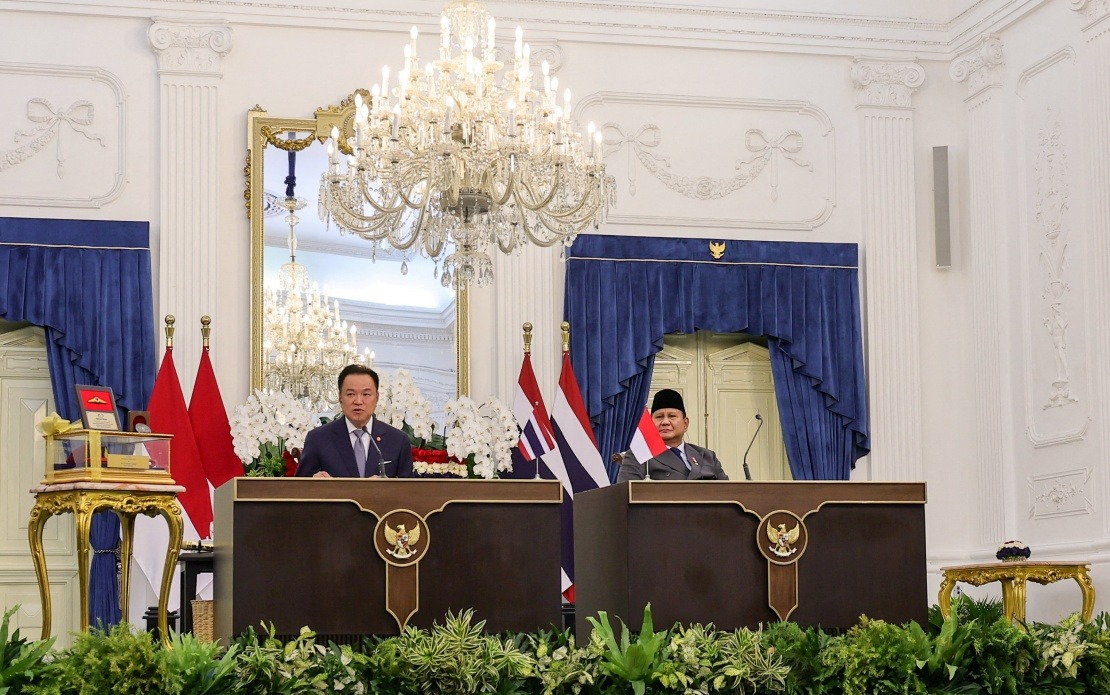
Indonesian President Prabowo Subianto and Thai Prime Minister Anutin Charnvirakul have reaffirmed their countries' commitment to ASEAN-coordinated peacebuilding in Myanmar, with both nations pledging to advance the Five-Point Consensus through dialogue and humanitarian outreach. The undertaking surfaced during their second Leaders' Consultation at Jakarta's Merdeka Palace on Monday, signalling a fresh push by Southeast Asia's largest economies to shepherd the crisis-torn nation towards stability amid persistent conflict and humanitarian deterioration.
The two leaders emphasised that regional cohesion remains essential to resolving Myanmar's intractable crisis. Prabowo stressed that Indonesia and Thailand would jointly mobilise ASEAN diplomatic machinery to encourage inclusive negotiations, violence reduction and broader access for relief organisations. This framing underscores growing frustration among ASEAN capitals with the slow pace of Myanmar's transition. The Five-Point Consensus, endorsed by the bloc in April 2021, calls for an immediate cessation of hostilities, constructive dialogue between the junta and opposition, mediated humanitarian assistance, and the dispatch of ASEAN envoys. Nearly four years later, implementation remains patchy, reflecting the junta's resistance and fractured opposition dynamics.
Beyond Myanmar, the two nations unveiled an expansive security partnership addressing the region's mounting transnational crime menace. Both countries agreed to escalate joint operations against online fraud syndicates, human trafficking networks and drug smuggling operations through enhanced intelligence-sharing protocols, coordinated financial investigations and cross-border law enforcement action. This collaboration represents a strategic recalibration in response to the explosive growth of cybercriminalised scam operations based in Myanmar, Laos and Cambodia that have targeted citizens across Southeast Asia with devastating personal and economic consequences.
Indonesia's focus on combating online scam networks reflects the scale of the problem domestically. The Indonesian government has facilitated the repatriation of nearly 1,000 nationals who fell victim to these syndicates, many of whom were coerced into labour within fortified compounds operated by criminal gangs. Thailand, similarly grappling with organised cybercrime, has positioned itself as a crucial transit point for regional intelligence gathering and victim recovery operations. The two countries' decision to develop a Transnational Referral Mechanism signals intent to standardise victim identification, protection protocols and dignified repatriation across borders, potentially serving as a template for broader ASEAN coordination.
Anutin's inaugural official visit to Indonesia since assuming Thailand's premiership in September 2025 underscored the significance both capitals attach to bilateral ties. The Thai leader's journey marks the first visit by a reigning Thai premier to Jakarta in 15 years, a gap that itself reflects strain in the relationship following Myanmar's 2021 coup and subsequent divergences over regional strategy. Anutin's willingness to prioritise Indonesia early in his tenure suggests Bangkok views strengthening ties with its neighbour as essential to advancing Thai interests across security, economic and diplomatic domains.
The defence dimension of the emerging partnership encompasses military training exchanges, maritime security surveillance and expanded equipment cooperation. Thailand proposed supplying Indonesia with 36 amphibious wheeled armoured vehicles, indicative of deepening military-industrial integration. Such arrangements reflect both countries' recognition that conventional military modernisation cannot be decoupled from addressing transnational security challenges emanating from state collapse and criminal networks in Myanmar and elsewhere. Maritime security cooperation carries particular weight given the Andaman Sea and Strait of Malacca's strategic importance to regional commerce and the proliferation of maritime crime.
The emphasis on capacity building and intelligence architecture reveals both nations' acknowledgement that unilateral action remains insufficient against criminal enterprises operating across porous borders. By formalising information-sharing frameworks and joint investigative protocols, Indonesia and Thailand aim to dismantle the institutional deficiencies that permit organised crime to flourish. Thailand's explicit commitment to combat online scam networks, human trafficking and wildlife trafficking alongside Indonesia signals recognition that these phenomena represent interconnected security threats requiring synchronised responses. Wildlife trafficking, in particular, connects criminal syndicates to broader narcotics and arms smuggling operations destabilising the region.
For Malaysian observers, the Indonesia-Thailand accord carries important implications. Malaysia has emerged as both a victim of and transit point for transnational crime flows, particularly online fraud operations and human trafficking. The strengthening of bilateral security mechanisms between Jakarta and Bangkok could enhance pressure on criminal networks that operate across the Tri-Border Area and throughout Southeast Asia, potentially benefiting Malaysian law enforcement efforts. Conversely, should Indonesia-Thailand cooperation exclude Malaysian participation or diverge from existing ASEAN frameworks, it risks fragmenting regional responses to coordinated criminal enterprises.
The partnership's emphasis on ASEAN centrality in Myanmar peacebuilding carries ambiguous implications. While Prabowo's insistence on bloc unity reflects genuine concern for institutional coherence, Myanmar's trajectory increasingly defies ASEAN diplomatic persuasion. The junta has marginalised ASEAN envoys, continued military operations and deepened strategic ties with China and Russia. Indonesia and Thailand's renewed commitment may therefore signal not renewed optimism about ASEAN's Myanmar influence but rather determination to prevent the regional architecture's complete irrelevance. By publicly reaffirming ASEAN's centrality while simultaneously building alternative bilateral mechanisms for addressing spillover effects, both countries hedge against the bloc's diminishing traction with Naypyidaw.
The security cooperation framework also reflects shifting geopolitical dynamics within Southeast Asia. As both nations navigate tensions with great powers and China's expanding regional footprint, Indonesia-Thailand coordination in defence procurement and intelligence sharing reinforces an important middle power axis. Thailand's proposal to supply armoured vehicles suggests Bangkok seeks to position itself as a credible defence vendor while simultaneously anchoring Indonesia's security orientation toward ASEAN rather than extra-regional powers. This supplier-buyer relationship, though modest in scale, embeds strategic dependencies that could facilitate deeper coordination on regional security architecture.
Looking ahead, the durability of this partnership depends on translating pledges into operational reality. Joint military training and intelligence sharing require sustained resource commitment and institutional trust. The Transnational Referral Mechanism demands harmonisation of legal frameworks and victim protection standards across national systems operating under different constraints. Equally important, both nations must ensure that bilateral cooperation reinforces rather than undermines ASEAN collective responses. The bloc's credibility as an institution depends partly on member states channelling multilateral ambitions through common forums rather than parallel bilateral channels that risk duplication and fragmentation.

