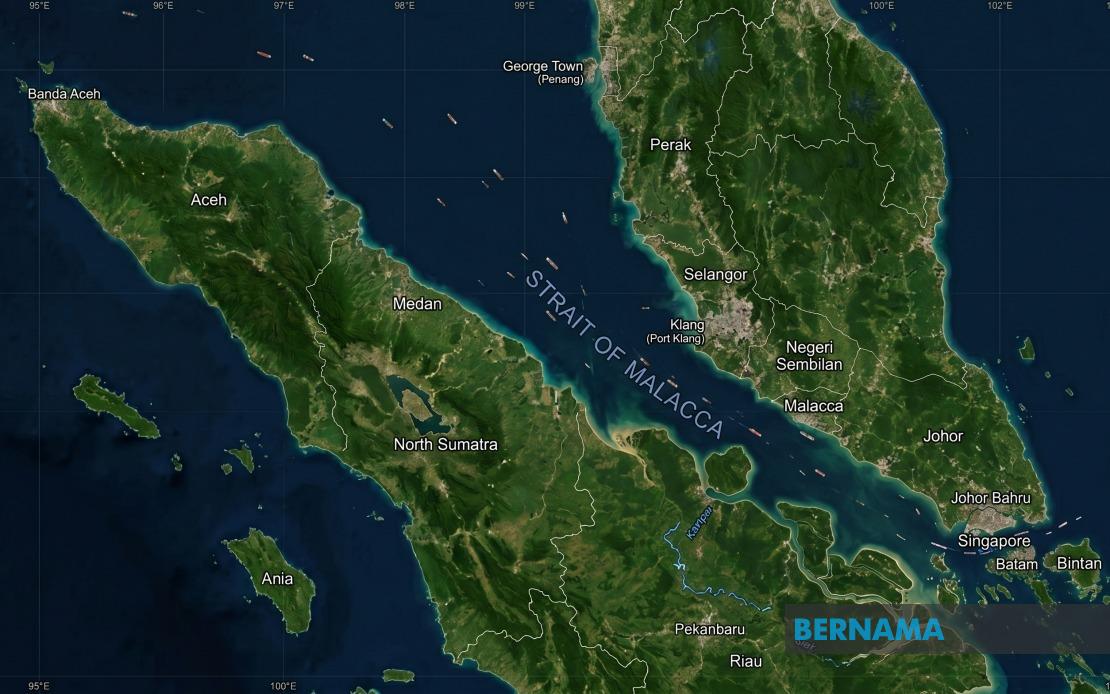
Indonesia and Singapore have jointly recommitted themselves to protecting the Strait of Malacca during high-level talks in Jakarta, signalling their determination to maintain one of the world's most critical maritime corridors. The two neighbouring nations, which directly control access to this crucial passageway, conveyed their shared resolve to uphold international law and preserve stability in Southeast Asia's most strategically vital waterway. The announcement came during the annual Indonesia-Singapore Leaders' Retreat on Monday, where senior officials underscored that safeguarding the strait remains a priority that transcends bilateral interests and speaks to the region's broader security architecture.
Indonesian President Prabowo Subianto and Singapore Prime Minister Lawrence Wong articulated their countries' commitment as rooted in the 1982 United Nations Convention on the Law of the Sea, which provides the legal framework governing maritime conduct globally. Both leaders emphasized that Indonesia and Singapore, as the nations physically bordering the Strait of Malacca, bear particular responsibility for ensuring the waterway functions as an open passage accessible to all legitimate commercial and military traffic. This positioning reflects the geopolitical reality that neither nation can unilaterally secure the strait, and that their interests align with maintaining a rules-based international order that permits freedom of navigation. The reference to UNCLOS is significant for Malaysia and other regional observers, as it grounds the discussion in established international law rather than allowing unilateral actions to dictate passage rights.
Beyond the traditional security calculus, both leaders identified emerging threats to the strait that demand coordinated regional response. Prabowo specifically highlighted three interconnected challenges: marine pollution, maritime accidents, and piracy operations that jeopardize the safety of commercial vessels traversing the narrow channel. These concerns reflect evolving maritime threats that extend beyond conventional geopolitical rivalry. Pollution from shipping accidents and illicit dumping threatens marine ecosystems and fishing livelihoods across the region. Maritime incidents—whether collisions, groundings, or mechanical failures—pose immediate dangers to crews and cargo, with potential ripple effects throughout regional supply chains. Piracy, though significantly reduced from its peak in the early 2010s, remains a persistent concern that requires sustained surveillance and law enforcement coordination. Each of these challenges requires expertise and cooperation that no single nation can provide, necessitating the multilateral approach both leaders endorsed.
The commitment to coordinate with Malaysia and Thailand carries particular significance for regional stability. Malaysia, as the nation whose shores most closely approach Singapore's territory at the strait's narrowest points, plays an essential role in any security arrangement. Thailand, though not directly bordering the Strait of Malacca itself, maintains significant maritime interests and has historically participated in regional security initiatives. By explicitly pledging continued coordination with both nations, Indonesia and Singapore signal that they view the strait's security as a four-nation responsibility rather than a bilateral matter. This framing is crucial for maintaining the consensus that underpins peace and prosperity in Southeast Asia. The inclusion of Malaysia and Thailand also acknowledges that unilateral actions or bilateral arrangements that exclude other stakeholders could undermine the multilateral mechanisms that currently enable smooth passage through the waterway.
The discussion also extended to broader regional and global challenges, reflecting recognition that maritime security cannot be divorced from wider geopolitical currents. Both leaders reaffirmed ASEAN's foundational principle that international disputes must be resolved through peaceful dialogue rather than confrontation, and that misunderstandings should be addressed candidentially among friends. This language carries implicit reference to tensions in the South China Sea and other regional flashpoints where maritime interests intersect with great power competition. By stressing that this commitment applies not only to Southeast Asia but to all regions, Prabowo and Wong signalled their countries' support for a rules-based international system that protects smaller nations from coercion. For Malaysian policymakers and observers, such statements matter because Malaysia's own maritime claims and interests depend on international norms that constrain unilateral actions.
The timing of these discussions assumes additional weight given Indonesia and Singapore's approaching 60th anniversary of diplomatic relations in 2025. Wong's visit to Jakarta for the annual Leaders' Retreat, which Prabowo identified as the second such formal gathering, reflects the institutional maturity and personal rapport between the two leaders. This relationship-building at the top levels of government creates momentum for cooperation at lower echelons of the bureaucracy and military establishments that ultimately implement security protocols. Such personal investment in bilateral ties often translates into smoother coordination during crises and greater willingness to accommodate each other's concerns. For a region where leadership dynamics frequently shape geopolitical outcomes, the apparent warmth and substantive engagement between these two leaders offers a measure of reassurance.
The partnership between Indonesia and Singapore extends beyond immediate strait security to encompass broader strategic cooperation. Both nations recognize that stability in Southeast Asia benefits their economies, their citizens, and their international standing. Indonesia's position as the world's largest Muslim-majority democracy and a leading ASEAN voice, combined with Singapore's role as a regional financial and logistics hub, means that sustained cooperation between them creates positive externalities for the entire region. When these two nations work in concert, they establish a baseline of institutional cooperation that other regional actors can build upon. Conversely, tensions between them would reverberate throughout Southeast Asia's security architecture and economic networks.
The emphasis on preserving the Strait of Malacca as a fully open passage reflects awareness that the waterway's value depends not on any single nation controlling it, but on its continued accessibility. Approximately one-third of global maritime trade and the vast majority of Asia's energy imports transit through the strait annually. Any disruption—whether from armed conflict, terrorism, piracy, or environmental disaster—would inflict economic damage far exceeding the territorial boundaries of the countries involved. This reality ensures that Indonesia and Singapore's interest in maintaining order aligns with the interests of maritime powers and trading nations worldwide. Malaysia, as another key stakeholder whose territory defines the strait's borders and whose economic vitality depends on unrestricted passage, shares this perspective. The multilateral consensus around openness thus reflects rational calculation rather than idealism.
Looking ahead, both nations' pledge to maintain coordination suggests they intend to deepen institutional mechanisms for maritime security. This might involve enhanced information-sharing protocols, joint training exercises, expanded coast guard cooperation, and unified approaches to emerging threats like transnational crime syndicates and environmental hazards. Such practical cooperation often proceeds with less fanfare than high-level political statements but ultimately determines whether commitments translate into effective action. For Malaysia and Thailand, the knowledge that Indonesia and Singapore are investing in these operational arrangements offers reassurance that the broader regional security architecture remains functional and capable of responding to challenges.
The reaffirmation of commitment also carries symbolic weight in a period of great power competition and regional uncertainty. By publicly restating their dedication to peaceful resolution of disputes and rule-based governance of maritime space, Indonesia and Singapore offer a counternarrative to zero-sum perspectives that view regional waters as arenas for strategic domination. This stance implicitly rejects approaches that would turn the Strait of Malacca into contested space where some nations' security comes at the expense of others'. For smaller and medium-sized nations in Southeast Asia, including Malaysia, the preservation of this multilateral consensus provides essential protection and preserves the conditions under which all nations can pursue their interests peacefully.

