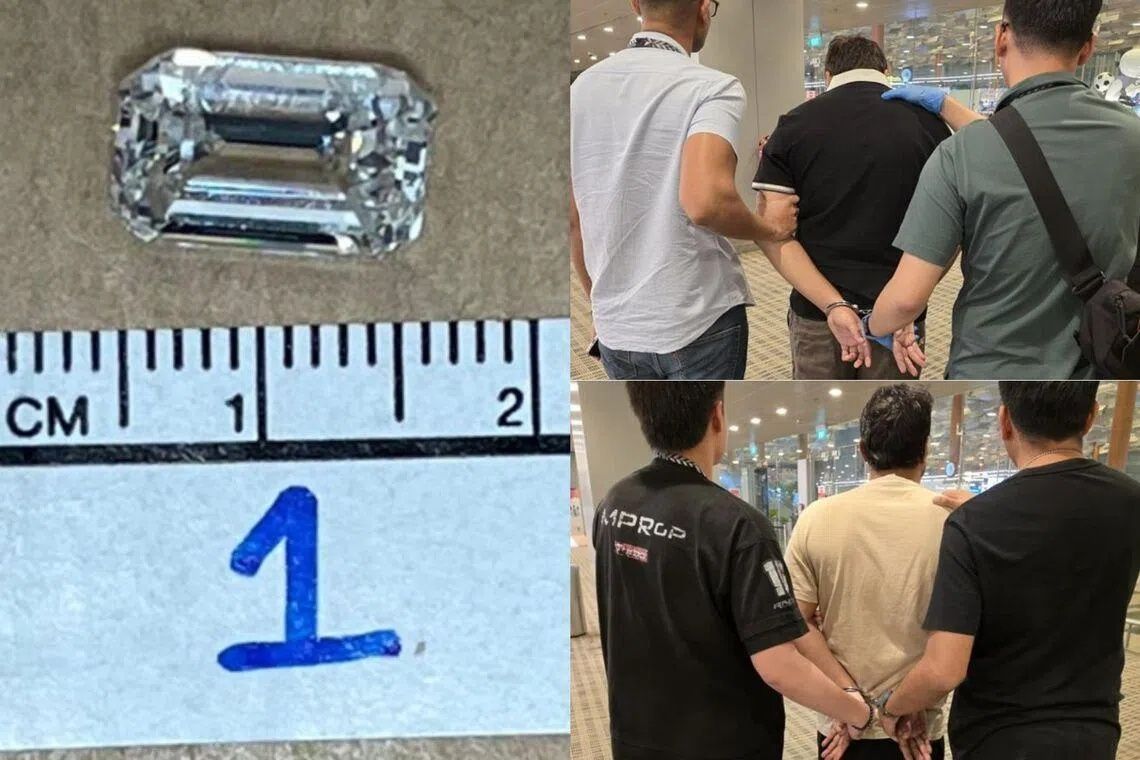
A carefully orchestrated scheme to pilfer a high-value diamond from a Singapore jewellery store has resulted in a substantial prison sentence for one of the perpetrators, highlighting the sophisticated methods employed by international theft rings targeting luxury retailers across the region. Mangroliya Manojkumar Kurjibhai, a 41-year-old Indian national, received a custodial sentence of two years, two months and two weeks after pleading guilty to theft charges following an incident in Chinatown on June 19. His younger accomplice, Serasiya Milan Ramnikbhai, 30, remains in custody awaiting trial on related charges. The pair's audacious attempt to evade detection at Singapore's Changi Airport, merely hours after the theft, ultimately proved unsuccessful when officers intercepted them during immigration clearance.
The theft unfolded with remarkable precision at Dianoche jewellery store located along Kreta Ayer Road, demonstrating that the perpetrators had invested considerable preparation time before arriving in Singapore. Court documents reveal the men had commissioned a counterfeit diamond in India prior to their departure, meticulously matching both the specifications and serial number of the genuine stone they intended to steal. This level of preparation suggests the pair possessed detailed knowledge of the target item before entering the store, though authorities have not disclosed precisely how they obtained this intelligence. The calculated nature of their planning underscores how international criminal networks operating across South Asia and Southeast Asia now employ increasingly sophisticated reconnaissance and preparation methods to target high-value assets.
On the afternoon of June 19, both tourists arrived at the Chinatown jewellery store around 3pm, with Serasiya concealing the fabricated diamond inside his mouth to facilitate the exchange. Mangroliya then approached a sales manager and requested to examine the 4.95-carat diamond, valued at approximately US$154,000 or just over S$199,000. During this critical phase of the operation, Mangroliya employed a diversionary tactic by asking the manager to retrieve several additional items for inspection, forcing the store employee to leave his position multiple times. This gave the criminal duo the window of opportunity they needed to execute their swap without immediate detection.
According to evidence presented by State Prosecuting Officer Yip Cheng Yee, Mangroliya then signalled Serasiya to proceed with the exchange. Serasiya spat out the counterfeit diamond onto the display surface and rapidly placed the authentic stone inside his mouth, a technique commonly employed in jewellery theft operations to minimize handling and detection. After completing the switch, Mangroliya calmly informed the manager that they would consider purchasing the item and both men departed the store in an apparently unhurried manner. The brazen nature of the theft—executing such a significant larceny in broad daylight within view of store staff—illustrates the confidence and experience these individuals possessed in executing such operations.
The store's surveillance systems proved instrumental in building the prosecution's case against the accused. CCTV footage captured the entire sequence of events, providing irrefutable visual evidence of the swap occurring. When the sales manager subsequently examined the diamond left behind using optical gemstone identification equipment, he immediately recognized it as a carefully crafted but detectable counterfeit. This discovery triggered an alert within the jewellery industry and with law enforcement authorities, setting in motion efforts to track and apprehend the perpetrators before they could depart Singapore with their stolen prize.
Following the successful theft, the two men proceeded to their hotel and arranged immediate travel back to India, booking flight seats on a departure scheduled for that same evening. Their hasty exit from Singapore represented a calculated gambit to put maximum distance between themselves and the scene of the crime before authorities could fully investigate and disseminate information to border agencies. However, this timeline also forced them to move quickly through Changi Airport's immigration checkpoint, where they ultimately encountered detection at Terminal 3 around 9pm. Officers recovered the genuine diamond from Serasiya's haversack during their arrest, securing critical physical evidence of the theft.
The legal consequences for this theft reflect Singapore's stringent approach to property crimes targeting high-value commercial establishments. Under local law, theft convictions carry maximum sentences of up to seven years imprisonment and substantial fines, depending on the value of stolen property and circumstances of the offence. Mangroliya's custodial sentence of over two years represents a serious penalty that aims to deter similar organized retail theft operations targeting the city-state's luxury retail sector. The fact that Serasiya's case remains pending suggests the prosecution may be pursuing additional or more serious charges against him, possibly relating to conspiracy or handling stolen property.
For Southeast Asian policymakers and retail security professionals, this incident illustrates emerging patterns in international theft rings targeting high-value merchandise across the region. The meticulous advance planning, use of counterfeit substitutes, coordinated team execution, and rapid exit strategies reflect professional criminal methodologies increasingly prevalent throughout Asia. Singapore's success in apprehending these suspects at the point of departure demonstrates the critical importance of robust border security protocols and inter-agency coordination among immigration and law enforcement bodies. The incident also underscores vulnerabilities in cross-border criminal investigation and prosecution, as the case has highlighted how organized theft networks may operate across multiple jurisdictions within South and Southeast Asia.
The broader context of this case extends beyond the specific theft to encompass the regional implications for retail security and international cooperation against organized crime. High-value jewellery stores throughout Malaysia, Singapore, and other regional financial centres face similar risks from well-organized criminal syndicates operating across national boundaries. This case serves as a cautionary example for the jewellery retail industry, emphasizing the necessity for comprehensive security measures including enhanced staff training, advanced surveillance systems, and strict protocols for handling valuable items. For Malaysian retail operators and security consultants, the methods employed by these perpetrators—particularly the use of manufactured counterfeits for exchange and rapid border-crossing tactics—represent specific threat vectors requiring targeted preventive measures and industry-wide awareness initiatives.

