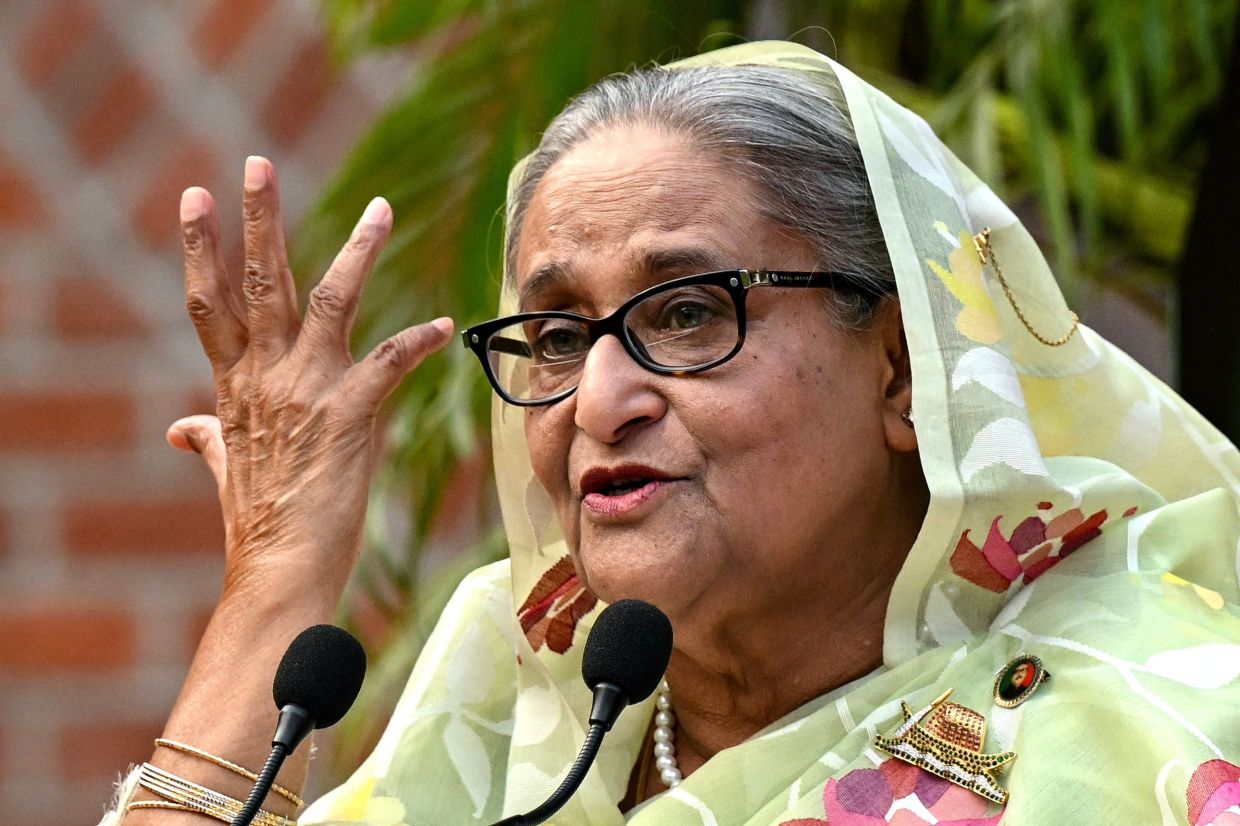
India's foreign ministry has moved swiftly to distance the New Delhi government from a controversial virtual address scheduled by exiled Bangladesh Prime Minister Sheikh Hasina, stating unequivocally that the event falls entirely within the purview of private media organisations and carries no official endorsement. The clarification came after Bangladesh lodged formal concerns with its neighbour over the implications of allowing high-profile political activities by a fugitive former leader, raising tensions between two countries already navigating a complex relationship following Hasina's dramatic exit from power last year.
The timing of Hasina's address—a virtual appearance on August 5 at an event hosted by the Foreign Correspondents' Club of South Asia—carries particular symbolic weight as it marks the second anniversary of the mass student-led uprising that toppled her government and forced her to seek refuge across the border in India. This will constitute her first public statement since fleeing Dhaka, representing a significant moment for the former premier who has been largely silent since her departure. The event is expected to include appearances by her son, Sajeeb Wazed Joy, alongside other speakers, creating a platform for her to address supporters and international audiences simultaneously.
Bangladesh's response has been characteristically firm, with the government imposing strict prohibitions on domestic media coverage of Hasina's remarks. Information Adviser Zahed Ur Rahman invoked a December 2024 order issued by Bangladesh's International Crimes Tribunal, which explicitly forbids news outlets and social media platforms from publishing, broadcasting, or disseminating any speeches, statements, interviews, or multimedia content involving the exiled former premier. This sweeping restriction effectively creates an information cordon around Hasina's communications within Bangladesh's borders, a measure that underscores the deep political divisions still festering in the country following her ouster.
The legal and diplomatic backdrop to this confrontation remains extraordinarily serious. Hasina, now 78 years old, faces a death sentence handed down in 2025 for crimes against humanity stemming from her alleged orchestration of a violent crackdown against the student demonstrators who ultimately removed her from office. She has dismissed the verdict as legally invalid and continues to maintain her innocence, viewing the proceedings as politically motivated persecution orchestrated by her successors. Her defiant stance has only hardened international attention on the case and complicated efforts to ease tensions between New Delhi and Dhaka.
Hasina's representatives have signalled that their patron intends to challenge Bangladesh's legal system directly rather than remain indefinitely in exile. Through statements to international media, she has indicated plans to return from India around December alongside Awami League colleagues, presenting themselves before the courts to contest the charges against them. Such a move would represent an extraordinary political gambit, testing whether Bangladesh's new administration under Prime Minister Tarique Rahman can accommodate the presence of its most formidable political adversary within the country's borders. The calculation suggests Hasina believes either the international pressure or domestic political mathematics will eventually force a resolution favourable to her.
Abu Obaidha Arin, a senior aide to the former premier, has declared that the New Delhi event will proceed regardless of Dhaka's objections, framing the virtual address as a matter of principle regarding freedom of expression. His statement—that efforts to silence dissent cannot extinguish voices operating beyond national jurisdiction—encapsulates the fundamental disagreement at stake. Hasina's camp views her ability to communicate internationally as an inalienable right, while Bangladesh's government treats her statements as components of ongoing legal and political warfare.
India's official position, articulated by foreign ministry spokesperson Randhir Jaiswal, provides New Delhi with a diplomatic off-ramp from the controversy. By characterising the Foreign Correspondents' Club event as a purely private affair, India maintains plausible deniability regarding any association with Hasina's political messaging while avoiding the appearance of capitulating to Bangladeshi pressure. This formulation allows India to preserve Hasina's de facto right to asylum and expression without explicitly endorsing her politics or antagonising Dhaka unnecessarily. The statement that the government neither participates in nor approves of views expressed at the forum represents a carefully calibrated response designed to satisfy multiple constituencies.
Yet beneath this diplomatic language lies a genuine strain in India-Bangladesh relations, one that has persisted since Hasina's fall from power. Bangladesh's State Minister for Foreign Affairs, Shama Obaed Islam, has formally communicated Dhaka's displeasure regarding not only Hasina but also other Awami League leaders who continue to issue political statements from Indian soil. This broader complaint suggests Bangladesh perceives India as providing a convenient platform for opposition voices in ways that complicate regional relations. The concern touches on sensitive issues of sovereignty, the proper treatment of political refugees, and the boundaries of acceptable activity by exiled leaders.
Despite these tensions, both nations have recently signalled intentions to improve bilateral relations under Bangladesh's new government. The election in February that brought the current administration to power marked a transition moment that both countries appeared willing to capitalise upon. However, the persistent reality of Hasina's presence in India, combined with her continued assertion of political relevance and her legal defiance from across the border, complicates these rapprochement efforts significantly. Each statement she issues, each international appearance, and each indication of her intent to return and contest the charges against her reopens wounds still fresh in Bangladeshi politics.
Bangladesh has continued to pursue Hasina's formal extradition through official channels, though India has shown no indication of complying with such requests. Extradition law, bilateral treaties, and questions of political asylum intersect in ways that make such cases extraordinarily complex, particularly between neighbours with historical ties and competing strategic interests. The refusal to extradite protects a political figure who previously served as a significant regional actor, while simultaneously frustrating Dhaka's efforts to consolidate its post-uprising political order.
The August 5 address thus represents far more than a simple media event or opposition rallying point. It crystallises fundamental disagreements between governments regarding the proper handling of displaced political figures, the role of international platforms in domestic political struggles, and the extent to which asylum provides protection for ongoing political activity. For Malaysia and other Southeast Asian nations observing these developments, the case offers instructive lessons regarding the complexity of managing relations with neighbours harbouring political opponents, a challenge not unfamiliar to the region's own diplomatic history.

