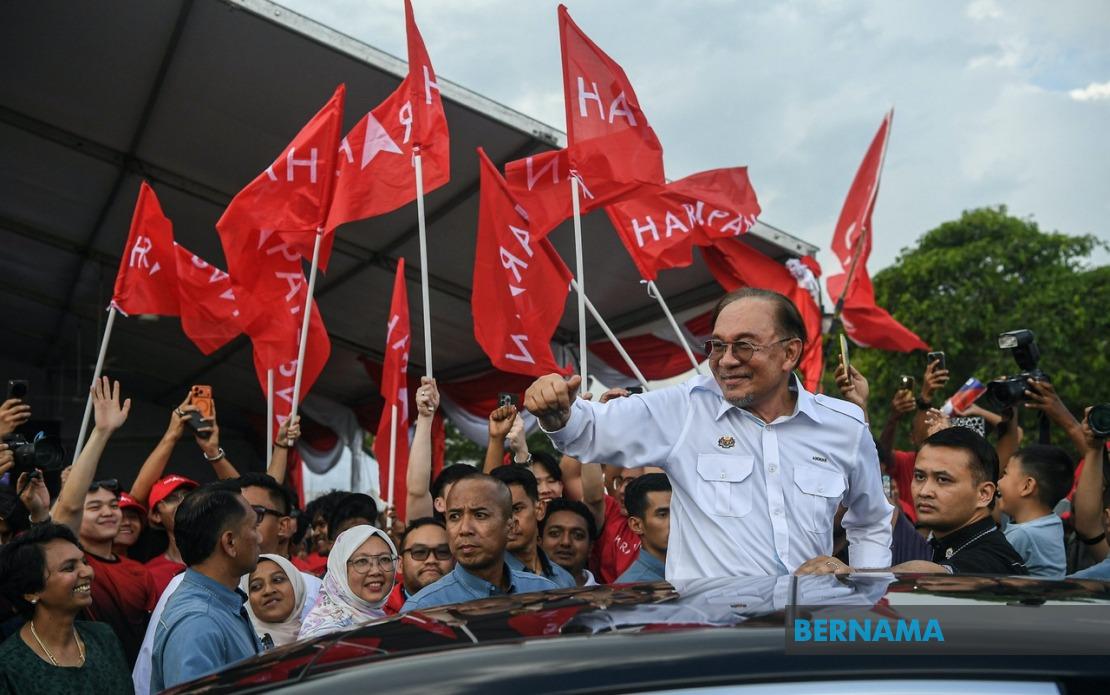
The 16th Johor State Election campaign has showcased a fascinating tension between modern digital strategy and traditional grassroots engagement. While political parties have invested heavily in social media content and online messaging platforms, a Bernama survey reveals that older voters in the state remain decidedly attached to the experience of meeting candidates in person. This preference reflects deeper assumptions about authenticity and trust that digital platforms, no matter how sophisticated, have yet to fully displace.
For senior voters across Johor's constituencies, there is something irreplaceable about the physical presence of a political candidate. A. Chandra, a 70-year-old retiree and Perling voter, articulated this sentiment plainly: attending campaign rallies offers an atmosphere of engagement and energy that livestreams simply cannot replicate. Being present allows voters to observe not just what candidates say, but how they carry themselves—their demeanour, their apparent sincerity, and the intangible sense of trustworthiness conveyed through direct interaction. These qualities matter enormously to older voters assessing whom to support in elections that occur only once every five years.
Maimunah Ismail, a 73-year-old housewife from Sedeli, captures the nuanced reality of how modern voters navigate multiple information channels simultaneously. She prefers attending campaign events because they offer clarity in understanding a candidate's message, yet she acknowledges the practical utility of social media engagement—following political developments on her mobile phone whilst managing household tasks. This flexibility has extended the reach of political campaigns to voters who might otherwise miss events entirely due to time constraints or other responsibilities. The digital sphere has not replaced traditional campaigning so much as expanded the ecosystem in which voters consume political information.
The challenge of campaign messaging has also evolved in this hybrid landscape. Fairuz Saif, a 59-year-old Kempas voter, pushes back against any suggestion that senior citizens lack digital literacy. Instead, he identifies the real bottleneck: political parties often fail to adapt their online messaging for accessibility. Digital campaigns that employ unnecessarily complex language or convoluted presentations alienate voters across all age groups. When campaigns distil their messages into simple, concise content, older voters prove willing and capable of engaging through platforms such as TikTok and Facebook. However, Saif maintains that face-to-face engagement retains a crucial advantage—candidates can answer questions directly, respond to concerns in real time, and build the interpersonal confidence that translates into voter support.
Physical limitations have paradoxically accelerated the adoption of digital campaigning among some older voters. M. Sivathramani, a 73-year-old retired civil servant with mobility constraints, has discovered that platforms like TikTok enable him to remain politically informed without navigating crowded venues or managing physical pain. Yet even he expresses the desire to attend in-person events when circumstances permit, suggesting that digital convenience supplements rather than replaces his preference for direct engagement. This pattern suggests that the shift towards digital campaigning is driven less by changing voter preferences and more by practical necessity for those facing genuine obstacles to attendance.
Working-age voters employed in demanding jobs take a more instrumental approach to campaign information gathering. Lee Lian Chen, a 58-year-old shop owner from Bukit Permai, uses social media strategically to evaluate candidates' manifestos and policy proposals before attending events to make her final assessment. Her behaviour reflects a rational voter calculus: with only one election every five years, the credibility of candidates' plans and their demonstrated capacity to deliver become paramount. Digital platforms provide efficient preliminary screening, whilst face-to-face encounters allow voters to verify sincerity and gauge implementation capability.
Academics studying electoral behaviour in Malaysia have begun to recognise that the apparent competition between digital and physical campaigning represents a false dichotomy. Dr Nazreena Mohammed Yasin, a senior lecturer at Universiti Tun Hussein Onn Malaysia's Department of Social Sciences, observes that these approaches now function as complementary strategies rather than rivals. Physical campaigns retain sentimental value—they offer voters an embodied experience of the electoral process, an atmosphere of democratic participation that abstract online content cannot entirely capture. Simultaneously, increasing numbers of older citizens now use Facebook, TikTok, and WhatsApp to monitor political developments and access live broadcasts, leveraging digital convenience without abandoning their traditional media consumption habits.
The diversity of information-seeking behaviour across generations and demographic groups underscores the necessity of multi-channel campaign strategies. Some older voters continue relying primarily on newspapers and television, channels they have trusted for decades. Others have adopted digital platforms precisely because they offer flexibility and accessibility—the ability to engage with political content on one's own schedule rather than adhering to television broadcast times or attending physical events. Working adults face genuine time constraints and mobility challenges that make social media a practical necessity rather than a preference. Understanding these distinctions allows political parties to design campaigns that reach voters where they actually are, rather than assuming uniform behaviour across age groups.
What emerges from the Johor campaign landscape is a portrait of voters increasingly adopting hybrid engagement strategies. Many now combine attendance at selected campaign events with sustained social media engagement, constructing a more complete picture of candidates and parties before casting their ballots. This mixed-method approach reflects neither digital enthusiasm nor digital resistance, but rather sophisticated navigation of available information sources. Voters recognise that social media offers breadth and convenience, whilst face-to-face encounters provide depth and personal verification. The effective campaign must therefore honour both preferences, recognising that in contemporary Malaysian elections, no single channel entirely captures voter attention or trust.
With 2.7 million voters preparing to cast ballots across the 56 constituencies in the 16th Johor State Election, the data from this survey carries practical implications for political strategists. The persistence of face-to-face campaigning's appeal suggests that candidates and parties cannot simply migrate their campaigns online in pursuit of efficiency. Older voters, who typically demonstrate higher turnout rates than younger cohorts, continue to value the irreducible experience of meeting politicians in person. Simultaneously, the growing adoption of digital platforms among senior citizens indicates that campaigns that completely neglect online strategies risk failing to reach even their most sympathetic demographic. The path forward demands investment and sophistication across both channels, recognising that in Johor and throughout Malaysia, electoral success increasingly depends on meeting voters effectively wherever they choose to engage.

