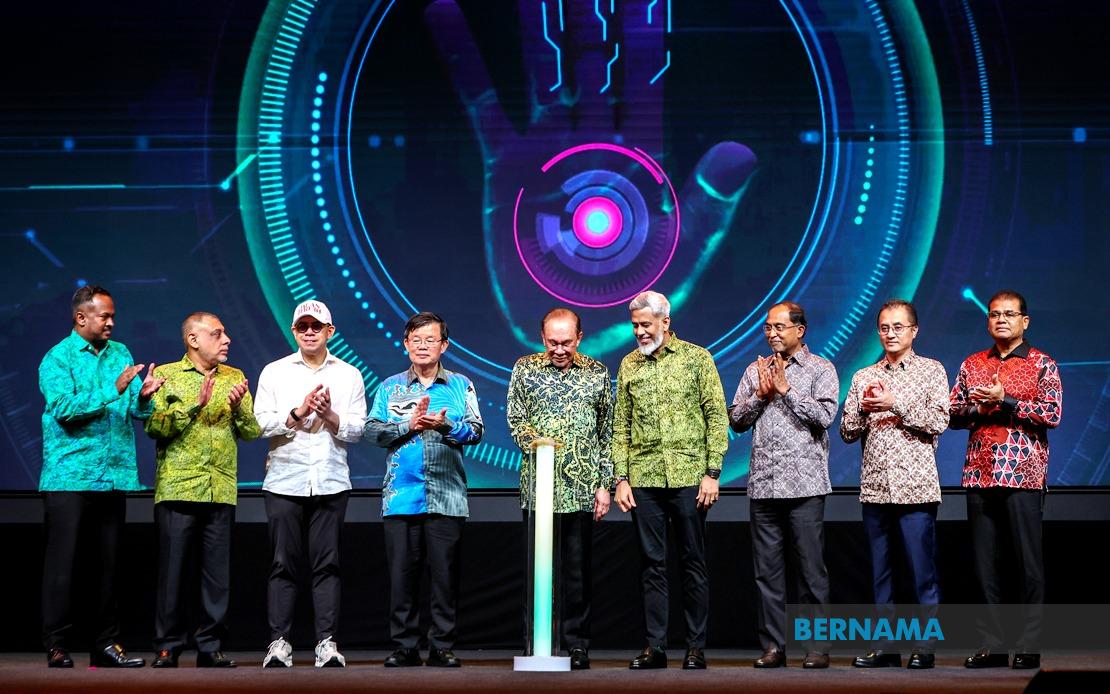
Prime Minister Datuk Seri Anwar Ibrahim has thrown his weight behind the Indian Muslim Transformational Framework 2030 (IMTF2030), a strategic initiative designed to unlock the potential of Malaysia's Indian Muslim community while simultaneously advancing the government's Malaysia MADANI development vision. Speaking at the framework's launch in Butterworth on July 24, Anwar highlighted how this organised approach to community advancement represents a pragmatic pathway to meaningful socio-economic transformation for nearly 800,000 Indian Muslims across the nation.
The IMTF2030 initiative, led by Pertubuhan Gabungan MUKMIN Nasional (MUKMIN), signals a significant shift towards structured, long-term planning within the Indian Muslim community. Rather than ad-hoc interventions, this framework establishes clear targets and measurable outcomes across multiple development pillars. Anwar's endorsement carries considerable weight, as it positions the framework not merely as a community project but as an integral component of the government's broader Malaysia MADANI agenda, which emphasises inclusive growth and the empowerment of all Malaysian communities.
In his remarks, Anwar challenged what he characterised as a defeatist mindset, asserting that the Indian Muslim community possesses the determination, capability and commitment necessary to drive transformative change. His statement reflects an understanding that minority communities sometimes internalise narratives of powerlessness, and that reimagining possibilities through structured frameworks can catalyse genuine progress. The Prime Minister's explicit acknowledgement of these attributes serves to validate community aspirations while emphasising that successful implementation requires serious, sustained effort.
The gathering in Butterworth drew significant political representation, including Penang Chief Minister Chow Kon Yeow, Minister of Higher Education Datuk Seri Dr Zambry Abdul Kadir, and Minister of Entrepreneur and Cooperatives Development Steven Sim. Their presence underscored government commitment to the initiative and signalled inter-agency coordination in supporting implementation. MUKMIN president Datuk Shahul Dawood characterised IMTF2030 as the community's first comprehensive, five-year transformation roadmap, emphasising that the framework transcends typical policy documents to embody a collective commitment to strategic thinking and collaborative action.
Central to IMTF2030's ambitions are ambitious yet grounded targets across education, entrepreneurship and economic participation. The framework aims to mobilise RM50 million for scholarships and capability development, reflecting recognition that educational advancement remains foundational to long-term community prosperity. The recently launched MUKMIN Future Leaders Scholarship has already secured commitments exceeding RM10 million, creating over 400 opportunities for talented individuals from the community to pursue higher education and professional development.
Beyond scholarships, the framework targets substantial capacity-building across the community. Plans to upskill 50,000 individuals acknowledge that economic mobility depends not only on access to education but on continuous professional development and adaptation to evolving job market demands. In an era of rapid technological change, particularly the integration of artificial intelligence and digital technologies, this emphasis on reskilling addresses real vulnerabilities that minority communities face in remaining economically competitive.
The entrepreneurship component reveals particularly ambitious economic aspirations. IMTF2030 targets the transformation of 2,500 enterprises through digitalisation, recognition that small and medium enterprises within the community need support navigating technological transitions. The development of 500 AI and digital-technology-driven enterprises suggests ambitions to position Indian Muslim entrepreneurs at the forefront of Malaysia's digital economy rather than as passive participants. Creating 50 export-ready Malaysian brands would represent a remarkable achievement in international competitiveness, though success will depend substantially on market access, financing and technical support.
The framework's broader economic objectives appear deliberately calibrated to generate meaningful wealth creation while addressing systemic inequalities. The target of RM10 billion in local supply chain procurement opportunities recognises that government spending power can be leveraged to create business opportunities for community enterprises. The projection of RM250 billion in cumulative economic value over the framework's period represents substantial wealth generation, though this figure warrants scrutiny regarding underlying assumptions and measurement methodology.
Socio-economic empowerment constitutes a crucial dimension often overlooked in purely economic frameworks. The target to uplift 10,000 families through inclusive development initiatives acknowledges that progress requires attention to those facing the greatest vulnerabilities. This approach aligns with Malaysia MADANI's emphasis on inclusive growth, ensuring that framework benefits extend beyond elite entrepreneurs to households experiencing genuine hardship. Such targeted interventions can address the structural disadvantages that perpetuate intergenerational poverty.
Anwar's insistence that the Indian Muslim community should advance its interests while respecting the rights of other ethnic groups carries important implications for Malaysia's multicultural trajectory. His framing suggests that community empowerment need not be zero-sum; rather, development initiatives can proceed through inclusive mechanisms that benefit targeted communities without triggering interethnic tensions. This messaging proves particularly significant in a nation where discussions of affirmative action and communal development occasionally generate controversy.
The successful implementation of IMTF2030 will require sustained coordination between government agencies, private sector partners and community organisations. Financing mechanisms must be clearly delineated, governance structures established, and progress monitoring systems implemented. The five-year timeframe provides adequate duration for meaningful transformation, though mid-term reviews will prove essential for course corrections based on emerging challenges or opportunities.
For Malaysia's broader development context, IMTF2030 represents an important experiment in community-led development under government support. If successfully executed, the framework could serve as a model for empowering other minority communities, demonstrating that strategic planning, adequate resourcing and political commitment can generate transformative outcomes. Conversely, implementation challenges could offer valuable lessons regarding realistic timelines and resource requirements for sustainable community development initiatives.
The framework ultimately reflects a recognition that inclusive national development requires deliberate attention to communities that have historically experienced marginalisation or underrepresentation in economic participation. By positioning Indian Muslim community advancement as complementary to Malaysia MADANI rather than contradictory to national interests, Anwar's government has created political space for ambitious, unapologetic community development. Whether IMTF2030 achieves its targets will depend fundamentally on implementation fidelity, adequate resource allocation, and sustained commitment from all stakeholders across the five-year period.

