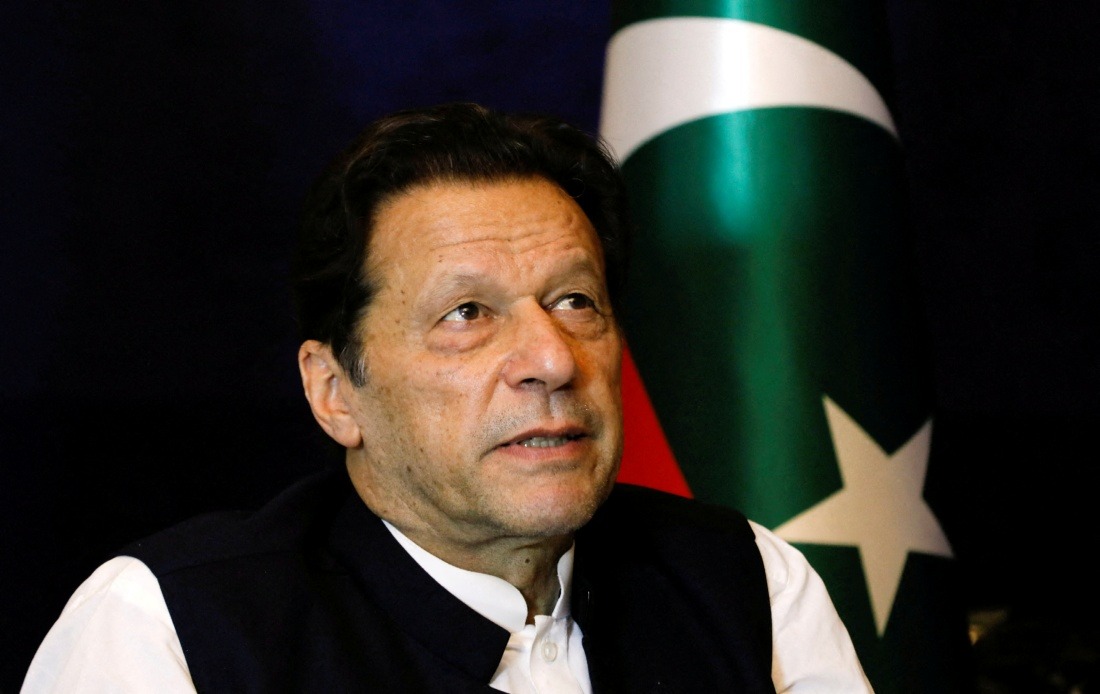
Former Pakistani Prime Minister Imran Khan has been returned to Adiala Jail in Islamabad after undergoing a comprehensive medical examination ordered by the country's Supreme Court. The 73-year-old cricket legend, who led Pakistan's 1992 World Cup victory before transitioning to politics, completed the health assessment on Friday morning and was transported back to detention at approximately 5 am local time, according to Pakistani Information Minister Attaullah Tarar.
The Supreme Court had previously directed prison authorities to facilitate Khan's transfer to Shifa International Hospital for medical evaluation. However, officials diverted the examination to the Pakistan Institute of Medical Sciences (PIMS) citing security concerns raised by Pakistan Tehreek-e-Insaf (PTI) supporters gathering outside the original hospital facility. Despite this change in venue, doctors from Shifa International Hospital were present throughout the procedure to maintain procedural integrity, ensuring the court's directive was substantially upheld.
Khan's medical evaluation involved a team of qualified specialists, including a cardiologist, ophthalmologist, and general physician, who conducted a thorough assessment of his health status. The examination team subsequently declared him medically fit, though specific clinical findings were not disclosed publicly. Throughout all stages of the medical process, Khan's sister Uzma Khan remained present, providing family oversight and support during the hospital procedures.
The detained former prime minister has remained incarcerated since August 2023, following convictions across multiple cases that Khan and the PTI party consistently characterise as politically motivated prosecutions. His detention has become a focal point of political tension in Pakistan, with supporters arguing that the legal proceedings represent an abuse of the judiciary for partisan purposes. The Supreme Court's decision to order a medical examination reflects ongoing concerns about Khan's wellbeing during his prolonged imprisonment.
The Supreme Court scheduled the next hearing in Khan's case for September 16, during which the court will review developments in his detention and legal circumstances. The court had initially permitted Khan to remain hospitalised until that date, though authorities ultimately returned him to jail following the completion of the medical checkup. This decision suggests that while the judicial system acknowledged health concerns warranting examination, officials determined that no immediate medical intervention or continued hospitalisation was necessary.
Khan's imprisonment represents a significant chapter in Pakistan's recent political history. Once celebrated as an anti-corruption crusader who mobilised mass street protests against the previous government, Khan's political fortunes reversed dramatically following his ouster from power in April 2022. The circumstances surrounding his removal from office involved complex constitutional and parliamentary manoeuvres that remain contentious, with Khan's supporters contending that the process was engineered through judicial manipulation and military influence.
The PTI's response to Khan's detention has periodically erupted into public demonstrations, creating security challenges that, as evidenced by the hospital diversion this week, continue to complicate routine administrative procedures. The party maintains that Khan's prosecution serves broader objectives of neutralising political opposition rather than pursuing legitimate criminal justice. This narrative has resonated with substantial segments of Pakistan's population, particularly younger voters who view Khan as a figure of generational change.
For Southeast Asian observers, Khan's prolonged detention illustrates the vulnerability of political leaders in South Asian democracies when they lose electoral support or offend influential institutional actors. The case demonstrates how judicial systems can be instrumentalised to marginalise opposition figures, a phenomenon that concerns democratic practitioners across the region. Malaysia has experienced its own episodes of high-profile political persecution, making Khan's situation resonant within domestic political conversations.
The medical examination episode also reveals the security dimensions complicating Khan's detention. The gathering of PTI supporters outside hospitals signals that Khan remains a potent political symbol capable of mobilising street-level activism. Authorities' willingness to alter prescribed procedures due to crowd management concerns suggests that sustaining Khan's incarceration involves ongoing logistical and security expenditures, raising questions about the long-term political sustainability of his imprisonment.
Khan's situation reflects broader patterns in Pakistani politics where power transitions frequently involve legal jeopardy for defeated leaders. Previous prime ministers, including Nawaz Sharif and Muhammad Ali Gillani, have faced prosecution following their departures from office, establishing an informal pattern where electoral defeat often precedes criminal investigation. This cycle undermines democratic stability by suggesting that political competition in Pakistan carries existential risks transcending normal democratic contestation.
As Khan's case proceeds toward its September 16 hearing, the Supreme Court faces mounting pressure to either advance meaningful judicial resolution or provide clearer justification for continued detention. The court's decision to order medical examination suggests some institutional concern about Khan's condition, yet returning him to jail after declaring him fit indicates reluctance to grant substantive relief. This middle-ground approach may reflect judicial uncertainty about the political implications of either releasing or definitively imprisoning a figure of Khan's prominence.

