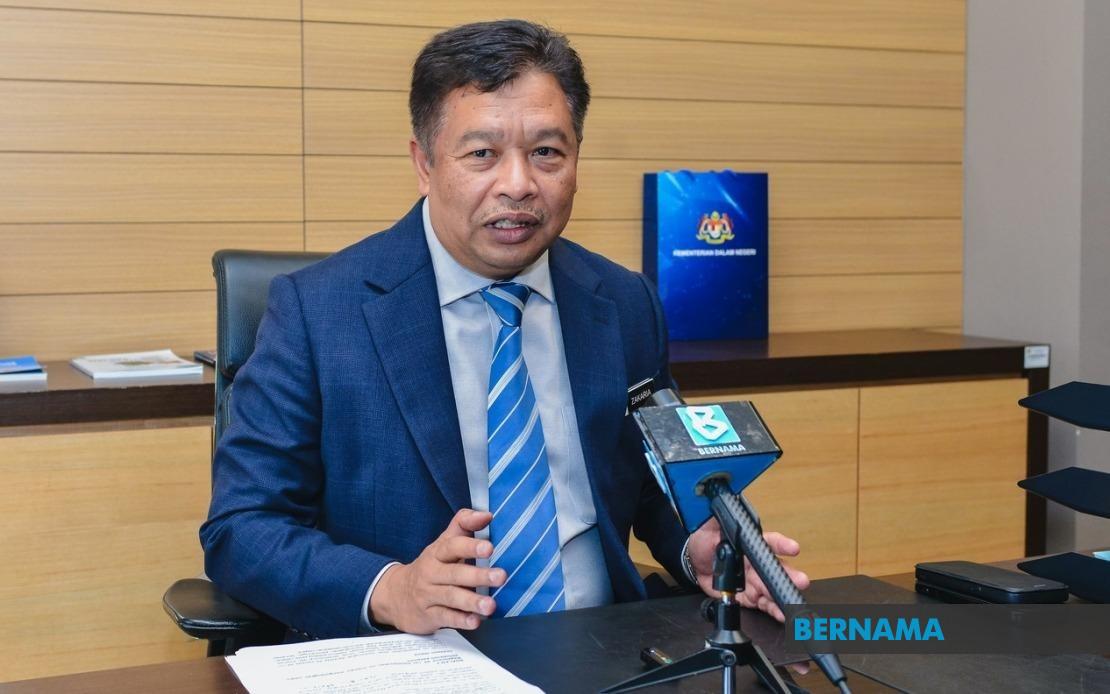
The Immigration Department has elevated its operational readiness to maximum capacity ahead of the Johor State Election, undertaking rigorous oversight of inspection infrastructure at the country's primary entry and exit points. The heightened alert level reflects the anticipated surge in cross-border movement as Malaysian voters working across the border in Singapore make their way home to cast their ballots on Saturday, July 11. Datuk Zakaria Shaaban, the department's director-general, confirmed that all systems at critical gateway facilities remain fully operational and have shown no signs of disruption during the preparatory phase.
Two major international terminals serve as the primary arteries for cross-border traffic between Malaysia and Singapore. The Sultan Iskandar Building, which straddles the connection between JB Sentral and Singapore's Woodlands checkpoint, and the Sultan Abu Bakar Complex at Tanjung Kupang via the Malaysia-Singapore Second Link form part of what international observers recognise as among the world's most heavily trafficked border facilities. Together, these gateways process roughly 300,000 individuals on an ordinary day, a volume that typically surges during periods of heightened activity such as election campaigns and public holidays. The scale of these operations underscores the logistical complexity involved in managing voter movement during an election cycle.
The Immigration Department has explicitly ruled out implementing any new technological systems for the election period, choosing instead to rely on proven existing infrastructure that has been thoroughly tested and refined through routine operations. This conservative approach prioritises stability and predictability over innovation, recognising that election day is not the appropriate occasion for experimental procedures. Zakaria explained that the department's technical personnel will maintain constant surveillance of all system performance indicators throughout the election period, with protocols established to identify and resolve any potential bottlenecks within minimal timeframes. Should the primary digital inspection systems experience any technical failure, the department stands ready to deploy manual inspection procedures immediately, ensuring that processing queues continue to move without significant delay.
The contingency planning reflects lessons learned from previous large-scale cross-border movement events and acknowledges the vulnerability of modern immigration infrastructure to unexpected technical problems. By pre-positioning technical teams and establishing clear escalation protocols, the Immigration Department aims to eliminate any scenario in which system failures prevent voters from fulfilling their electoral obligations. The maintenance of 24-hour system monitoring represents a significant deployment of human resources, demonstrating the government's commitment to removing barriers to voter participation. Immigration officials recognise that returning voters may face time constraints due to work commitments and travel scheduling, making seamless border processing essential to the integrity of the election process.
Home Minister Datuk Seri Saifuddin Nasution Ismail has provided parallel assurances at the ministerial level, committing his ministry to facilitating uncomplicated travel arrangements for Malaysian citizens employed in Singapore. The minister's public undertaking signals whole-of-government engagement with the election logistics challenge and underscores the political significance attached to enabling worker participation in the voting process. The comprehensive mitigation strategy referenced by the minister encompasses multiple layers of contingency planning, suggesting that immigration authorities have collaborated with other relevant agencies including transport and security entities to create an integrated response capability.
The Johor State Election represents a significant democratic exercise, with 172 candidates competing for representation across 56 parliamentary constituencies. Early voting commenced on July 7, allowing certain categories of voters including those with mobility constraints and essential workers to cast their ballots before the main polling day. However, the majority of the electoral body will participate in the primary voting event on Saturday, creating the predictable surge in border traffic that immigration authorities are preparing to accommodate. The election assumes additional importance within Malaysia's broader political landscape, as state-level contests serve as important indicators of public sentiment between federal election cycles.
The geographic specificity of the Johor voter challenge reflects the substantial Malaysian workforce concentration in Singapore, a phenomenon rooted in decades of economic integration between the two nations and the employment opportunities available across the causeway. Many Malaysians commute daily or work on extended rotation systems that keep them in Singapore throughout the working week, necessitating specific arrangements to enable their electoral participation. The border infrastructure connecting the two countries has evolved to handle this routine cross-border labour movement, but election periods create exceptional demand patterns that require enhanced coordination and resource allocation.
The Immigration Department's emphasis on problem-free operations on election day reflects an understanding that voter accessibility directly impacts democratic representation and public confidence in electoral processes. When citizens encounter significant obstacles in exercising their voting rights, whether due to infrastructure failures or poor planning, the legitimacy of the election outcome can become subject to question. By investing in redundant systems and standby procedures, immigration authorities are not merely addressing a logistical challenge but reinforcing the democratic principle that eligible voters should face minimal friction in accessing polling facilities.
The commitment to maintaining normal inspection protocols rather than expediting procedures demonstrates a balance between facilitating movement and maintaining security standards. Border checkpoints serve multiple functions beyond immigration processing, including customs verification and quarantine oversight. The Immigration Department's assurance that the Sultan Abu Bakar Complex and Sultan Iskandar Building inspection systems are functioning optimally indicates that no compromises on these critical security and public health functions are being contemplated. The coordination required among multiple agencies operating within these integrated complexes adds another layer of complexity to the election preparations.
For Malaysian workers in Singapore and other voters who have temporarily relocated across the border, the immigration preparations may influence their actual participation in the electoral process. When returning voters perceive that border crossings will be congested and time-consuming, they may reconsider their commitment to vote, particularly if they must return to work on Monday morning. Conversely, clear assurances of smooth processing and publicly visible preparation efforts may encourage participation among those who might otherwise abstain due to practical concerns about transit logistics. The immigration messaging therefore carries implications beyond mere operational efficiency, potentially affecting the composition and size of the voting population.
The 16th Johor State Election occurs within a context of evolving electoral practices and expanding digital governance in Malaysia. The decision to maintain existing inspection systems rather than deploy new technology suggests a preference for continuity and reliability over modernisation for this particular occasion. As Malaysian government agencies continue to integrate advanced technologies into border management and immigration processes, the experience gained from managing voter movements during major elections informs the design of future systems. Immigration authorities will likely conduct post-election analysis to identify any gaps in the current infrastructure and recommend enhancements for future elections, ensuring that democratic participation remains as frictionless as possible.

