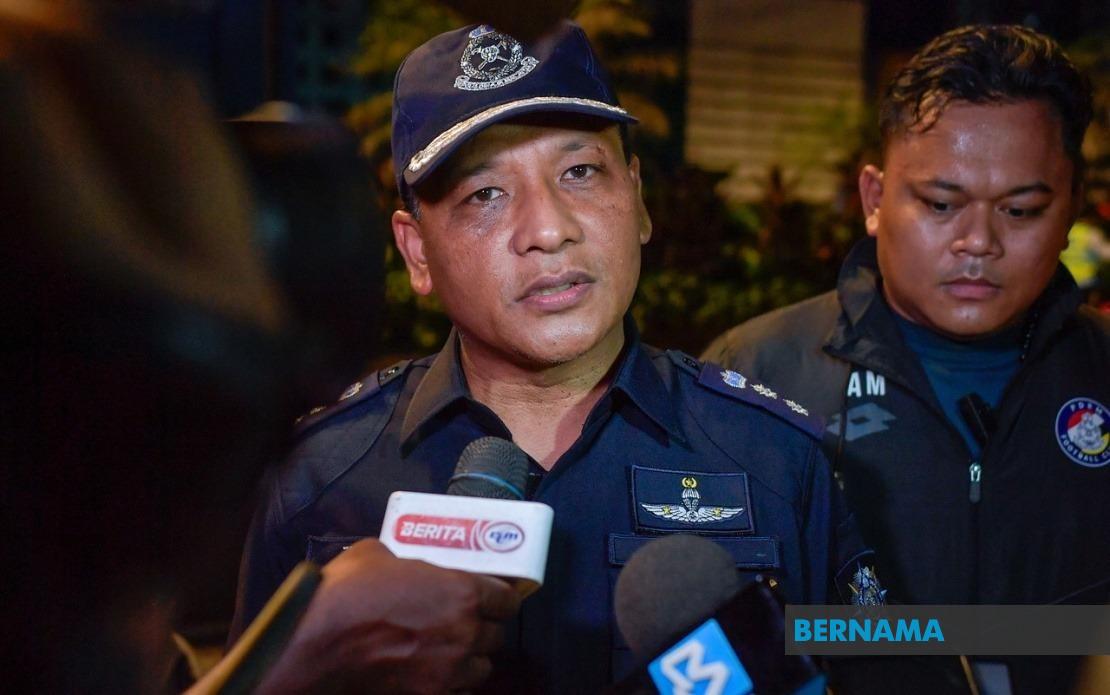
A fatal traffic collision in Kuala Lumpur involving an Immigration Department vehicle has reached a critical juncture as authorities prepare to submit their findings to the Attorney General's Chambers for potential criminal charges. The incident, which unfolded in the early hours of the morning on Jalan Sultan Ismail, resulted in the deaths of three members of the same family and left a fourth family member fighting for survival in hospital intensive care. Police announced on Monday that the comprehensive investigation file would be delivered to the Attorney General's office by Tuesday, marking the next phase in a case that has drawn significant public attention to road safety concerns involving government vehicles operating under emergency conditions.
According to ACP Mohd Zamzuri Mohd Isa, chief of the Kuala Lumpur Traffic Investigation and Enforcement Department, the move to refer the matter to the Attorney General's Chambers came after consultation between investigating officers and the Kuala Lumpur Prosecution Director. The referral represents a formal step in Malaysia's legal process, whereby serious traffic fatalities involving government vehicles must be evaluated by the AGC's General Crime and Public Order Division to determine whether criminal charges are warranted against those involved. This procedure ensures that cases of significant public concern receive appropriate legal scrutiny and that decisions on prosecution are made by senior judicial authorities rather than police alone.
The crash unfolded under circumstances that have raised questions about emergency vehicle protocols and traffic light compliance. The Kuala Lumpur Immigration Department truck, operating under emergency conditions with its beacon and siren activated, entered a busy junction while the traffic light was red. The vehicle was en route to Chow Kit to conduct an enforcement operation targeting illegal immigrants when the collision occurred at approximately 1 am. A Proton Saga sedan, lawfully proceeding through the same intersection on a green light, had no opportunity to avoid the truck, and the two vehicles collided with significant force.
The impact of the collision caused the Immigration Department truck to lose directional control, veer sharply from its intended path, and strike multiple victims and vehicles. Beyond the Proton Saga driver, the truck struck four members of a family crossing or near the junction. The deceased were identified as Shaik Mohd Firdaus Shaikh Yahya, 53, and his two daughters, Siti Nor Sazlin, 25, and Siti Darwisyah Auni, 12. His wife, Norhayati Razali, 55, suffered injuries serious enough to require treatment in the Intensive Care Unit at Kuala Lumpur Hospital. Additionally, an Inokom Matrix vehicle was struck during the incident, expanding the scale of the collision's impact on innocent parties.
Police secured remand orders for two drivers involved in the incident: the operator of the Immigration Department truck and the driver of the Proton Saga. The investigation has proceeded under Section 41(1) of the Road Transport Act 1987, which addresses dangerous or reckless driving resulting in death or serious injury. This legislative framework allows prosecutors to pursue charges ranging from careless driving to causing death by rash or negligent act, depending on the evidence gathered and the Attorney General's assessment of culpability.
The case highlights an ongoing tension in Malaysian transportation safety between the operational necessities of government agencies conducting enforcement activities and public safety regulations that apply universally. Emergency vehicles, while entitled to certain privileges such as using lights and sirens to signal priority passage, remain subject to fundamental traffic rules and duty-of-care obligations. The decision to enter a junction against the traffic signal, even with emergency equipment activated, places the burden of responsibility on the vehicle operator to ensure that proceeding under such circumstances is genuinely justified and executed with appropriate caution.
For Malaysian readers and Southeast Asian observers, this incident carries broader implications regarding the governance of emergency vehicle operations across the region. Many countries grapple with balancing the legitimate operational requirements of law enforcement and immigration agencies against the rights of ordinary citizens to safe passage on public roads. The submission of this investigation to the Attorney General's Chambers represents a significant moment in establishing clear accountability standards, potentially influencing how similar agencies across Malaysia calibrate their emergency protocols and train drivers on risk assessment and traffic law compliance.
The involvement of the Immigration Department adds another dimension to the case, as it involves an agency responsible for border and immigration enforcement. The operational urgency of conducting raids and enforcement activities is genuine, yet such operations must not come at the cost of civilian lives. The investigation and subsequent prosecution decisions will likely influence future training programs, operational guidelines, and the balance between swift enforcement action and responsible vehicle operation.
The Attorney General's Chambers now faces the task of reviewing the evidence meticulously to determine what charges, if any, are appropriate and justified by the facts. This determination will consider whether the truck driver's actions constituted negligence, recklessness, or constituted conduct falling within more serious criminal categories. The case also potentially implicates questions of institutional responsibility, operational supervision, and whether the Immigration Department's protocols for emergency vehicle use require revision. The coming weeks will reveal not only the legal consequences for those directly involved, but may also catalyse policy discussions within the department and across Malaysian government agencies about preventing similar tragedies.

