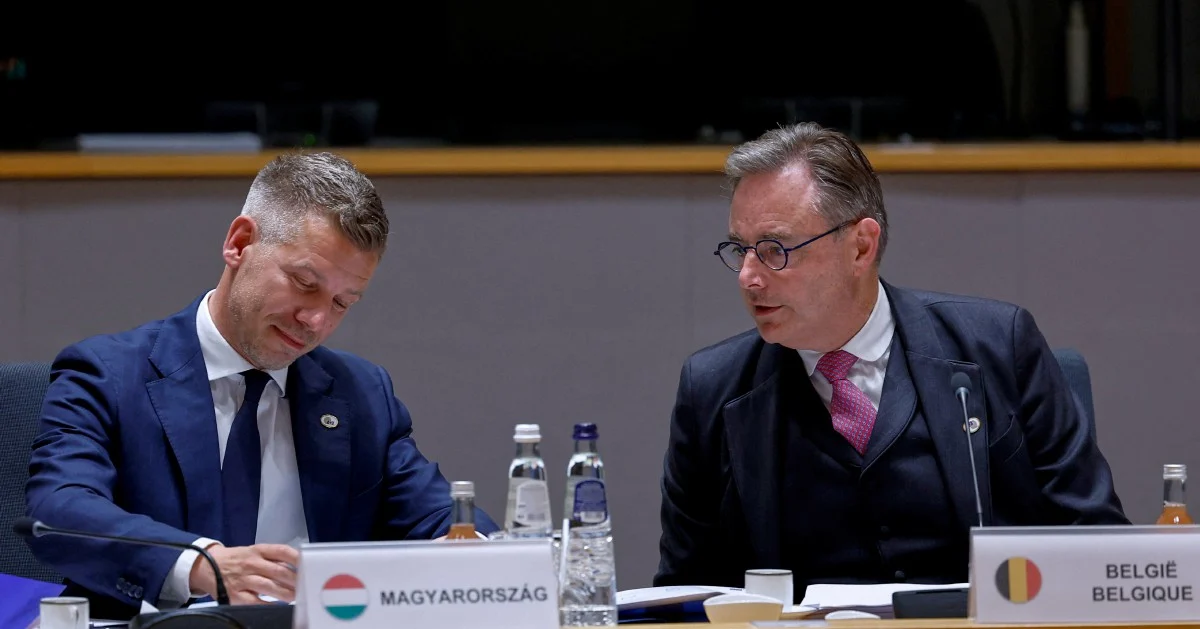
Hungarian lawmakers are poised to advance anti-corruption legislation on Tuesday as part of a broader reform agenda pursued by newly installed Prime Minister Peter Magyar. The package represents a significant policy shift aimed at addressing concerns that have prompted the European Union to withhold substantial financial support from Budapest.
The proposed measures form a cornerstone of Magyar's stated commitment to institutional reform and good governance. Since assuming office, the Prime Minister has signalled a departure from previous governance approaches, framing his administration as committed to tackling entrenched corruption and restoring international confidence in Hungarian institutions. For EU policymakers, these legislative steps carry substantial weight in determining whether to release billions of euros in funds that have been held pending improvements in rule of law and anti-corruption standards.
Hungary's relationship with Brussels has grown increasingly strained over allegations of systemic corruption and concerns about judicial independence. The EU's withholding of funds—including disbursements from the Recovery and Resilience Facility and other budget mechanisms—represents one of the most visible consequences of this deterioration. By advancing anti-corruption legislation now, Magyar's government is signalling that it takes these international pressures seriously and is prepared to undertake genuine institutional change.
The stakes are extraordinarily high for Budapest's fiscal outlook. Hungary, like other Central European states, relies significantly on EU structural funds and development grants to support infrastructure projects, social programmes, and economic development initiatives. The frozen allocations represent a material constraint on the government's budgetary flexibility and capacity to invest in critical sectors. For ordinary Hungarians, the blocked funds translate into delayed projects, reduced public services, and economic uncertainty.
Magyar's reform drive extends beyond symbolic gestures. The anti-corruption measures under consideration are designed to strengthen institutional checks, enhance transparency in public procurement, and impose stricter oversight of government spending. These are precisely the areas where the EU has expressed systematic concern, and where previous Hungarian administrations faced international criticism. The scope and rigour of these reforms will likely determine whether EU officials view them as credible commitments or merely tactical manoeuvres to appease Brussels temporarily.
The political calculus for EU member states is equally complex. Several EU governments have grown frustrated with Hungary's governance trajectory and have backed enforcement mechanisms to pressure compliance with bloc-wide standards. At the same time, Hungary maintains considerable leverage within EU decision-making structures, and some member states prioritise maintaining broader strategic relationships. The question of whether anti-corruption measures are sufficiently robust therefore intersects with broader diplomatic considerations among EU capitals.
For Southeast Asian observers, Hungary's predicament offers instructive parallels regarding the international dimensions of governance. As countries throughout the region navigate relationships with developed economies and participate in multilateral institutions, the leverage that wealthy partners can exercise through conditional aid remains highly relevant. Hungary's situation demonstrates both the vulnerability of smaller member states within international frameworks and the potential political cost of governance failures that trigger external accountability mechanisms.
Magyar's administration must balance domestic political considerations against external pressure. Anti-corruption measures that are too stringent risk provoking resistance from entrenched interests within Hungary's bureaucracy and business community. Conversely, reforms that appear insufficient will likely fail to satisfy EU skeptics who question whether genuine change is underway. This tension between reassuring international partners and maintaining domestic political viability characterises many transitional governance situations.
The timing of Tuesday's parliamentary vote reflects urgency on both sides. Hungary's government needs tangible progress to demonstrate to EU counterparts that reform is genuinely advancing, while Brussels requires evidence of serious institutional change before committing to release funds that EU taxpayers ultimately underwrite. The legislative outcome will provide the first major test of whether Magyar's reform agenda represents meaningful change or represents primarily rhetorical repositioning.
Regional implications extend beyond Hungary itself. Other Central European and Balkan states that have similarly experienced EU scrutiny and sanctions regarding rule of law standards will observe how Budapest's strategy plays out. If anti-corruption measures successfully facilitate the release of withheld funds, other countries facing similar pressures may emulate this approach. Conversely, if reforms prove insufficient to satisfy EU requirements, the message to other member states attempting to navigate similar dynamics would be starkly different.
The stakes for Magyar personally are also substantial. As a newly installed leader, his ability to deliver on anti-corruption promises and restore Hungary's standing within the EU framework will shape his political trajectory and define his administration's credibility. Success in this domain could provide momentum for other reforms, while failure would undermine his authority domestically and internationally.
Looking forward, observers across Europe and beyond will watch closely how the EU responds to Hungary's legislative initiatives. Whether the bloc accepts these measures as sufficiently rigorous, demands additional reforms, or adopts a more gradualist approach to releasing funds will carry implications extending far beyond Budapest's government buildings. The unfolding dynamic between Hungary and Brussels remains a crucial test case for how international institutions enforce governance standards and how smaller member states navigate pressure from more powerful partners.

