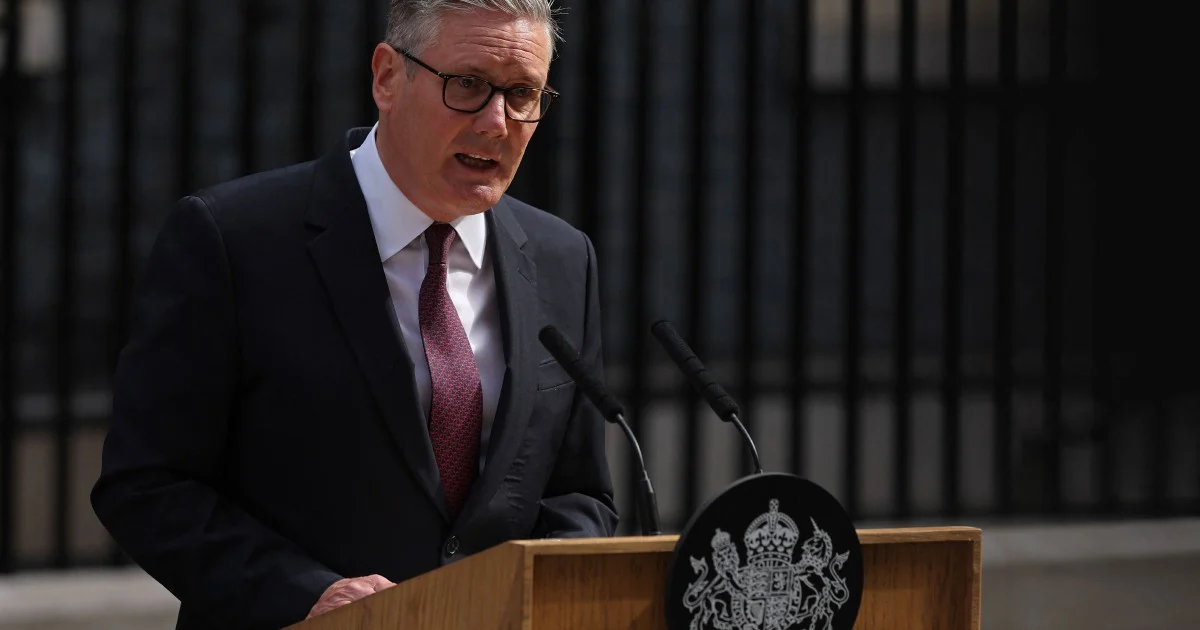
Prime Minister Keir Starmer's announcement on Monday that he intends to step down from his post marks another chapter in Britain's turbulent political landscape. With the new leader expected to take office before parliament reconvenes in September, the United Kingdom faces the prospect of its seventh prime ministerial transition within ten years—a sobering testament to deepening divisions within Westminster and growing institutional strain. The succession process now set in motion will determine not only the direction of British governance but also signal how the Labour Party intends to address the mounting pressures that precipitated Starmer's decision.
The mechanism for selecting a new British prime minister differs fundamentally from the formal electoral processes used in many other democracies. Rather than a nationwide popular vote or parliamentary election in the traditional sense, the process unfolds within the governing party itself. Since the Labour Party currently holds a majority in the House of Commons, its members will effectively determine who governs Britain. This internal party mechanism has become the de facto method for prime ministerial succession in the United Kingdom, reflecting the parliamentary rather than presidential nature of British politics.
Within the Labour Party, the leadership selection follows a structured but competitive framework. Any member of parliament from the Labour benches may declare their candidacy, though they must secure support from a minimum threshold of fellow MPs before their name appears on the ballot. This nomination requirement, typically set at around 10 to 15 per cent of the parliamentary group depending on party rules at the time, effectively filters out fringe candidates and ensures that frontrunners command meaningful support among their legislative peers. The process thus combines grassroots democratic elements with elite gatekeeping mechanisms that shape the candidate field.
Once candidates are nominated, the selection widens to include the broader Labour Party membership. All registered Labour members across the country are entitled to vote, making it a genuinely inclusive democratic exercise that extends beyond Westminster's corridors. This expansion of the electorate to party members fundamentally differs from the instant-runoff voting system used in many other Labour leadership contests globally and reflects the party's commitment to member participation. Candidates campaign vigorously during this phase, visiting constituencies, addressing party conferences, and making their case to members who will ultimately determine the outcome.
The voting mechanism itself employs ranked-choice balloting, allowing members to indicate preferences across multiple candidates. Should no candidate secure an outright majority on the first count, the lowest-polling contenders are progressively eliminated and their votes redistributed according to members' secondary preferences. This system encourages coalition-building and requires winners to demonstrate broader appeal rather than merely winning a plurality of first-preference votes. The transparent counting process typically takes place over several weeks, during which the identity of the next prime minister gradually becomes apparent to the political world and media observers.
The September return of parliament deadline creates a temporal constraint that shapes the entire process. Party officials must complete all nomination phases, campaign periods, and voting tabulations before legislators reassemble for the new session. This schedule compresses what might otherwise be a leisurely transition period into several weeks of intensive political activity. For international observers and Malaysian readers monitoring British political developments, this accelerated timeline underscores the urgency with which the Labour Party must resolve its leadership question and restore governance momentum.
The implications of Starmer's departure extend beyond mere procedural matters. His resignation reflects deeper fractures within the Labour government, including policy disagreements, backbench rebellions, or public confidence erosion that made his continued leadership untenable. The identity of his successor will signal whether the party intends to shift direction, consolidate current strategies, or pursue entirely new policy priorities. On issues ranging from economic policy and public service delivery to Britain's international role and relationship with Europe, the incoming leader's background and stated positions will reshape governmental direction.
For Southeast Asian observers, Britain's leadership instability carries practical consequences. The UK remains an important diplomatic partner, significant investor, and participant in regional security frameworks including AUKUS and various bilateral trade discussions. Frequent prime ministerial changes potentially disrupt continuity in foreign policy, alter negotiating positions on trade agreements, and affect the consistency of Britain's engagement with ASEAN nations. Malaysia, as a major Southeast Asian economy and current ASEAN chair or rotating participant in regional structures, must adapt to and anticipate potential shifts in British policy orientation resulting from new leadership.
The broader context of seven prime ministers in ten years reflects systemic vulnerabilities in British political culture. Whether attributable to social media amplification of backbench dissent, rising demands for responsiveness from increasingly fragmented electorates, or fundamental disagreements about national direction, the frequency of leadership changes suggests structural problems extending beyond individual leaders' competence or popularity. This pattern raises questions about whether institutional reforms—such as fixed-term parliaments, formal confidence mechanisms, or enhanced party discipline—might provide greater stability going forward.
The Labour Party's specific challenge involves selecting a leader capable of unifying fractious elements within its parliamentary caucus and broader membership while simultaneously restoring public confidence and governing effectiveness. Candidates must address both internal party concerns and external voter perceptions, crafting messages that appeal to activists while remaining credible with the general electorate ahead of future electoral contests. The winner will inherit not only immediate policy challenges but also the longer-term task of stabilising what has become an unpredictably volatile political environment.
As the succession process unfolds across the coming weeks, British political observers and international analysts will scrutinise candidate positions on key issues, their relationship histories with existing power structures, and their demonstrated capacity for leadership under pressure. The selection of Starmer's successor represents more than a mere changing of faces at Number 10 Downing Street; it constitutes a defining moment for the Labour Party's political project and Britain's role in an increasingly complex international environment. For Malaysia and other regional partners, the outcome carries implications for bilateral relationships, trade negotiations, and the broader architecture of Indo-Pacific security and cooperation.

