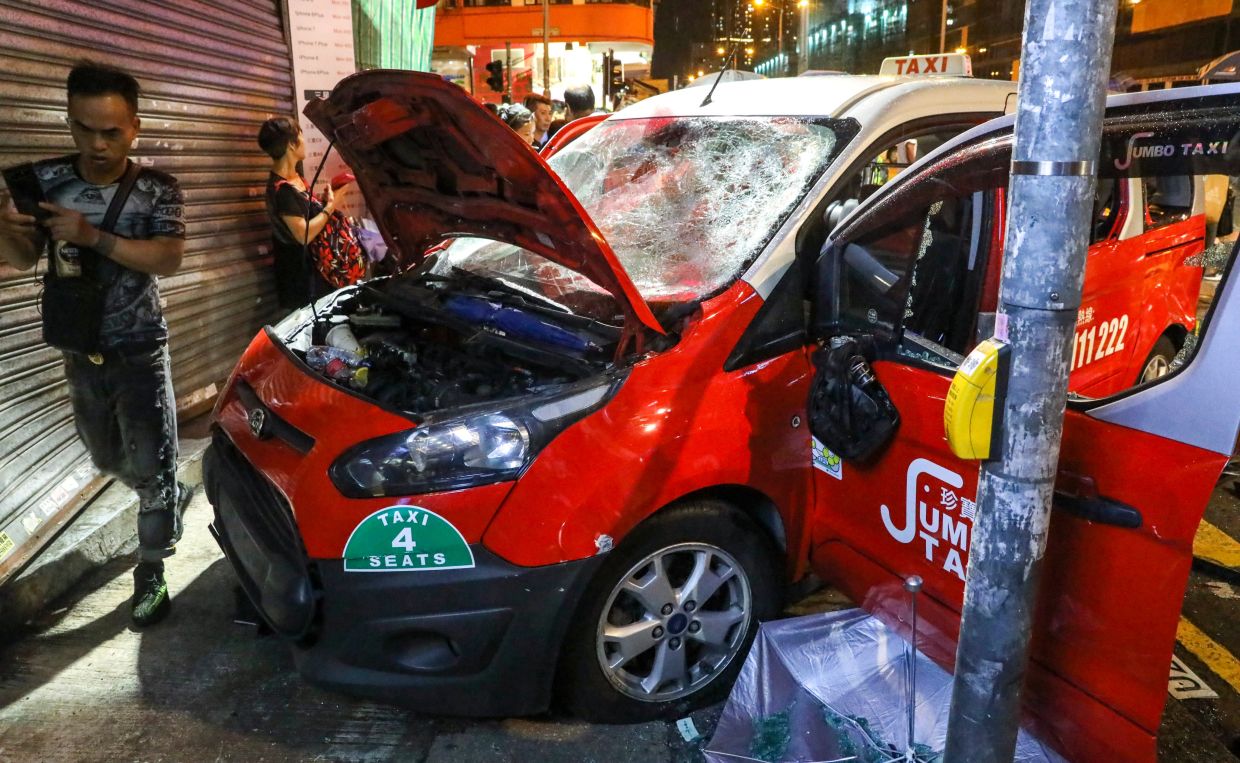
Park Hoi-lam, a kindergarten clerk in Hong Kong's Tuen Mun district, is pursuing a personal injury lawsuit that highlights the lingering physical and emotional toll of the city's 2019 protest movement. During proceedings this week before Justice Simon Leung Chun-man, her legal team called for the court to hold taxi driver Henry Cheng Kwok-chuen liable for HK$8.4 million (US$1.07 million) in damages following the October 6, 2019 incident in Sham Shui Po when his vehicle mounted a pavement and struck her and another woman.
The circumstances surrounding the collision paint a picture of a day that began ordinarily before escalating into violence. Park had been travelling to Tsim Sha Tsui by bus that afternoon when road closures forced her to disembark in Sham Shui Po. After discovering that railway services had also been suspended, she and friends decided to walk towards Mong Kok. Having moved too quickly and become separated from her companions, Park found herself in an increasingly crowded gathering that, she testified, remained peaceful until a sudden commotion erupted near Cheng's taxi.
Plaintiff's counsel Susanna Leong contended that the accident itself demonstrated the driver's negligence and failure to exercise reasonable care toward pedestrians in a busy area. She emphasized that Cheng neither sounded his horn nor attempted to brake before his vehicle struck the plaintiff and her companion. This failure to take basic precautionary measures, she argued, distinguished the driver's conduct from the defensive argument that protesters later attacked him—a distinction critical to assessing liability for the collision itself rather than subsequent events.
The defence presented an entirely different narrative, one in which Cheng emerged as an unwilling participant in the day's violence. Defence counsel Ashok Sakhrani stressed that their client was himself targeted for attack, subjected to what they characterized as a vicious assault involving metal rods and hard objects while merely attempting to conduct his normal working day. This framing sought to recast the incident as a clash between a working professional and an angry crowd, rather than an instance of reckless driving endangering pedestrians.
Defence lawyers raised a broader argument about the nature of seeking recompense through courts. They contended that pursuing damages from Cheng—whom they positioned as another victim of the violence—represented an attempt to obtain justice through the courts from someone who had himself suffered harm. This argument implicitly challenged whether civil litigation was the appropriate mechanism for addressing injuries sustained during protest-related chaos, though it sidestepped the core question of whether Cheng's driving actions met accepted standards of care.
Park's testimony provided detailed account of her injuries and their persistent impact on daily functioning. The taxi struck her at what she described as very high speed, resulting in serious damage to her lower limbs that required seven operations within three months. Following her discharge on January 18, 2020, she needed ongoing outpatient therapy. Years later, she continues to experience significant knee pain that restricts her mobility to roughly an hour of walking before requiring rest.
The practical limitations Park now faces illustrate how protest-era injuries continue reverberating through victims' lives. In her current role as a kindergarten clerk near her Tuen Mun residence, she cannot lift heavy objects or comfort distressed toddlers by carrying them—fundamental job requirements that her pre-injury self could manage without difficulty. A cosmetic surgeon has recommended reconstructive surgery to address scars on her legs, a procedure Park cannot afford. Medical professionals have advised that her condition will not improve further despite two surgeries after discharge, and she faces possible knee replacement surgery in future years.
The defence strategy included an attempt to undermine Park's credibility by questioning her decision to bring legal representation when providing a police statement in March 2020, nine months after the incident. Park's response—that she was protecting her own interests—was straightforward, and she denied any protest involvement or concerns about legal consequences. This line of questioning reflected a broader defence tactic attempting to suggest that Park may have had motivations beyond straightforward injury compensation.
A critical point of contention emerged around the nature of Park's functional recovery. Surveillance footage obtained by a private detective agency showed Park shopping and dining after work, evidence the defence cited as demonstration that she led a normal life with manageable walking capacity. Park's response proved more nuanced than the defence footage suggested. She questioned whether occasional shopping and dining—activities any person must perform to sustain daily existence—genuinely constituted evidence of living a meaningful life, implicitly arguing that the footage captured only superficial glimpses of her existence while obscuring chronic pain, emotional distress, and the loss of professional capabilities.
This legal challenge sits within Hong Kong's evolving relationship with accountability for injuries sustained during the turbulent 2019 period. The trial will determine whether courts recognize a distinction between collateral violence directed at a driver and the prior question of whether that driver exercised reasonable care toward pedestrians. The outcome will likely influence how Hong Kong courts navigate similar cases where protest-related chaos creates multiple injury victims with competing claims to compensation and justice.
For Malaysian and broader Southeast Asian readers, the case underscores how political upheaval creates long-term personal costs that extend far beyond immediate headlines. Park's struggle to afford reconstructive surgery and her loss of professional function illustrate how ordinary citizens—uninvolved in organizing or leading protests—become permanently altered by circumstances beyond their control. The legal dispute between two individuals harmed in the chaos raises uncomfortable questions about who ultimately bears responsibility when political events create collateral damage among bystanders.

