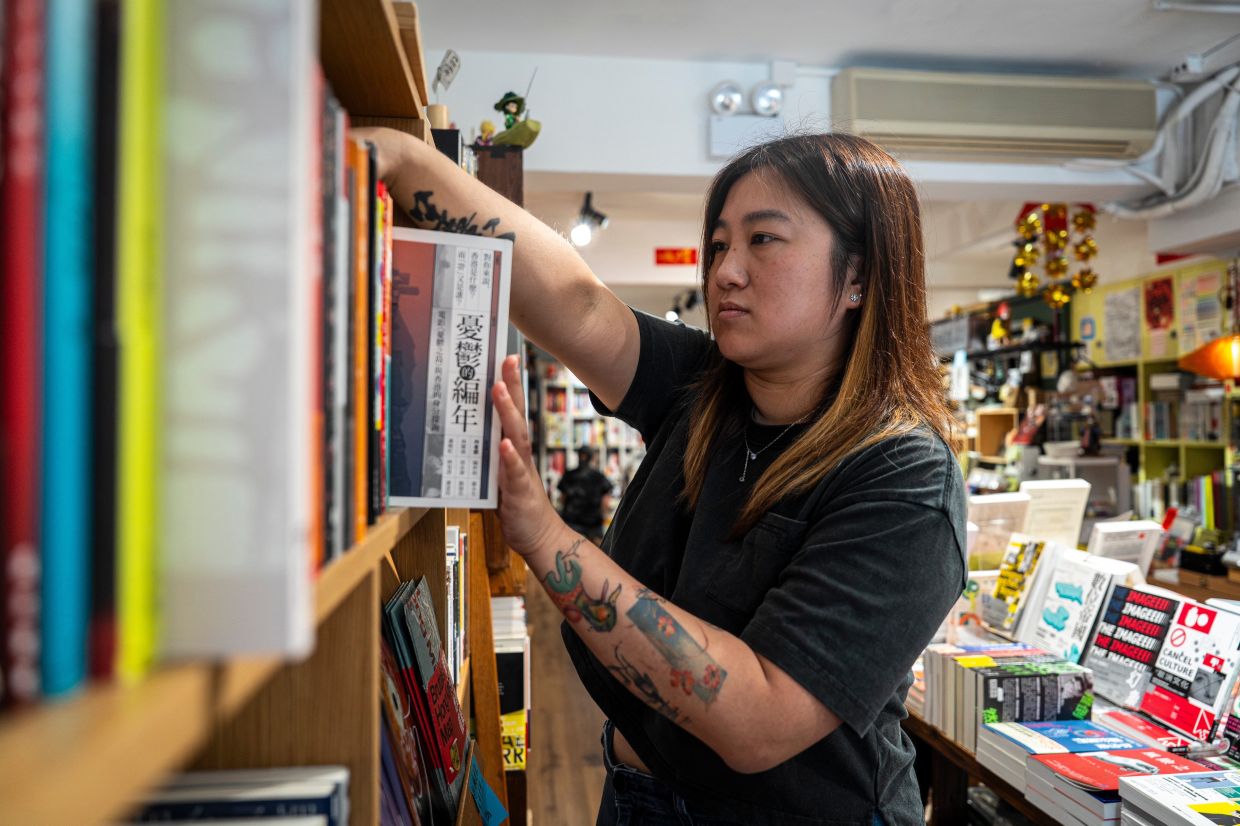
Hong Kong police have arrested two people on suspicion of selling seditious publications and accepting funds from foreign political entities, with unconfirmed reports suggesting one detainee is Leticia Wong, the pro-democracy owner of Hunter Bookstore in Sham Shui Po district. The arrests, made on Wednesday, represent another significant enforcement action under Hong Kong's 2024 national security law, though authorities have not officially confirmed the identities of those taken into custody. The timing comes just over a week before July 1, when the city marks the 29th anniversary of its 1997 return to Chinese sovereignty, a date often symbolising broader concerns about Hong Kong's autonomy and freedoms.
Wong, a former district councillor known for her vocal support of democratic causes, has maintained her prominence as an independent voice even as many prominent pro-democracy activists have faced imprisonment following the 2019 mass protests. If the media reports prove accurate, her detention would underscore how enforcement of national security provisions has expanded beyond high-profile political figures to include those managing cultural and intellectual spaces. The bookstore has become a symbol of resistance to what critics characterise as increasing restrictions on free expression, hosting events and stocking publications that challenge government narratives.
According to the Hong Kong government's statement issued Thursday, the two detained individuals manage the shop where they allegedly displayed and sold materials deemed seditious in nature. Police investigations claim the pair distributed publications inciting hatred toward the Hong Kong government, its judiciary, and law enforcement bodies. The allegations also include receiving remittances believed to originate from foreign political organisations, a charge that reflects authorities' concern about international support networks for dissent. However, the government statement provides no specifics regarding which publications or organisations were involved, leaving questions about the precise nature of the accusations.
The bookstore itself has faced sustained governmental pressure over an extended period. Wong previously disclosed that between July 2022 and June 2025 alone, authorities took action against her establishment on 92 separate occasions, ranging from inspections and visible police patrols outside the premises to warning letters alleging various violations. This pattern of intervention illustrates how enforcement can operate through cumulative administrative pressure rather than single dramatic arrests. Last year, a pro-Beijing newspaper characterised an independent book fair hosted at the bookstore as embodying "soft resistance," highlighting the venue's plan to sell a biography of jailed pro-democracy entrepreneur Jimmy Lai, whose detention has drawn international attention.
The Hong Kong authorities justify their enforcement through national security rationales, maintaining that both the 2024 law and related security measures are essential for maintaining public order and protecting the city's stability. Officials continue to assert that freedom of speech remains protected, a claim disputed by press freedom organisations and international commentators who document increasingly narrow boundaries for expression, particularly regarding political and social criticism. This fundamental disagreement over what constitutes legitimate speech versus sedition runs through every enforcement action.
The arrest follows a similar police operation in March targeting another independent bookstore, where the owner and staff were detained on suspicion of selling seditious materials, notably including the same Jimmy Lai biography. Those individuals were subsequently released on bail, though the arrest and detention process itself carries significant reputational and operational consequences for booksellers and cultural practitioners. The repeated focus on biographical and political literature suggests authorities are systematically targeting materials presenting alternative historical narratives or critiques of governance.
For Malaysia and other Southeast Asian nations, Hong Kong's security law enforcement represents a cautionary example of how rapidly institutional protections for civil liberties can erode once comprehensive security legislation takes effect. The mechanisms being deployed in Hong Kong—administrative harassment, selective prosecution, and foreign funding allegations—have appeared elsewhere in the region, making developments in the city relevant to broader questions about democratic space across Asia. Malaysian journalists, publishers, and civil society observers have tracked these developments closely, aware that similar legislative frameworks exist domestically.
The international dimension of these arrests warrants consideration, as accusations of foreign funding have become a standard element in prosecutions under national security laws across multiple Asian jurisdictions. The vagueness surrounding which organisations allegedly provided support creates ambiguity that can chill international civil society engagement and cultural exchange. For regional publishers and cultural institutions, the Hong Kong precedent suggests increased caution regarding any perceived international connections.
Wong's case is particularly significant because she represents a category of activist—neither a prominent political figure nor an underground organiser, but rather someone operating within ostensibly legal commercial and cultural spaces. Her bookstore functions as a meeting point for like-minded individuals and a repository of intellectual resources that authorities apparently view as threatening to political stability. The detention of such middling figures arguably represents a more sophisticated enforcement strategy than targeting only the most visible dissidents.
The lack of official confirmation regarding the identities of those arrested, combined with the absence of specific details about alleged seditious content, reflects how these security operations proceed with limited transparency. This opacity prevents meaningful public debate about whether actual threat to stability has been demonstrated or whether enforcement reflects political preference masquerading as security necessity. Civil society groups and international organisations monitoring Hong Kong's situation have expressed concern that the breadth of sedition provisions allows authorities to prosecute expression that in other democracies would receive constitutional protection.
Looking forward, these arrests will likely influence behaviour among Hong Kong's remaining independent booksellers, publishers, and cultural workers. The cumulative effect of enforcement—whether through detention, bail conditions, or sustained administrative pressure—functions as a suppressant on risk-taking, even absent formal censorship. For anyone engaged with literature, publishing, or intellectual exchange in Hong Kong, the operational environment has demonstrably narrowed, with consequences extending beyond immediate detainees to broader institutional self-restraint.

