A coordinated police operation has resulted in the arrest of seven suspects within hours of a brazen daylight robbery at Hong Kong International Airport, in which a visitor from Indonesia was violently attacked and relieved of gold bars valued at HK$7 million. The seven individuals, comprising four men and three women all between the ages of 20 and 39, were taken into custody on suspicion of conspiracy to commit robbery and abetting in criminal activity, with authorities announcing the breakthrough within 48 hours of the June 18 incident becoming public knowledge.
The theft took place in the airport's car park as the victim, who had recently arrived on a flight from Bali, made his way to retrieve his vehicle. The man had been entrusted with six gold bars by a mainland Chinese businessman, making the cargo both valuable and time-sensitive. His arrival appeared to have been no secret, as the coordinated nature of the attack suggests the perpetrators possessed detailed intelligence about his movements, his flight schedule, and precisely which car park section he would be accessing.
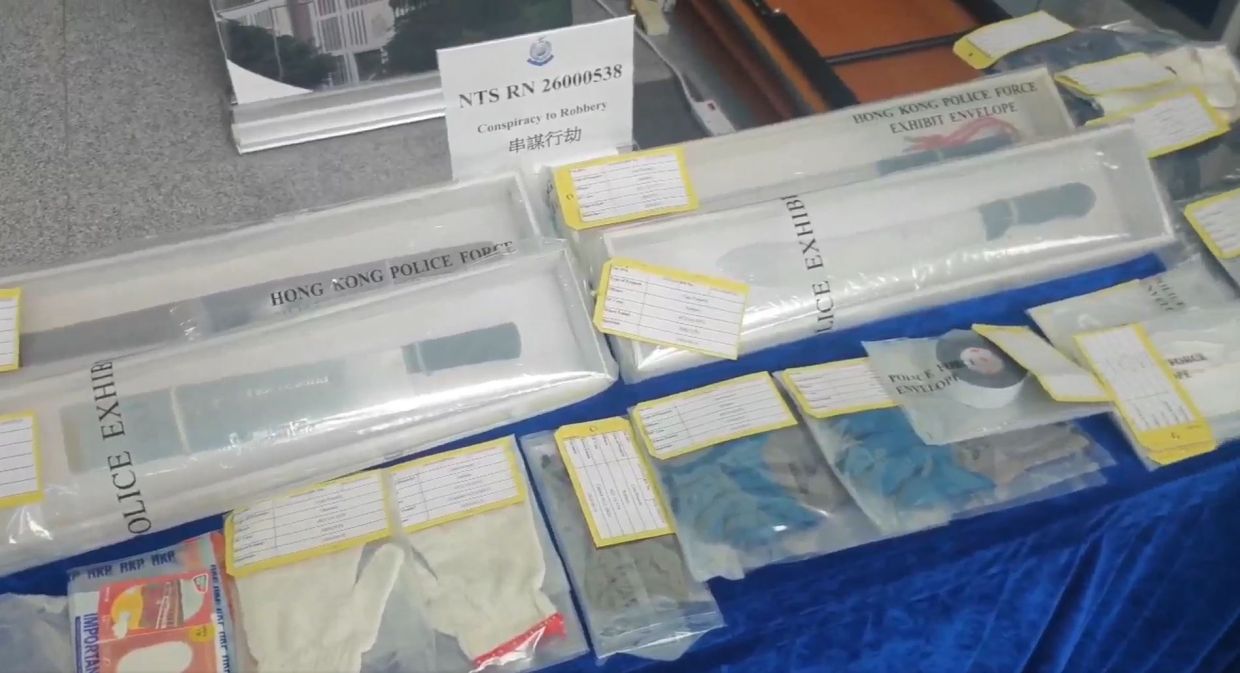
Three assailants, their identities concealed behind masks, emerged to intercept the victim during his walk through car park 3. The attackers were equipped with knives, which they wielded with brutal efficiency, inflicting stab wounds on the victim's left hand and foot as they fought to secure the backpack containing the precious cargo. The assault was swift and decisive; once the robbers had obtained their target, they fled the scene in a seven-seater vehicle, leaving the injured man behind.
The victim's injuries, while serious, were not life-threatening. He was transported to Princess Margaret Hospital where medical staff confirmed his condition had stabilised. Despite suffering penetrating wounds to both his hand and foot, the victim survived the ordeal without requiring emergency surgery, though the psychological toll of such a violent encounter remains unknown.
Investigators working on the case moved with considerable speed and efficiency. Within the first 12 hours following the reported robbery, four of the seven arrested individuals had already been taken into custody. The police recovery operation proved equally swift, with the vehicle used as the getaway vehicle subsequently located in Tsuen Wan, along with the knives that had been used in the attack. This rapid recovery of physical evidence has likely strengthened the case against those detained.
A significant complication in the investigation emerged when authorities suggested that at least some of the perpetrators involved in the robbery may have already absconded to the Chinese mainland. Police acknowledged they have requested assistance from mainland law enforcement bodies to trace and apprehend those suspects who remain at large. This cross-border dimension adds complexity to an already intricate investigation and suggests the robbery may have connections to organised criminal networks spanning Hong Kong and mainland China.
Background checks on the detained suspects have revealed concerning associations. Several of those arrested possess documented links to triad organisations, the secretive criminal syndicates that have long operated throughout Hong Kong and southern China. The involvement of individuals with triad connections raises questions about whether this robbery was orchestrated by a larger criminal enterprise rather than opportunistic street criminals.
Particularly troubling to police is the question of how the perpetrators obtained their operational intelligence. The precision with which the attack was executed—knowing not just that the victim would arrive that day, but the specific car park section he would use—strongly suggests inside information. Investigators have indicated that an "insider" may have been instrumental in planning the heist, potentially someone with access to airport operations or connections to the intended recipient of the gold bars on the mainland. This hypothesis would elevate the case from a street robbery to a more sophisticated theft operation involving collusion among multiple parties.
The incident has exposed vulnerabilities in airport security protocols, particularly regarding the movement of high-value cargo through publicly accessible areas. While Hong Kong International Airport maintains extensive security infrastructure, the car parks represent a grey zone where civilian vehicles and passengers move with relative freedom. The successful execution of this robbery in broad daylight raises questions about surveillance coverage, security patrols, and emergency response procedures in these areas.
From a regional perspective, this case illustrates the persistent threat posed by organised crime networks operating across Southeast Asia and Greater China. Gold, being a portable store of value with global market demand and minimal traceability compared to currency or jewellery, remains an attractive target for criminal organisations. Trafficking stolen gold through Southeast Asian ports and markets has become increasingly common, with organisations exploiting loose enforcement and the region's role as a transshipment hub.
The involvement of a victim arriving from Bali also underscores how modern crime networks operate across jurisdictional boundaries. Indonesian-Hong Kong travel corridors are well-established routes for business and tourism, but they equally present opportunities for criminals to move goods and execute sophisticated thefts that span multiple countries. This cross-border dimension makes investigation and prosecution considerably more challenging for regional law enforcement agencies.
As the investigation continues, authorities face the twin challenges of locating suspects believed to have fled mainland and determining the full extent of any insider involvement. The case will likely have ramifications beyond Hong Kong, potentially prompting coordinated reviews of security practices at major transportation hubs throughout Southeast Asia, while also serving as a reminder of the ongoing threat posed by transnational organised crime to both businesses and travellers in the region.

