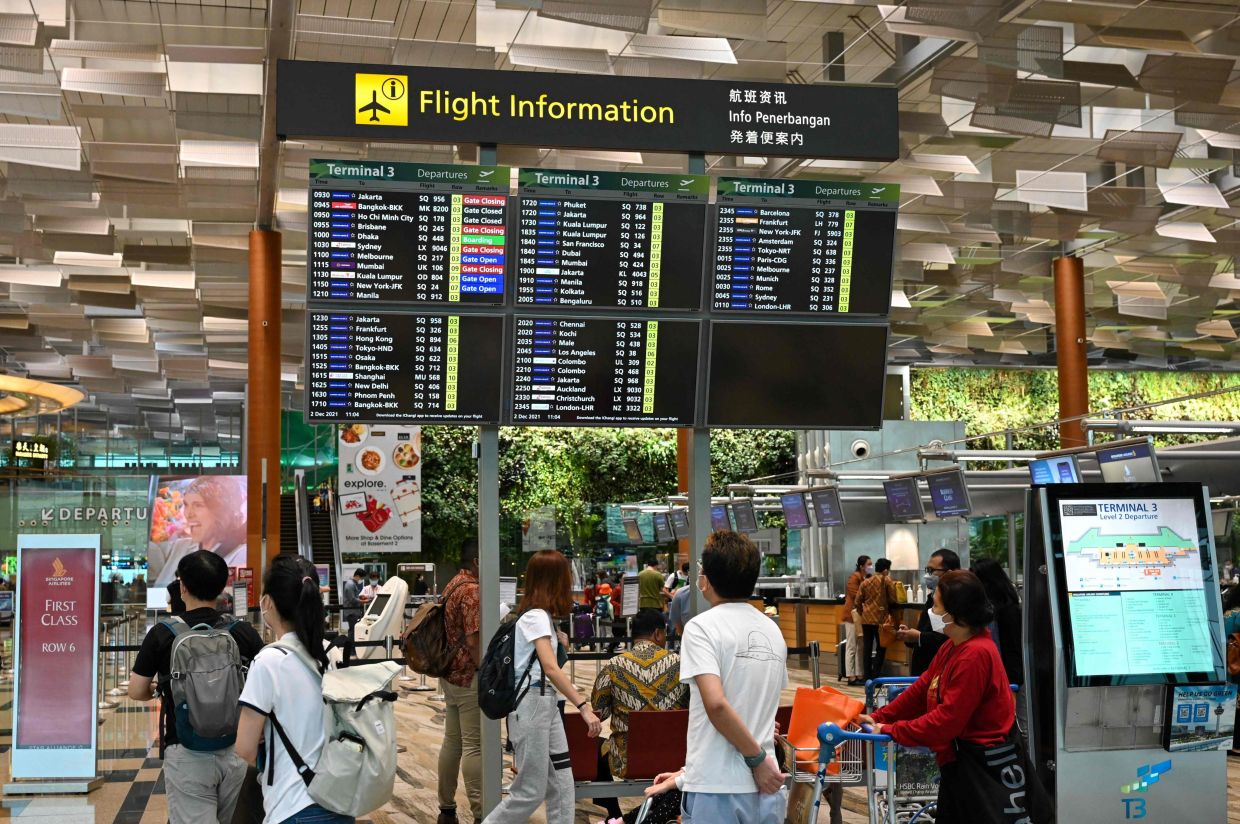
A Singapore court has convicted and imprisoned a Hong Kong mother and her adult son for their involvement in a chaotic and violent incident that unfolded at Changi Airport's Terminal 3 in late June 2024. Chan Sui-kwan, aged 65, received a six-month custodial sentence for voluntarily causing hurt to deter a public servant from performing official duties, while her son, Chan Wing-kwan, 42, was sentenced to ten days in jail on a charge of voluntarily causing hurt. The sentencing, handed down this week, marks the conclusion of legal proceedings that stretched over more than a year following the initial altercation.
The sequence of events that led to these convictions began on the afternoon of June 30, 2024, when the pair's behaviour at the airport's terminal became increasingly erratic and aggressive. Court documents reveal that the son's initial agitation stemmed from a misunderstanding—he had apparently misconstrued actions by nearby passengers as mockery directed towards him. This perceived slight triggered a volatile response, culminating in him kicking his own mother in what appeared to be an uncontrolled outburst.
When a 69-year-old bystander, moved by concern for the woman's welfare following the kick, approached to check on her condition, his intervention set off a further escalation. Rather than accepting his assistance, the mother instructed him to step away, while her son adopted a confrontational posture, verbally challenging the stranger to fight. The hostility that both family members displayed towards this helpful bystander suggested a pattern of aggression that would continue to intensify throughout the afternoon.
The situation deteriorated significantly when the mother was kicked a second time by her son, this incident occurring on a different level of the terminal. As tensions mounted, the bystander made the decision to contact the police and summon help. However, before authorities could arrive, the son rushed towards the man in what escalated into a physical confrontation. During the scuffle, the son delivered repeated punches to the bystander's head and face, inflicting injuries including a haematoma—a pool of blood beneath the skin—along with abrasions to the knee and bruising to the fingers.
Police officers who attended the scene conducted preliminary investigations and recorded the mother and son's passport information as part of standard procedure before returning their travel documents. However, the matter did not conclude with this first police intervention. Later the same afternoon, airport security or police personnel located the pair again, this time in the departure hall of the terminal. At this point, the mother's behaviour escalated further when she refused to surrender her passport to authorities and created a public disturbance that warranted her arrest.
The mother's resistance to lawful custody proved particularly aggressive. As officers moved to place her under arrest, she fought back forcefully, and during the struggle, she bit a police officer on his right forearm. The bite penetrated his clothing and left a one-centimetre mark along with visible bruising, constituting an assault on a law enforcement officer engaged in the execution of his duties. This incident provided the basis for the more serious charge against the mother relating to deterring a public servant from performing official functions.
The legal process that followed proved lengthy and complicated. The son was formally charged on April 24 of last year, while the mother did not appear in court until November 18, 2024—a delay of several months that suggests potential complications in locating or notifying the defendants. Both individuals subsequently missed a scheduled court appearance set for July 22 this year, prompting the issuance of an arrest warrant. They were ultimately convicted on July 29 and handed their sentences the following day.
For Malaysian readers and observers of regional security matters, this case underscores the seriousness with which Singapore's judiciary treats violent conduct in public spaces, particularly those involving assaults on law enforcement personnel. The airport environment, crucial to regional commerce and travel, demands heightened standards of public order, and Singapore's courts have consistently imposed meaningful penalties for disruptions in these spaces. The six-month sentence for the mother reflects the aggravated nature of her conduct, especially the assault on the police officer, while the ten-day term for her son, though lighter, still registers court disapproval of his role in initiating and sustaining the violence.
The case also illustrates the potential complications that can arise when disputes between family members spill into public spaces, involving innocent bystanders who attempt to intervene. The bystander's decision to contact authorities, while commendable, also exposed him to physical harm—a reality that may discourage similar interventions in future incidents. Furthermore, the incident raises questions about airport security protocols and whether earlier intervention might have prevented the escalation that occurred between the initial police attendance and the later arrest in the departure hall.
From a broader perspective, this incident exemplifies the type of disruptive conduct that regional airports periodically experience, particularly involving international travellers who may be unfamiliar with local norms or whose personal circumstances—stress, fatigue, or mental health challenges—may manifest in aggressive behaviour. Singapore's response through swift prosecution and meaningful sentencing sends a clear message that such conduct will not be tolerated, regardless of the perpetrators' nationality or family relationships. For regional travellers and airport operators across Southeast Asia, the case serves as a reminder of the importance of maintaining composure during stressful travel situations and the legal consequences that attend violent or disruptive actions.

