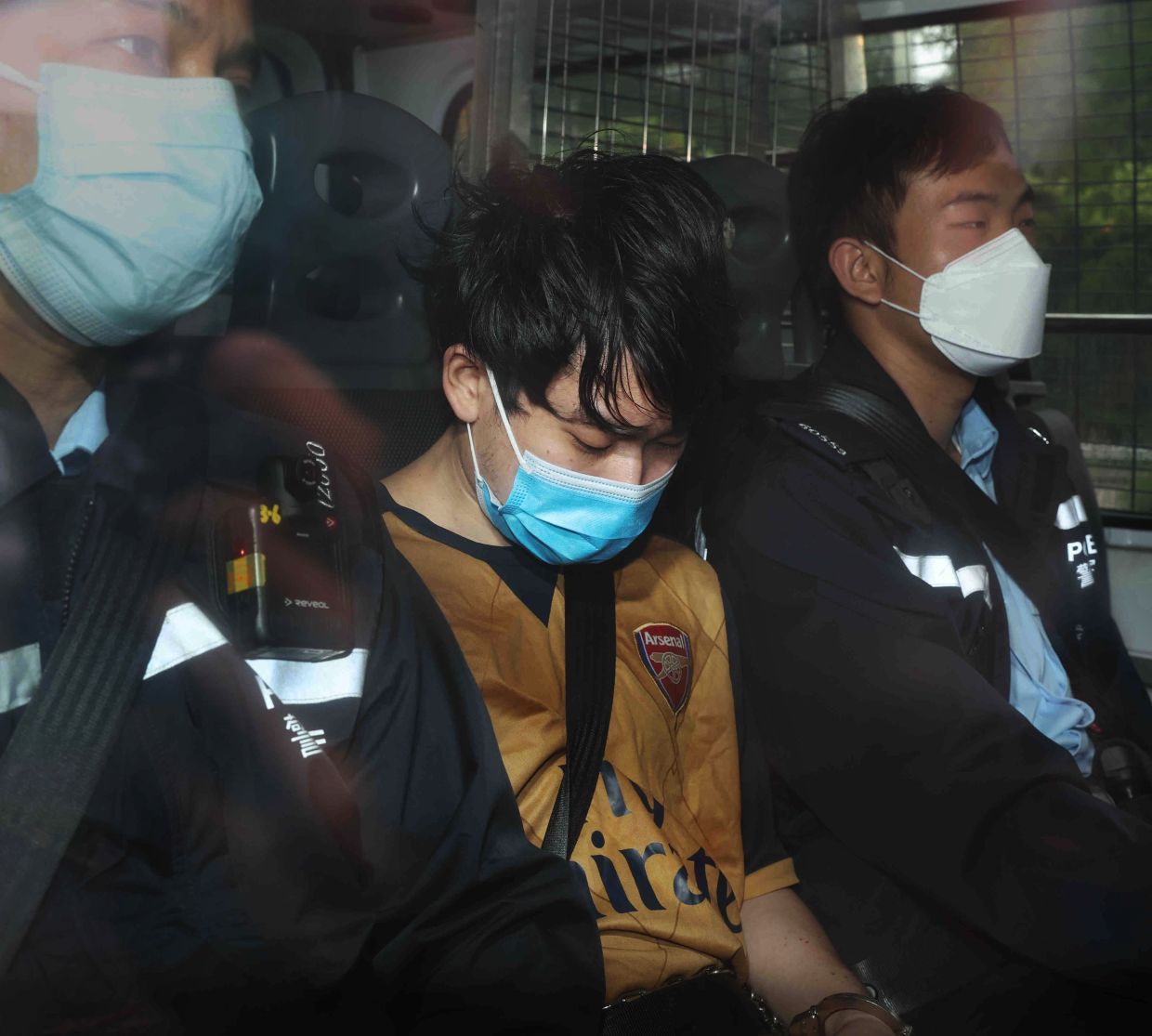
A 29-year-old unemployed man has taken the stand at Hong Kong's High Court to defend himself against murder allegations stemming from the death of his 30-year-old girlfriend four years ago. Ng Ka-sing's defence hinges on an extraordinary claim: that he inadvertently killed Yip Tsz-ching through a series of beatings administered between April 28 and 29, 2022, in their modest 700 square-foot apartment at Galore Garden in Hung Shui Kiu. Rather than a calculated act of violence, his legal team characterises the fatal injuries as arising from a misguided and deeply troubling weight-loss regimen that spiralled catastrophically out of control.
The case presents a disturbing portrait of domestic life that veered into tragedy. According to Ng's account to investigating officers, he struck Yip repeatedly with a rod over the course of multiple intervals beginning on the night of April 27. His stated intention was to keep her awake, operating under the misguided notion that sleep deprivation would contribute to fat loss. The beatings allegedly continued intermittently through the early hours of April 28, with gaps between sessions that lasted several hours. When Ng reportedly questioned whether he should cease his actions, a family member who shared the flat—identified as his sworn sister—allegedly encouraged him to persist, suggesting the regime should continue longer.
The prosecution's case, presented by Senior Public Prosecutor Audrey Parwani in her opening statement, paints a fundamentally different narrative. Parwani told the seven-member jury that Ng's various explanations to police lack credibility and do not constitute a comprehensive account of what transpired. The Crown's position is that the defendant has not been truthful with investigators about the circumstances surrounding Yip's death, particularly regarding the extensive injuries she sustained. Among the most significant findings was that corrosive burns covered 55 percent of Yip's body—injuries that stretch far beyond what Ng's weight-loss explanation would encompass.
The defendant's account regarding the chemical burns is especially troubling. Ng claimed that Yip herself poured a bottle of drain cleaner over her own body, whilst he splashed the liquid onto the floor with the intention of "stimulating" her feet. He further asserted that Yip struck herself against a wall seven to eight times after slipping on the contaminated floor surface. These claims, which seem designed to minimise his culpability for the chemical injuries, appear central to the prosecution's scepticism about his entire narrative. Dr Foo Ka-chung, the government pathologist, determined that Yip died from suffocation following head injuries and the extensive thermal and chemical burns across her chest, abdomen, and limbs.
The physical evidence surrounding the disposal of Yip's body underscores the severity of her injuries and raises questions about Ng's state of mind. Early on April 29, joggers discovered what would prove to be Yip's body protruding from a rolled-up quilt laden onto Ng's wheelboard along Tin Ha Road. The remains had been meticulously wrapped with multiple layers of plastic film and secured to a toppled wooden chair using black rubbish bags. Yip's head was wrapped extensively in cling film and adhesive tape. Forensic evidence specialist Lo Man-hung documented these restraints and bindings, which speak to deliberate concealment rather than the actions of someone responding impulsively to an accidental death.
Witnesses to the discovery provided further context regarding Ng's demeanour. Lau Kwok-yan, the jogger who reported the body to police, testified that Ng stood on the street appearing remarkably composed whilst awaiting officers to arrive, showing no visible signs of panic or distress. Street cleaner Wong Ah-sum recounted questioning Ng about the corpse, whereupon the defendant matter-of-factly identified it as a "corpse" and stated his intention to transport it to a police station. When arrested at 6:36 am, Ng reportedly said simply: "This was my girlfriend. I hit her to death with a rod by mistake."
The timeline of Yip's final hours adds another dimension to the prosecution's case. At approximately 5 am on April 28, Yip reportedly told Ng that she was experiencing pain and believed she might not survive the injuries she had sustained. She fell into a coma after speaking for the last time at 7:21 am that same morning. Government pathologist Dr Foo Ka-chung estimated that Yip had been dead between 12 and 24 hours by the time her body was discovered. The injuries Dr Foo identified included multiple bruises, abrasions, and lacerations distributed across her head and other parts of her body, consistent with blunt force trauma from punching and kicking.
Ng had previously offered to plead guilty to manslaughter, a significantly lesser charge than murder, but prosecutors rejected this plea. This prosecutorial decision suggests confidence in the Crown's ability to prove the higher charge and a determination to pursue the case on its most serious footing. The rejection also reflects the prosecution's assessment that the circumstances—including the disposal method, the extensive injuries, and the apparent lack of remorse—constitute evidence of murder rather than an accidental killing.
The case carries implications that resonate beyond the courtroom walls in Hong Kong. It highlights the intersection of intimate partner violence with deeply problematic misconceptions about health and fitness. Ng's purported belief that violent sleep deprivation constitutes a legitimate weight-loss strategy reflects a dangerous distortion of wellness discourse that can pervade certain communities. Malaysian readers, living in a region where health consciousness and fitness trends are increasingly prevalent, should consider the dangers inherent in unverified or extreme approaches to physical modification.
The trial before Mrs Justice Judianna Barnes and the jury is scheduled to continue for 18 days, with considerable testimony yet to be presented. The outcome will hinge on whether the court accepts Ng's account of accidental death, or whether the prosecution successfully establishes that the accumulated injuries, the chemical burns, the deliberate disposal, and Ng's apparent composure at the scene constitute sufficient evidence of intentional murder. For observers of Hong Kong's legal system and broader Southeast Asian jurisprudence, the case represents a significant test of how courts evaluate claims of accident versus intent when evidence of extreme violence exists.

