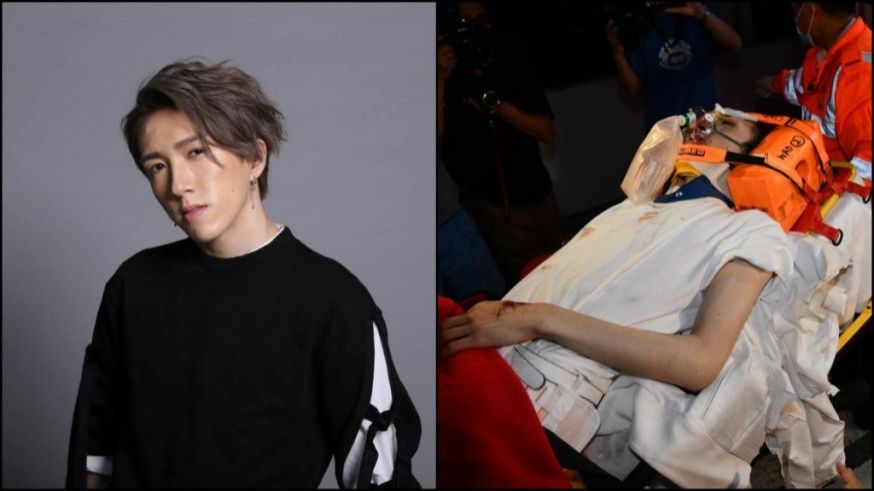
A Hong Kong court has ordered one of Asia's entertainment industry's most substantial personal injury payouts, awarding HK$6.29 million (approximately RM3.32 million) to dancer Mo Li Kai-yin following a catastrophic accident that left him permanently paralysed. The District Court's decision on June 15 represents a milestone judgment in workplace safety litigation across the region, highlighting the severe consequences when concert venues and production companies fail in their duty of care to performers.
The incident occurred on July 28, 2022, during the fourth performance of a planned 12-show series by beloved Cantopop boy band Mirror at Hong Kong Coliseum. A four-by-four-meter LED panel, suspended from the ceiling, suddenly collapsed onto the 31-year-old dancer during the concert. The impact caused immediate and irreversible damage to his cervical spine, resulting in complete paralysis from the neck downwards. Emergency responders rushed Mo to Queen Elizabeth Hospital, where surgeons performed urgent procedures to stabilise his condition and prevent further deterioration.
The court's language in its ruling underscores the severity of Mo's condition and the lifetime implications. Judges described his injuries as "catastrophic," determining that he now requires round-the-clock care from three dedicated caregivers to manage every aspect of daily living, from personal hygiene to nutrition and mobility. The judgment explicitly noted that Mo has been rendered permanently and totally incapacitated, with no realistic prospect of returning to independent adult life or any form of employment. This assessment forms the foundation for the comprehensive compensation package spanning multiple categories of damages.
Mo's employment at the time was with Studiodanz, the dance academy and production company responsible for coordinating dancers at the Mirror concert series. Although Studiodanz did not participate in the trial proceedings, the court found the company liable for all damages awarded. Beyond the primary compensation, the firm was ordered to cover Mo's accumulated legal expenses and pay interest on the judgment amount. The company had previously faced occupational safety fines of HK$132,000 for breaching workplace safety regulations—a penalty that pales in comparison to the subsequent civil judgment.
The compensation structure reflects the long-term realities of permanent disability. Beyond the headline figure, Mo was granted maximum awards across several distinct categories: permanent total incapacity, ongoing caregiving expenses, periodic payments to cover future medical and living costs, and documented medical expenses incurred since the accident. This multi-layered approach acknowledges that survival with spinal cord injury requires sustained, escalating investments in medical technology, therapeutic interventions, and human support—costs that extend across decades.
Mo's background as a professional dancer makes the tragedy particularly poignant. He discovered his passion for dance while completing university studies between 2015 and 2019, then transitioned to full-time professional performance in 2019. During his brief but active three-year career, he performed at major concerts, appeared on television programs, featured in commercial advertisements, and participated in music video productions. Simultaneously, he maintained his passion for education, teaching dance at four different studios including Studiodanz. His meteoric rise through Hong Kong's competitive entertainment scene was abruptly halted by the single moment of structural failure.
The accident's impact extended beyond Mo himself to his family unit. His father, Reverend Derek Li Shing-lam, made the difficult decision to resign from his pastoral responsibilities in Canada and return to Hong Kong to become his son's full-time primary caregiver. This sacrifice highlighted the familial dimensions of catastrophic injury—the ripple effects that touch not only the direct victim but also their closest supporters. Tragically, Reverend Li passed away on April 25, leaving Mo without his most dedicated family caregiver and underscoring the urgency of the court-ordered paid care arrangements.
Since the accident, Mo has pursued an aggressive rehabilitation program incorporating cutting-edge medical technologies unavailable in most regional facilities. His treatment regimen includes regenerative medicine approaches alongside implantable microstimulator technology designed to restore neurological function. While full recovery from complete cervical spine dislocation remains medically unlikely, Mo has achieved modest but meaningful progress. He has regained some voluntary movement in his right arm and recovered partial sensation in bladder and bowel functions—improvements that significantly impact his quality of life and independence levels. A video posted to his Instagram account in March demonstrated his ability to operate an electric wheelchair using his recovering right hand, a testament to both medical advancement and personal determination.
The judgment carries implications extending far beyond Mo's individual circumstance. For the Hong Kong and broader Southeast Asian entertainment industries, the ruling serves as a stark reminder of the consequences of inadequate safety protocols at major concert venues. LED screens and suspended rigging systems represent standard technology at modern concerts, yet failures remain possible when maintenance, inspection, and anchoring procedures are neglected. The substantial damages award will likely prompt venues, production companies, and promoters to reassess their safety infrastructure investments and insurance coverage.
For Malaysian entertainment professionals and venues, the case offers crucial lessons about liability exposure. The Hong Kong court's willingness to award maximum damages across all categories suggests regional courts increasingly view catastrophic injuries as requiring comprehensive, lifetime-spanning compensation rather than token settlements. Malaysian concert promoters, particularly those hosting international acts or using advanced staging technology, should review their safety protocols, insurance arrangements, and contractual protections accordingly.
The case also highlights the importance of robust occupational safety frameworks in the entertainment industry, a sector where workers often operate under intense time pressure, minimal regulatory oversight, and significant physical risk. While Studiodanz faced safety fines, these administrative penalties proved insufficient to prevent the accident. The subsequent civil judgment demonstrates that legal accountability ultimately rests with employers and venue operators who fail to prioritise worker protection.
Mo's ongoing rehabilitation journey continues as he works toward maximising whatever functional recovery remains possible. The court-awarded compensation provides the financial foundation for sustained, high-quality care and medical intervention. However, the judgment ultimately cannot restore what was lost—a promising career, physical independence, and the simple possibility of living life without constant assistance. His case stands as a sobering example of how a single moment of structural negligence can permanently transform an individual's entire existence.

