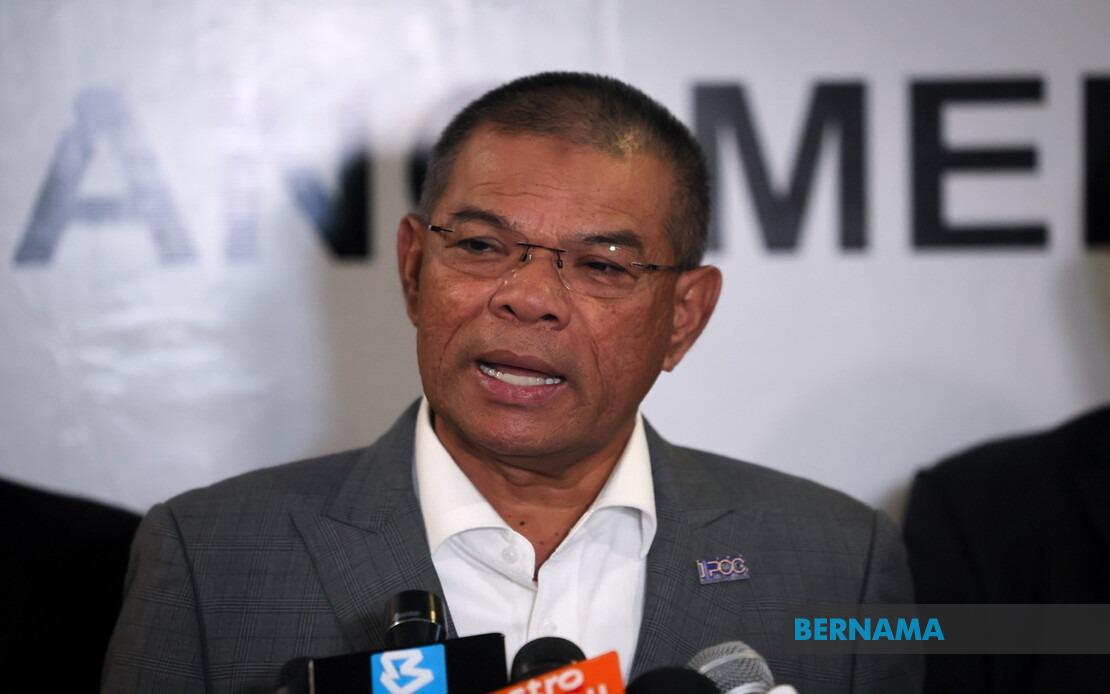
Home Minister Datuk Seri Saifuddin Nasution Ismail has directed the Malaysian Immigration Department to provide complete cooperation with investigating authorities following a fatal collision on Jalan Sultan Ismail in the early hours of August 19 that resulted in three deaths. The minister's directive came as officials worked to establish the precise circumstances surrounding the incident, which has raised fresh questions about operational protocols governing government agency vehicles in urban areas.
In a statement posted to social media, Saifuddin Nasution emphasised that any findings of negligence, misconduct, or legal violations must trigger decisive action against those found culpable. The minister's unequivocal language underscores the seriousness with which the Home Ministry intends to treat the matter and reflects broader public concern about accountability in government operations. His comments signal that the investigation will not be perfunctory, and that individuals or systemic failures identified in the probe could face meaningful consequences.
The tragedy unfolded when an Immigration Department Black Maria lorry, operating without passengers aboard, collided with a Proton Saga at the Maju Junction intersection. According to eyewitness accounts and preliminary police findings, the immigration vehicle was en route to Chow Kit to conduct enforcement operations against undocumented migrants when the collision occurred shortly after 1 am. The Black Maria reportedly proceeded through the intersection while traffic signals indicated red for its lane, though its beacon lights and siren were activated at the time.
The Proton Saga, which was travelling straight through the intersection on a green light, proved unable to swerve or brake sufficiently to avoid the lorry. The impact dislodged the larger vehicle, sending it into an uncontrolled skid across the intersection. In its trajectory, the lorry struck four pedestrians who were present at the scene, alongside an Inokom Matrix multi-purpose vehicle. Three members of the same family were pronounced dead, while a fourth pedestrian sustained serious injuries requiring emergency medical attention. The incident raises critical questions about the balance between operational necessity and public safety when government vehicles operate under emergency protocols in densely populated urban zones.
Investigators have initiated a formal inquiry under Section 41(1) of the Road Transport Act 1987, a provision that addresses offences related to dangerous or reckless driving by vehicle operators. This legal framework allows authorities to examine whether the driver's conduct—including decisions regarding speed, intersection entry, and vehicle control—fell below accepted standards of care. The statute carries penalties for those found guilty, ranging from fines to imprisonment depending on the severity of any violations established during proceedings.
The circumstances documented at the scene point to a complex interplay of factors that will occupy investigators' attention. The activation of beacon lights and sirens suggests the driver believed operational circumstances warranted emergency procedures, yet the timing of the green light for the Proton Saga raises questions about whether the Immigration vehicle operator had reasonably established safe passage through the intersection before proceeding. The question of whether emergency lighting and sound automatically conveys right-of-way to other traffic participants, or whether operators must verify clear passage, will likely feature prominently in the investigation's findings.
For the Malaysian public and transport safety advocates, the incident highlights recurring concerns about the management and oversight of government vehicle operations in urban environments. Immigration enforcement activities, particularly overnight raids targeting undocumented migrants, represent necessary public administration functions, yet they must be conducted in ways that do not expose innocent bystanders to disproportionate risk. The Home Ministry's directive for full cooperation suggests a recognition that public confidence in such operations depends upon demonstrable commitment to accountability and transparent investigation.
The tragedy also carries implications for how government agencies approach emergency vehicle protocols more broadly. While Malaysia's police and civil defence services operate under established guidelines for emergency driving, questions persist about whether all agencies employing vehicles in enforcement roles receive equivalent training and oversight. The collision at Maju Junction may prompt broader review of such standards across multiple departments, potentially leading to revised guidelines or enhanced training requirements for drivers of government vehicles operating with emergency equipment.
Saifuddin Nasution's expression of condolences to the affected family represents the standard compassionate response expected of senior officials following such incidents, yet the substantive focus of his statement centres on investigation rigour and accountability. By explicitly linking any findings of misconduct to firm action, the minister has established clear expectations for how the probe will be conducted and what consequences may follow. This framing suggests that the Home Ministry recognises the reputational stakes involved and the need to demonstrate serious engagement with public safety concerns.
The investigation process will necessarily examine multiple dimensions of the incident, from vehicle maintenance records to driver training history and operational decision-making in real time. Authorities will interview the Immigration lorry driver, the Proton Saga operator, and available witnesses to reconstruct the sequence of events and establish whether applicable traffic regulations were observed. Technical analysis of vehicle damage, intersection geometry, and sight lines may also inform conclusions about whether the collision was preventable under different operational choices.
As investigations proceed, the incident serves as a sobering reminder of how quickly routine government operations can transform into tragedy when public safety considerations are inadequately balanced against operational objectives. The Home Minister's firm stance on accountability suggests that Malaysia's leadership recognises this tension and intends to ensure that enforcement activities conducted in the public interest are not conducted at unacceptable cost to public safety. The findings of this investigation will likely shape how immigration and other enforcement agencies approach high-risk operations in urban settings moving forward.

