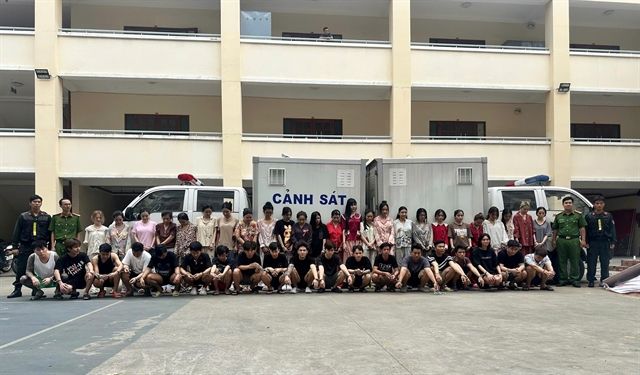
Ho Chi Minh City's drug enforcement division has brought down a complex criminal network trafficking electronic cigarettes infused with etomidate, an anaesthetic substance banned for civilian use. The operation resulted in the arrest of 49 individuals, of whom four are foreign nationals, and the seizure of 1,670 vape pods along with significant quantities of ketamine and methamphetamine. The bust represents a growing concern across Southeast Asia about synthetic drugs disguised as consumer products targeting recreational users, particularly young people in urban areas.
Etomidate presents a distinctive danger compared to conventional narcotics because it was only added to Vietnam's controlled substances list in January, leaving enforcement agencies and the public largely unprepared to identify or respond to its misuse. The substance functions as a short-acting sedative intended exclusively for surgical anaesthesia administered by medical professionals in controlled hospital settings. When inhaled through vaping devices, etomidate bypasses the digestive system entirely, crossing directly through lung tissue into the bloodstream and reaching the brain within seconds—a significantly faster absorption route than traditional consumption methods. This rapid delivery system intensifies both the immediate and long-term health consequences for unsuspecting users.
The criminal operation was disturbingly well-organised, employing multiple distribution networks with distinct roles and geographic responsibilities. Investigation began after police identified a street-level retailer operating under the nickname Ba Giá, later revealed to be Nguyen Huu Huan, 28, from Dong Thap Province. Huan and his wife, Ngo Thi Kim Chi, 30, were detained on June 25 after selling etomidate-infused pods to a local buyer. However, further enquiries uncovered that Huan functioned as merely one node in a larger supply chain, prompting police to trace upstream suppliers.
Two separate wholesale operations fed the Ho Chi Minh City market. The first network was directed by Huynh Ngoc Thuy Nhu, 26, and her associate Hua Tuong Vy, 20, both residing in the city. More significantly, a second group led by Le Quoc Duy, 40, from An Giang Province, had established a cross-border smuggling route through small, unmonitored checkpoints between Cambodia and Vietnam. Duy would transport the vapes from Cambodia into Vietnamese territory before distributing them to Ho Chi Minh City retailers. Police recovered 37 vape pods from Duy's location along with 200 grams each of ketamine and methamphetamine, suggesting the operation dealt in multiple substances simultaneously. A third criminal group, headed by Cambodian national Han Kiat and three foreign associates, specialised in marketing these products to the expatriate community living in Ho Chi Minh City.
The deliberate marketing strategy targeted young consumers through carefully chosen packaging and product names that suggested wellness and relaxation benefits. Vape pods were branded as "chill pod," "relaxation pod," "sleep-well pod," and "fly pod"—terminology designed to appeal to recreational users seeking mood-altering experiences. The pods were subsequently distributed through venues frequented by younger demographics, including bars, karaoke lounges, and private rental apartments. The sophisticated branding obscured the danger, while criminals deliberately marketed the product as "undetectable" or "100 per cent negative," exploiting a critical gap in standard drug detection technology available to consumers and lower-level enforcement officials.
This detection gap represents a significant vulnerability in Southeast Asia's drug control architecture. Conventional rapid-test kits available in markets throughout the region detect traditional narcotics such as heroin, cannabis, and methamphetamine through chemical reactions specific to those substances' molecular structures. Etomidate's different chemical composition renders these tests ineffective, meaning only sophisticated forensic laboratory equipment operated by specialist agencies can confirm its presence. This technological disparity provides criminals with a substantial window to market and distribute etomidate-laced products before field detection becomes possible, effectively allowing the substance to circulate while appearing invisible to standard screening protocols.
The physiological effects of etomidate inhalation escalate rapidly and unpredictably. Users initially report light-headedness and mild hallucinations, sensations that may seem controlled or manageable. However, acute effects follow quickly, including neurotoxicity, pronounced drowsiness, involuntary muscle spasms, and loss of consciousness. The particular danger emerges when etomidate is combined with alcohol or other sedative substances—a common scenario in bar and karaoke environments where these products were being sold. Such combinations can trigger sudden respiratory arrest and fatal overdose. The speed of onset and severity of effects mean users have minimal time to seek medical assistance once symptoms emerge, effectively transforming casual recreational use into a life-threatening medical emergency.
Ho Chi Minh City's operation illustrates a troubling trend across the region: sophisticated criminals are weaponising consumer products, particularly electronic devices perceived as trendy and harmless, to distribute dangerous synthetic substances. The involvement of foreign nationals—two South Koreans, Chinese, and Cambodian suspects—indicates this is not an isolated domestic criminal enterprise but rather a transnational trafficking operation exploiting porous borders and weak inter-agency coordination across Southeast Asia. The utilisation of unmonitored border crossings in An Giang Province reflects the persistent challenge of controlling smuggling routes in the Mekong region, where informal crossing points remain difficult for authorities to monitor comprehensively.
For Malaysia and other Southeast Asian nations, the Vietnamese case study carries urgent implications. The vape market in Malaysia and neighbouring countries continues expanding, with many retailers and consumers unable to distinguish legitimate products from those containing illegal substances. Similar etomidate networks could already be operating in Malaysian cities, particularly Kuala Lumpur and George Town, where large expatriate communities and vibrant nightlife scenes provide ideal distribution channels. Malaysian authorities should consider whether enforcement agencies possess adequate testing capability to detect etomidate in vaping products, and whether pharmaceutical regulations have been updated to address this emerging threat.
The Vietnamese police warning specifically emphasised the vulnerability of young people, who may be attracted by the perceived trendiness and fashionable appearance of vaping devices without understanding the genuine health risks. Adolescents and young adults demonstrate limited experience evaluating pharmaceutical risks, making them particularly susceptible to marketing claims of products bearing appealing brand names. The criminal groups deliberately exploited this demographic vulnerability, recognising that younger consumers would be less likely to question product authenticity or research dangers. Public health campaigns throughout Southeast Asia should incorporate specific warnings about etomidate-laced vapes, focusing educational efforts on secondary school and university environments where these products are most likely to circulate.
Ho Chi Minh City authorities have also highlighted the particular danger posed by the product's appearance and marketing as a wellness item rather than a drug. Unlike heroin or methamphetamine, which carry significant social stigma and are recognised as dangerous, etomidate-infused vapes are presented as relaxation aids—positioning that allows marketing messages to penetrate social circles that would reject overtly dangerous substances. Parents and educators across Southeast Asia should be alerted to this deceptive rebranding strategy, as young people may not recognise that products marketed under wellness terminology are nonetheless illegal and profoundly dangerous. The operation's scale—involving nearly fifty individuals across multiple networks—suggests that enforcement resources dedicated to traditional drug investigations may be insufficient to address emerging threats posed by disguised chemical substances. Regional cooperation mechanisms, particularly regarding cross-border intelligence sharing and coordinated enforcement operations, will prove essential for preventing similar operations from expanding throughout Southeast Asia.

