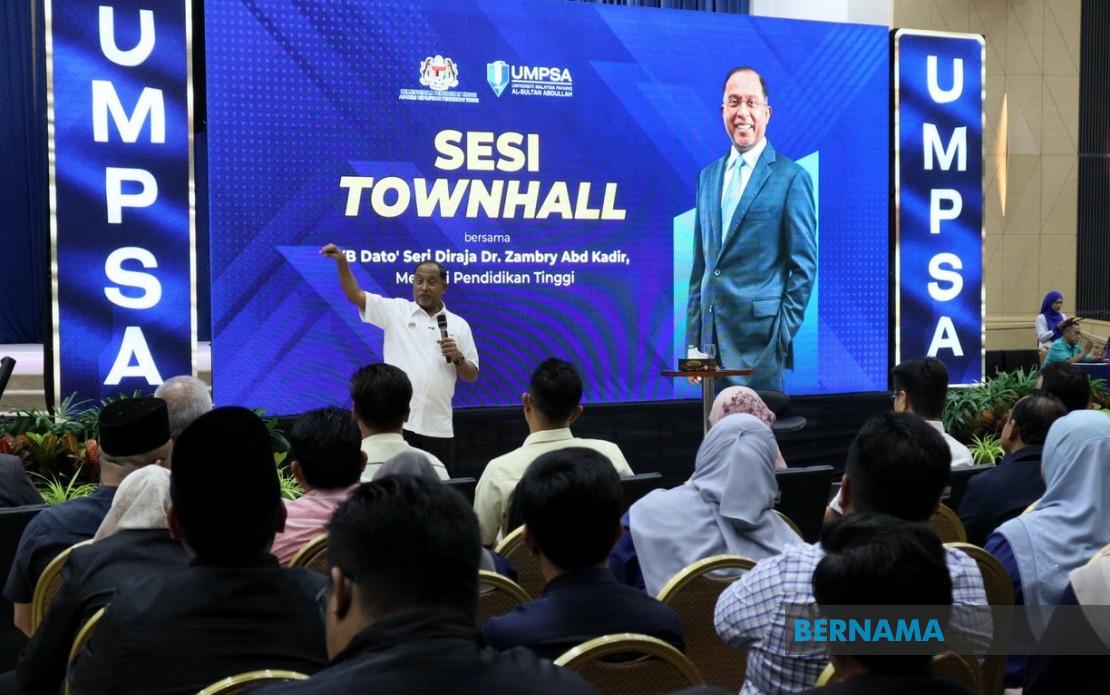
The Ministry of Higher Education (KPT) has initiated a comprehensive review process following Prime Minister Datuk Seri Anwar Ibrahim's recent instruction to reassess disciplinary actions taken against university students who have breached institutional regulations. This development represents a significant shift in how Malaysian higher education institutions will approach student conduct matters, particularly those involving political expression and criticism of government policies. Higher Education Minister Datuk Seri Dr. Zambry Abd Kadir confirmed the ministry's commitment to implementing these changes while maintaining compliance with existing legislative frameworks that govern university operations and student rights.
The initiative encompasses a broad spectrum of disciplinary cases currently within the purview of university Student Affairs Departments across the country's public institutions. Dr. Zambry explained that the review process takes into careful account legislative decisions already made at the parliamentary level, as well as provisions within university regulations that specifically address student freedoms and rights. The ministry recognises the delicate balance between maintaining institutional order and protecting fundamental rights of academic freedom and expression that form the cornerstone of university culture. This nuanced approach suggests the government is attempting to calibrate discipline mechanisms without completely dismantling institutional authority.
A significant coordination effort has already commenced among Malaysia's public universities to ensure consistency in implementing these new directives. All vice-chancellors have participated in meetings with the director-general of Higher Education to align their understanding and approach to the reforms. The ministry indicated that a formal statement detailing the implementation strategy would be released following these consultations. This top-down coordination mechanism suggests the government views student disciplinary reform as a system-wide priority requiring synchronised action across all public higher education institutions rather than allowing individual universities to interpret the directive independently.
Prime Minister Anwar Ibrahim's original directive, delivered at the Malaysia Madani Intellectual Forum Series 13, specifically addressed students who had previously faced disciplinary consequences for criticising him personally and government policies. His instruction called for the immediate absolution of these students from all related offences associated with their criticism. This measure represents a significant departure from previous administrations' approach to student activism and political expression within campus environments. The PM's action reflects broader commitments within the Malaysia Madani framework to foster more open and inclusive governance, which extends to the higher education sector's disciplinary practices.
The timing and scope of these reforms must be understood within the context of the government's announced intention to repeal the Universities and University Colleges Act (AUKU) 1971, a legislation that has long restricted student political activities and demonstrations. The AUKU repeal, announced by Prime Minister Anwar Ibrahim previously, has been characterised as a landmark shift toward enhancing student freedoms and democratic participation within campus communities. However, given that the formal legislative amendment to AUKU will require considerable time to navigate parliamentary procedures, the government has instructed an immediate interim measure to release students from offences related to government criticism. This pragmatic approach allows substantive reform to take effect quickly rather than waiting for lengthy legislative processes to conclude.
Critically, the government has clarified that the absolution from offences pertains specifically to university disciplinary matters and does not extend to criminal law violations prosecuted by the Royal Malaysia Police (PDRM). This distinction is legally and politically significant, as it preserves the state's authority to pursue criminal charges for conduct that violates laws beyond university regulations—such as public order offences, sedition, or other criminal statutes. The demarcation between institutional discipline and criminal prosecution demonstrates governmental intent to expand student freedoms within academic settings while maintaining legal boundaries that apply to the broader society. This separation also reflects international norms where universities operate with some autonomy in student discipline while remaining subject to national criminal law.
The extension of these reforms to private higher education institutions (IPTS) presents a more complicated scenario, as these institutions operate under different legal frameworks. Private higher educational institutions in Malaysia are regulated primarily under the Private Higher Educational Institutions Act 1996 (Act 555), which grants them greater operational autonomy compared to public universities. Dr. Zambry acknowledged this complexity, noting that the applicability of the new disciplinary framework to private institutions requires careful legal examination. Nevertheless, the minister expressed hope that private institutions, particularly those with state ownership or state-related connections, would voluntarily adopt aligned policies and implement consistent changes with their public counterparts. This voluntary cooperation approach suggests recognition that private institutions cannot be compelled to follow the same directives as public universities, yet the government wishes to encourage system-wide consistency.
The participation of 500 young lecturers and administrators aged 40 and below from higher education institutions across Pahang, Terengganu, and Kelantan in the Kembara KARISMA Pemimpin Muda MADANI programme underscores the government's investment in cultivating next-generation academic leadership aligned with Malaysia Madani principles. These emerging leaders will play crucial roles in implementing and interpreting the new disciplinary guidelines within their respective institutions. Their involvement in the broader leadership development programme suggests the government recognises that sustained reform requires not merely top-down directives but genuine buy-in from mid-level academic administrators who ultimately implement disciplinary policies on campus grounds. The focus on younger administrators and lecturers indicates strategic attention to reshaping institutional culture from within over the medium to long term.
The practical implications of this directive will gradually become apparent as individual universities begin reviewing cases of students previously disciplined for government criticism. Institutions must grapple with questions regarding retroactive application—whether students already penalised should have records expunged or simply have sanctions lifted, and whether academic records should reflect the original offence or be entirely cleared. These operational details will significantly affect affected students' academic standing, future employment prospects, and the broader symbolism of reconciliation that the government appears to intend. The absence of detailed guidance on retroactive application suggests universities may exercise considerable discretion in how they implement the absolution, potentially creating inconsistencies across institutions.
From a regional perspective, Malaysia's movement toward enhanced student freedoms stands in contrast to neighbouring countries where government criticism remains heavily restricted in academic settings. The reform signals Malaysia's positioning as a Southeast Asian democracy committed to academic freedom and pluralistic expression within universities. However, the preservation of criminal law boundaries and the unclear extension to private institutions suggest the liberalisation remains measured and bounded rather than wholesale. International observers and academic freedom advocates will likely scrutinise how comprehensively these reforms are implemented, particularly regarding whether the spirit of expanded student freedoms translates into substantive cultural change within Malaysian universities or remains merely a policy adjustment.
The success of this initiative ultimately depends on whether university administrators embrace the reform's underlying philosophy or implement it narrowly as administrative compliance. If interpreted generously, the directive could catalyse more vibrant intellectual discourse, student activism, and democratic participation within Malaysian campuses. Conversely, if institutions interpret the changes minimally while maintaining restrictive cultures, the substantive impact on student freedoms may prove limited. The government's emphasis on vice-chancellor coordination and the promised statement suggest commitment to fostering genuine implementation rather than token compliance. Coming months will reveal whether this directive represents a watershed moment in Malaysian higher education's approach to student discipline and freedom or represents a modest adjustment to existing hierarchical structures.

