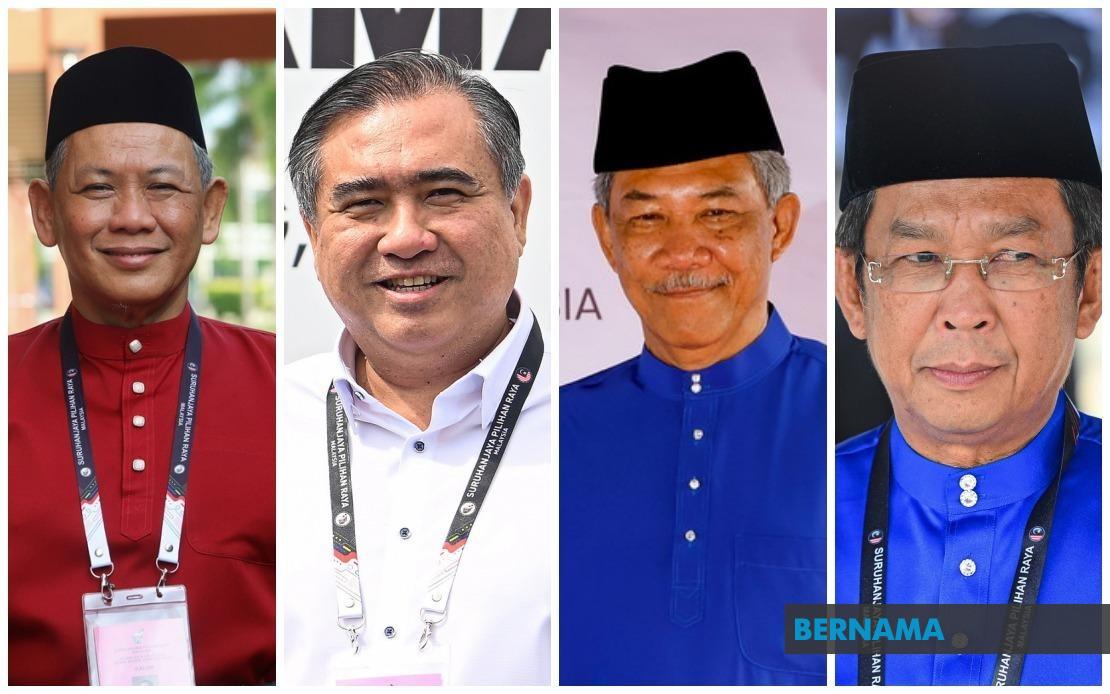
The 16th Negeri Sembilan state election is shaping up as a highly competitive affair, with several luminaries from Malaysia's major political formations facing unexpectedly tough challenges to their political fortunes. Unlike previous contests where dominance of certain seats appeared assured, this election cycle signals a departure from established patterns, with incumbents and party heavyweights confronting determined opposition across diverse constituencies throughout the state.
Amongst those navigating complex electoral terrain is Datuk Seri Aminuddin Harun, the caretaker Menteri Besar and chairman of Pakatan Harapan's Negeri Sembilan chapter. The PKR vice-president finds himself embroiled in a three-way contest for the Linggi seat, competing against both Datuk Mohd Faizal Ramli representing the incumbent Barisan Nasional faction and Bersatu's Datuk Zamri Md Said. Such multi-cornered battles introduce unpredictability that even well-entrenched politicians cannot entirely discount, as vote splitting across ideological lines frequently produces counterintuitive outcomes.
Transport Minister Anthony Loke, who additionally holds the position of DAP secretary-general, confronts a direct assault on what has long been regarded as safe territory. The Chennah constituency, which DAP has controlled continuously since 2013, now features a formidable challenger in Siow Kong Choon, the Negeri Sembilan MCA Youth chief fielded by Barisan Nasional. This development carries particular significance for DAP's broader electoral strategy in Negeri Sembilan, suggesting that traditional Chinese-majority enclaves may no longer represent automatic strongholds for the party.
The Rantau constituency presents perhaps the most symbolically significant contest, pitting the 70-year-old Datuk Seri Mohamad Hasan—affectionately known as Tok Mat by constituents—against Dr Azizul Hakim Mahdi representing Pakatan Harapan. Mohamad, who simultaneously serves as Foreign Minister and UMNO deputy president, has represented Rantau since 2004 and embodies the establishment politics that Harapan continues challenging across Malaysian states. The generational dimension underlying this matchup underscores shifting political dynamics affecting even the most senior figures within Barisan Nasional's hierarchy.
Datak Seri Jalaluddin Alias, the Negeri Sembilan UMNO chief, navigates a three-way struggle in Pertang alongside Harapan's Mohd Umry Abdul Khois and Bersatu's Mohd Faizal Fadli Mohd Idrus. Jalaluddin has held this seat since the 2013 election, yet the emergence of a credible Bersatu candidate represents a fracturing of the traditional Barisan Nasional vote that regional party strategists must view with concern. The entrance of former ruling coalition partners into direct competition against incumbent members exemplifies the structural realignment that Malaysian state-level politics has undergone since the 2018 national electoral upheaval.
The Nilai constituency exemplifies the complexity of contemporary Malaysian electoral competition through its five-cornered configuration. DAP's J. Arul Kumar, serving as national deputy chairman whilst also holding the incumbent seat, confronts challengers from across the political spectrum: Datuk Lai Chien Kong for Barisan Nasional, Datuk V. Saravana Kumar representing Bersatu, Berjasa's Zamani Ibrahim, and independent candidate Omar Mohd Isa. When contests fragment across multiple credible contestants, traditional incumbency advantage diminishes considerably, obliging established politicians to mobilise support far more actively than historical voting patterns might suggest necessary.
Similarly fragmented contests characterise the Sri Tanjung seat, where five candidates including incumbent PH representative Dr G. Rajassekaran will compete against Barisan Nasional's A. Achutan, two independent candidates, and Bersatu's Leevineshwaraan Murugan—a 23-year-old representing the youngest candidacy in this election cycle. The emergence of youthful challengers reflects broader demographic shifts within Malaysian political participation and potentially signals changing voter preferences regarding candidate age and generational representation.
Nominations concluded on July 18 across eight nomination centres, formally initiating the prescribed 14-day campaign period extending until July 31. This compressed timeframe requires candidates to maximise their ground presence and messaging efficiency across a constituency base that has grown increasingly sophisticated in evaluating political offerings. The Election Commission has designated July 28 for early voting, with general polling scheduled for August 1.
A total of 103 candidates are contesting the 36 state legislative seats, reflecting the expanded field characteristic of contemporary Malaysian electoral competition. Pakatan Harapan fields the maximum contingent with 36 candidates occupying every contested seat, followed by Barisan Nasional's 25, Bersatu's 24, and Perikatan Nasional's 11 representatives. Additionally, smaller formations including Berjasa, Parti Orang Asli Malaysia, and Parti Sosialis Malaysia each contributed single candidacies, whilst four independent aspirants complete the roster.
The fractured nature of candidate distribution across competing coalitions substantially alters electoral mathematics compared to previous contests dominated primarily by two-cornered fights between Barisan Nasional and Pakatan Harapan. Bersatu's sustained participation introduces a third major force capable of splitting votes particularly amongst constituencies containing substantial Malay-Muslim electorates, where party switching from established formations remains an ongoing phenomenon. Regional analysts anticipate that this competitive environment may yield results substantially diverging from either national trends or Negeri Sembilan's traditional voting preferences.
For Malaysian readers observing state-level political developments, the Negeri Sembilan election carries implications extending beyond the state's immediate interests. Results will provide early indicators regarding whether Barisan Nasional has successfully consolidated its post-2022 national recovery, whether Pakatan Harapan maintains sufficient appeal following its Selangor and Penang gubernatorial experiences, and whether Bersatu sustains political relevance as a consequential third force. The competitive challenges confronting senior politicians across all major coalitions suggests that no regional election in contemporary Malaysia can be dismissed as predetermined, regardless of historical precedent or the prominence of incumbent officeholders.

