The HAWANA 2026 Summit, Malaysia's premier celebration of journalism and media professionals, opened in Butterworth with a carefully curated photo exhibition that chronicles the evolution of the National Journalists' Day initiative and the human impact of its accompanying welfare fund. The gallery, unveiled ahead of Prime Minister Datuk Seri Anwar Ibrahim's official launch at the PICCA Convention Centre @ Arena Butterworth, encapsulates nearly a decade of commemoration and solidarity within the Malaysian media industry.
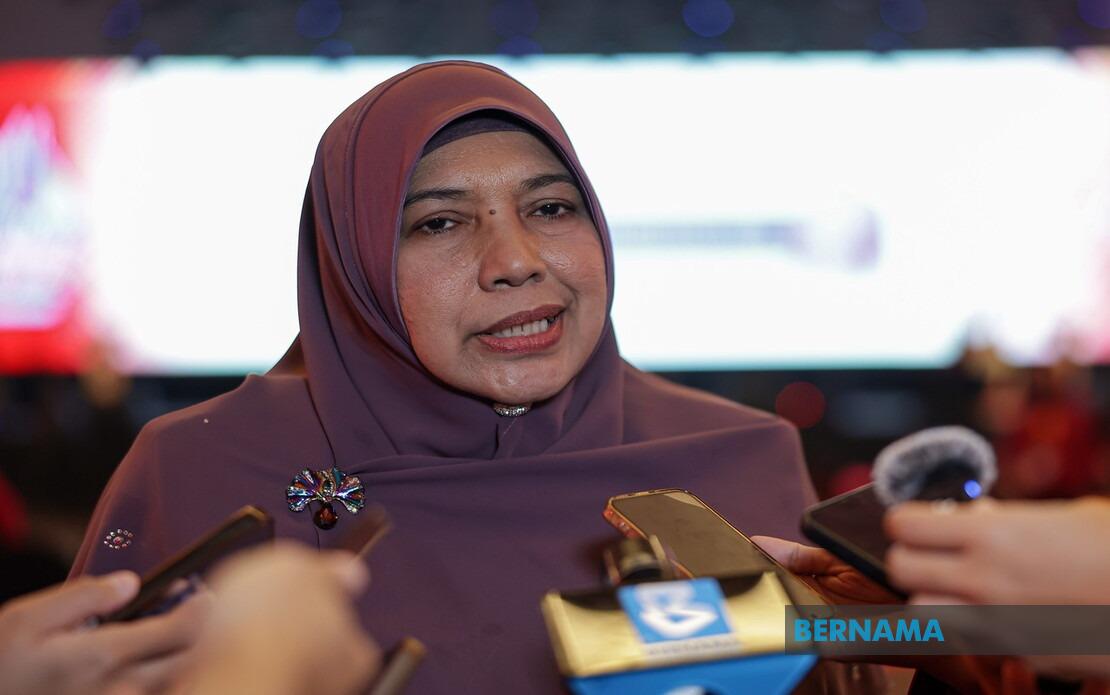
Bernama, the Malaysian National News Agency, has positioned the exhibition as a cornerstone platform for recognising the often-invisible contributions of journalists and media practitioners to national discourse. Datin Paduka Nur-ul Afida Kamaludin, chief executive officer of Bernama and chairman of the HAWANA 2026 Working Committee, described the gallery as an essential instrument for shifting public attention toward the media's instrumental role in society. She emphasised that the exhibition moves beyond ceremonial appreciation to demonstrate concrete, tangible outcomes—specifically, the sustained relief provided to journalists grappling with medical crises and financial strain through the Tabung Kasih@HAWANA initiative.
The gallery's dual-segment structure reflects a deliberate curatorial strategy. One section traces the chronological and thematic arc of HAWANA from its inception in 2018 through 2025, documenting how the celebration has evolved across multiple Malaysian cities and expanded its programming scope. The second segment shifts focus to beneficiaries of the Tabung Kasih@HAWANA welfare fund, presenting their narratives through visual storytelling. This approach humanises what might otherwise remain an abstract charitable endeavour, allowing visitors to connect individual faces and circumstances to the fund's broader mission of supporting vulnerable journalists and media veterans.
Bernama's dual role as both the secretariat administering Tabung Kasih@HAWANA and the summit's implementing agency typically operates behind the curtain of newsroom operations. Nur-ul Afida highlighted that the exhibition serves as a rare opportunity to illuminate this background infrastructure. Most media consumers remain unaware of Bernama's extensive coordination work, which extends far beyond news distribution to encompass welfare management and industry advocacy. The gallery, in this sense, functions as a transparency mechanism, allowing the agency to communicate its institutional commitment to the profession's human dimension—an aspect frequently overshadowed by routine reporting functions.
The curatorial process involved meticulous selection and contextualisation by the Bernama Photo Desk, under the guidance of editor Mohamad Bakri Darus. Each photograph featured in the exhibition is accompanied by bilingual captions in both Malay and English, ensuring accessibility across Malaysia's diverse readership and reflecting the multilingual nature of the journalism profession itself. This attention to linguistic inclusivity acknowledges that media practitioners represent varied backgrounds and educational traditions, reinforcing the exhibition's message that the journalism community operates as a cohesive, mutually supportive ecosystem.
The geographic scope of previous HAWANA celebrations underscores the initiative's commitment to national inclusivity rather than concentration in a single metropolitan hub. Since its establishment, HAWANA has been hosted in Kuala Lumpur twice (2018 and 2025), along with venues in Melaka (2022), Ipoh, Perak (2023), and Kuching, Sarawak (2024). This rotation across states and regions signals intentionality—the recognition that journalism's infrastructure and challenges extend throughout Malaysia's geography, not merely in the capital. The exhibition preserves visual memories from these varied venues, allowing media professionals from different regions to locate themselves within the broader national narrative of the profession.
The breadth of activities documented within the exhibition reflects HAWANA's multifaceted programming approach. Beyond formal ceremonial components, the celebration encompasses Strategic Partner Meetings designed to facilitate industry collaboration, Media Forums addressing contemporary journalistic challenges, the HAWANA-DBP Pantun Festival celebrating traditional literary forms, a Carnival and Exhibition open to public participation, and competitive sports events. This eclecticism—mixing professional development with cultural celebration and recreational engagement—portrays journalism not merely as a serious civic function but as a living community with social dimensions.
The Tabung Kasih@HAWANA component of the exhibition carries particular significance for Southeast Asian media contexts, where journalist welfare and occupational protection remain underdeveloped compared to more established media markets. Malaysia's institutionalisation of a dedicated welfare fund represents a policy response to the precarious conditions many practitioners face—inadequate insurance coverage, sudden illness or injury, inadequate retirement planning, and limited institutional safety nets. By visualising the beneficiaries and their circumstances, the exhibition validates the fund's existence not as charity but as recognition of structural vulnerabilities within the profession.
For Malaysian readers and media stakeholders, the exhibition arrives at a moment of broader industry reflection. Digital disruption has fundamentally reshaped newsroom economics and employment structures, rendering traditional protections obsolete in many instances. Freelancers, contract workers, and practitioners in digital-native outlets often lack the institutional support available to employees of established news organisations. The Tabung Kasih@HAWANA therefore addresses a gap that market forces have widened considerably over the past decade, serving as a countervailing mechanism against increasing precarity.
The timing of the gallery's unveiling coincides with intensifying scrutiny of media freedom and professional standards across Southeast Asia. By celebrating HAWANA's eight-year trajectory and documenting its welfare outcomes, Malaysia demonstrates a commitment to sustaining the institutional infrastructure that enables independent journalism. The exhibition implicitly argues that press freedom cannot exist as an abstract principle—it requires practical support systems, professional community networks, and recognition of journalists' material needs and human dignity.
The exhibition also serves pedagogical functions. Younger media practitioners encountering the photographs encounter a visual history of their profession's institutional development. They learn that previous generations built frameworks for mutual support and collective celebration, establishing precedents and norms. This historical consciousness, transmitted through photographic narrative, may encourage contemporary practitioners to maintain and strengthen these bonds as they navigate their own professional challenges.
As Prime Minister Anwar Ibrahim prepares to officiate the HAWANA 2026 Summit, the photo gallery functions as more than decorative accompaniment. It represents an official, documented acknowledgement that government recognises journalism's social value and commits institutional resources to practitioners' welfare. This symbolic alignment between political leadership and media support resonates particularly in regional contexts where journalist protection remains contested and fragile.
The exhibition's bilingual presentation and careful photographic selection ultimately communicate a singular message: Malaysia's journalism community constitutes a valued, supported, and historically conscious profession. The Tabung Kasih@HAWANA recipients visible within the gallery are not anomalies requiring charity but integral members of a profession whose challenges warrant institutional response. In preserving this narrative visually, the exhibition contributes to professionalisation efforts that elevate journalism's standing within national discourse.

