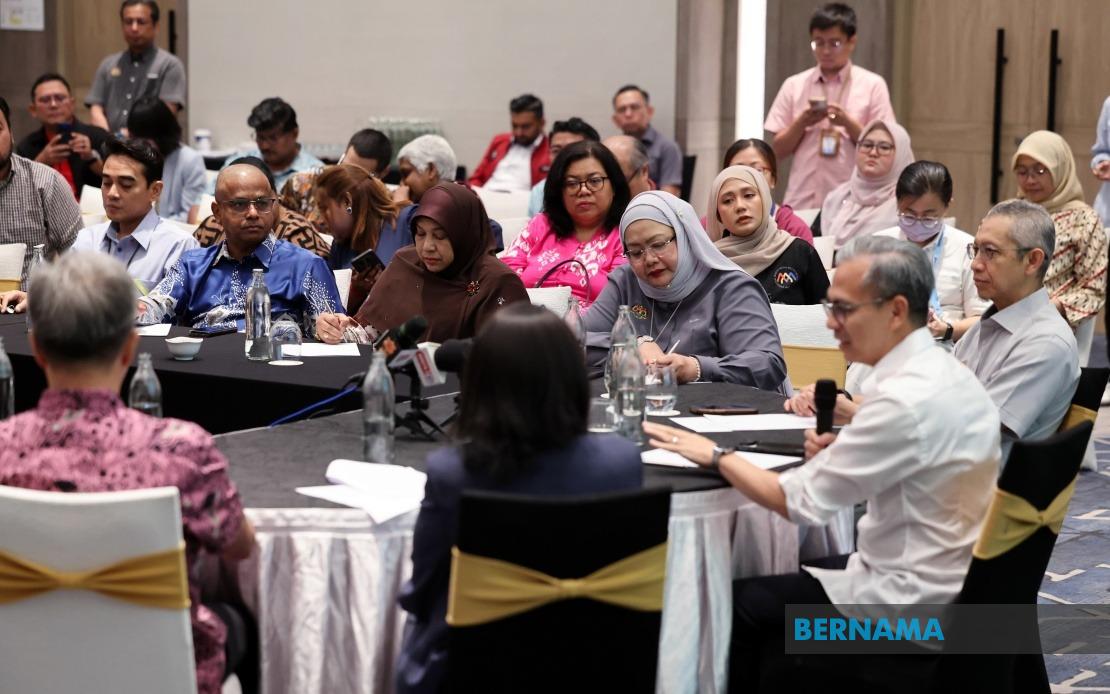
The HAWANA 2026 Summit officially commenced on June 20 at PICCA@Arena Butterworth Convention Centre, drawing media practitioners, industry guests and strategic stakeholders from across Malaysia and the broader ASEAN region. The gathering represents a significant occasion within Malaysia's media landscape, serving as a dedicated forum for journalists and news professionals to engage in substantive dialogue on professional standards and regional cooperation. The convention centre filled throughout the day as participants from various media organisations reconnected and explored the venue's exhibition spaces, which featured displays from industry partners alongside a curated photo gallery celebrating aspects of journalistic practice.
The convergence of regional delegates underscores HAWANA's expanded role beyond a national commemoration. By drawing media representatives from ASEAN member states, the summit positions itself as a platform for cross-border professional exchange and the cultivation of shared editorial standards across Southeast Asia. Such regional participation reflects growing recognition that media challenges—including misinformation, credibility erosion and the need for ethical journalism—transcend national boundaries and demand coordinated responses among practitioners across the bloc.
Prime Minister Datuk Seri Anwar Ibrahim will officiate the summit, lending government endorsement to discussions surrounding media integrity and journalistic responsibility. The ceremonial presence underscores the Malaysian government's stated commitment to supporting professional journalism and reinforces the position that robust, credible media serves broader societal interests. The event's elevation to prime ministerial level signals institutional recognition of journalism's role in democratic discourse and information ecology.
This year's theme, 'Media Integrity Strengthens Credibility', directly addresses a persistent challenge facing newsrooms throughout the region and globally. In an environment characterised by digital disruption, algorithmic distribution and the proliferation of unverified claims on social media platforms, traditional and emerging media organisations face sustained pressure to demonstrate trustworthiness and editorial rigour. The summit's thematic focus suggests that stakeholders view integrity as foundational—not merely an aspirational ideal but a practical necessity for media organisations seeking audience engagement and institutional longevity.
The organising ministry has targeted approximately 1,000 media practitioners for attendance, indicating the scale of Malaysia's journalism community and the significance assigned to convening practitioners for professional development and dialogue. This attendance projection reflects the breadth of Malaysia's media sector, encompassing broadcast networks, print publications, digital news platforms and news agencies operating across multiple languages and serving diverse constituencies throughout the country.
Bernama, the Malaysian National News Agency, leads implementation of the summit on behalf of the Ministry of Communications. As the state news agency with decades of institutional history, Bernama's central coordinating role situates the gathering within Malaysia's official information architecture while potentially enhancing the programme's reach and credibility among institutional media users. The agency's involvement reflects its traditional function as custodian of certain professional standards within Malaysia's journalism landscape.
HAWANA itself—the National Journalists' Day summit—operates as an annual mechanism for acknowledging media practitioners' contributions to public information. By institutionalising a dedicated occasion to recognise journalists' professionalism and commitment to accuracy and verification, the observance establishes explicit parameters for what constitutes credible journalistic practice. In doing so, it offers a counter-narrative to narratives of media decline or wholesale public distrust, instead affirming that professional journalism remains a valued social function worthy of formal acknowledgment.
The summit's scale and international participation suggest that addressing media credibility challenges has become a regional priority. For Malaysian media practitioners, the gathering provides networking opportunity and exposure to peer perspectives across ASEAN, potentially fostering collaborative approaches to shared professional challenges. For the broader Malaysian public, the summit's prominence may reinforce awareness that journalistic standards and integrity constitute active professional concerns rather than assumed givens.
The intersection of national commemoration and regional engagement reflected in the HAWANA 2026 programme positions Malaysian journalism within a Southeast Asian context where media landscapes increasingly converge around digital platforms and shared information challenges. By convening practitioners across borders and emphasising integrity as a collective responsibility, the summit articulates an aspiration toward regional media ecosystem where credibility remains paramount despite technological and commercial pressures.
Looking forward, the outcomes and discussions generated at HAWANA 2026 may influence professional discourse and editorial practices throughout the region for months following the summit's conclusion. Initiatives, frameworks or commitments emerging from the gathering could shape how media organisations approach fact-checking, source verification and audience engagement across Malaysia and neighbouring ASEAN nations.

