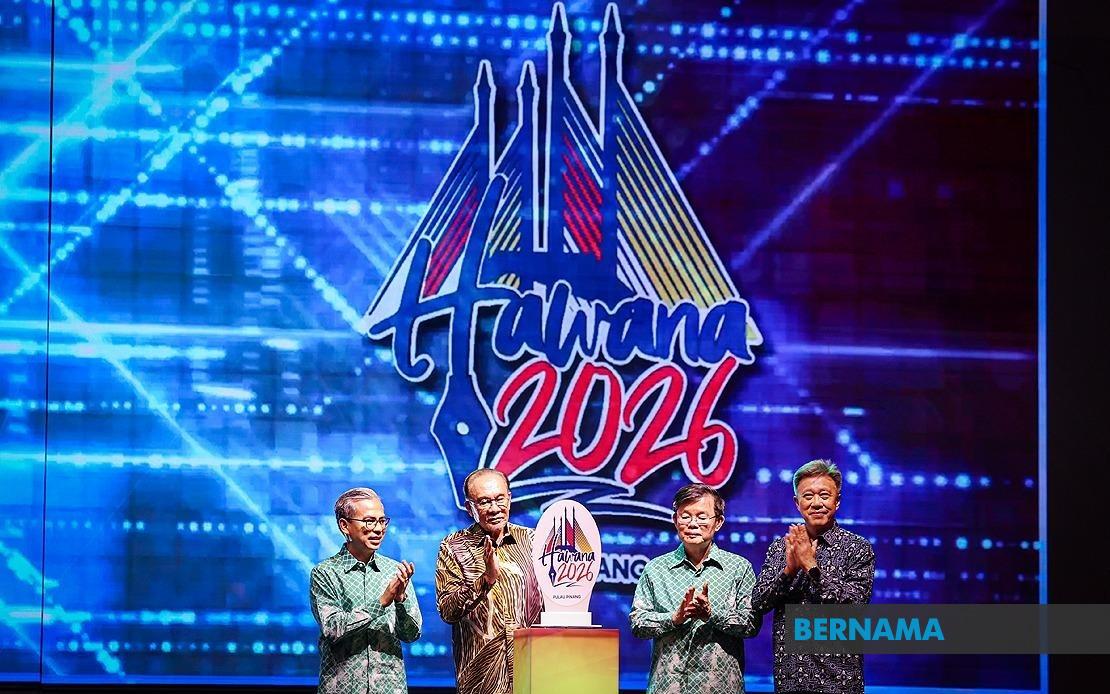
The three-day National Journalists' Day (HAWANA) 2026 concluded this week in Penang with a renewed emphasis on media integrity and credibility, drawing nearly 1,000 journalism professionals from across Malaysia and neighbouring ASEAN countries. Held at the PICCA@Arena Butterworth Convention Centre, the event demonstrated the regional appetite for strengthening professional standards and collaboration within the media industry at a time when journalists face mounting pressures from misinformation and digital disruption.
Prime Minister Datuk Seri Anwar Ibrahim officiated the main celebration on Saturday, using the occasion to underscore government support for the media's foundational role in sustaining an informed populace. His announcement of an additional RM1 million injection into the Tabung Kasih@HAWANA welfare fund signals tangible commitment beyond rhetoric. The fund, which has assisted 773 media practitioners with RM2.26 million since its 2023 launch, addresses a persistent vulnerability within the industry: journalists facing unexpected hardship often lack adequate safety nets. This expansion reflects growing recognition that supporting individual practitioners strengthens the entire ecosystem.
The Prime Minister's parallel commitment to continue the Media Innovation Fund addresses an equally pressing concern. As traditional revenue models collapse and digital platforms consolidate advertising spend, Malaysian media organisations struggle to fund digital transformation independently. Government backing for innovation efforts, whether in newsroom technology, audience analytics, or new content formats, provides essential bridge financing during this turbulent transition. Without such support, regional newsrooms risk falling further behind international competitors or succumbing to ownership consolidation that threatens editorial independence.
Communications Minister Datuk Fahmi Fadzil's announcement that Telekom Malaysia would contribute RM500,000 to the welfare fund represents a significant corporate endorsement of industry-wide welfare initiatives. This partnership model, where major corporations volunteer substantial contributions, suggests an emerging recognition among Malaysia's business leadership that healthy, independent media serves broader national interests. The private sector's participation reduces reliance on government funding alone and creates more sustainable, diversified support structures.
The ceremonial presentations to specific practitioners—including former Media Prima executive producer Noraini @ Talhah Mat Tahir, Makkal Osai journalist Guanalan Sengalaney, and former Kwong Wah Yit Poh freelancer Ch'ng Lay Wah—personalised the welfare fund's impact. These individuals represent the profession's backbone: experienced journalists who have contributed decades to their craft but lack institutional safety nets. Public recognition of their struggles acknowledges an uncomfortable truth: journalism, despite its public importance, often leaves practitioners vulnerable in their final working years or after illness or injury disrupts employment.
The HAWANA Award recognition for former Broadcasting director-general Datuk Suhaimi Sulaiman honoured career-long contributions to the sector, while the posthumous Special HAWANA Award 2026 to Azlan Idris carried profound emotional weight. Azlan's leadership at Bernama Radio since 2007, combined with his roles at TV3, NTV7, and Channel 9, exemplified the multi-platform expertise increasingly demanded of modern broadcast journalists. His involvement in organising four HAWANA editions underscored how individual practitioners contribute to industry institution-building beyond routine reporting.
The newly formalised memorandum of understanding between Bernama and Timor-Leste's Agência Noticiosa de Timor-Leste (TATOLI) extended regional cooperation into practical channels for news exchange and professional development. Such bilateral agreements, particularly with smaller ASEAN nations, help build capacity within less-resourced newsrooms while creating pathways for Malaysian media to develop regional expertise. For Timor-Leste, partnership with Malaysia's national news agency offers institutional learning and technical support; for Bernama, it strengthens positioning as a regional media leader and opens access to stories and perspectives from an important but often-overlooked neighbour.
The three-day RIUH Pi HAWANA Carnival, featuring local musical acts including Exists, Bunkface, and Kugiran Masdo alongside interactive workshops and food vendors, intentionally expanded HAWANA beyond professional conferences into broader cultural celebration. This approach recognises that journalism's credibility ultimately depends on public trust and understanding. By creating accessible, entertainment-oriented engagements with media themes, organisers attempted to demystify journalism and reach audiences beyond the newsroom. The involvement of 24 local creative brands and 20 food vendors simultaneously supported the broader creative economy.
Conference programming addressed substantive industry challenges through multiple forums. The Malaysia Media Retreat 2.0, organised by the Malaysian Federation of Media Clubs, and the Malaysian Press Institute's town hall titled "2035: Will Journalists Still Exist?" confronted uncomfortable questions about journalism's future sustainability and relevance. These discussions occur within a global context where newspaper employment has contracted sharply, regional digital players struggle to achieve profitability, and artificial intelligence poses novel challenges to traditional reporting workflows. Malaysian journalists discussing these issues openly, with government representatives present, suggests industry willingness to engage honestly about transformation.
Penang's hosting role extended beyond logistics to economic and promotional benefits for the state. Governor Tun Ramli Ngah Talib's pre-summit dinner for 350 guests, including ASEAN media leaders, enhanced Penang's profile as a destination capable of hosting major national events. The state's infrastructure and organisational capacity received implicit validation through the event's apparent smoothness, potentially attracting future high-profile gatherings and associated tourism revenue.
Bernama's lead role in organising HAWANA 2026, including conducting the first live television broadcast in the event's history, demonstrated the national news agency's institutional capacity at a moment when its strategic importance to Malaysia's information ecosystem warrants scrutiny. As digital platforms fragmentise news consumption and traditional wire services face uncertain futures, Bernama's ability to convene the industry and manage major events reinforces arguments for its continued investment and relevance.
The thematic emphasis on "Media Integrity Strengthens Credibility" addressed the core challenge facing journalism globally: eroding public trust. Misinformation proliferation, partisan polarisation, and perception of media bias have damaged journalists' social standing across democratic societies. HAWANA 2026's focus on integrity standards, coupled with practical support mechanisms and frank discussion of industry challenges, attempted to reposition Malaysian journalism as a trustworthy, professionally-grounded institution capable of withstanding contemporary pressures. Whether this messaging translates into meaningfully improved public perception, or simply represents wishful institutional rhetoric, remains to be seen in coming months.

