An ambitious educational initiative is set to reshape learning approaches in Johor, with the state government and Harvard University jointly developing the Program for Scientifically-Inspired Leadership (PSIL) for students at two secondary institutions. The partnership, which will be formally implemented in January 2027, represents a significant effort to expose Malaysian students to internationally benchmarked teaching methodologies while maintaining local educational standards.
According to Aznan Tamin, chairman of the Johor State Education and Information Committee, approximately 100 carefully selected students from Sekolah Menengah Kebangsaan Tasek Utara and SMK Seri Kota Puteri 2 will form the initial cohort under the Sekolah Rintis Bangsa Johor (SRBJ) pilot framework. The programme, originally established by Harvard University in 2019, prioritises experiential learning methodologies that challenge students to think critically, communicate effectively, and develop leadership competencies—skills increasingly recognised as essential for 21st-century success across Malaysian and global workforces.
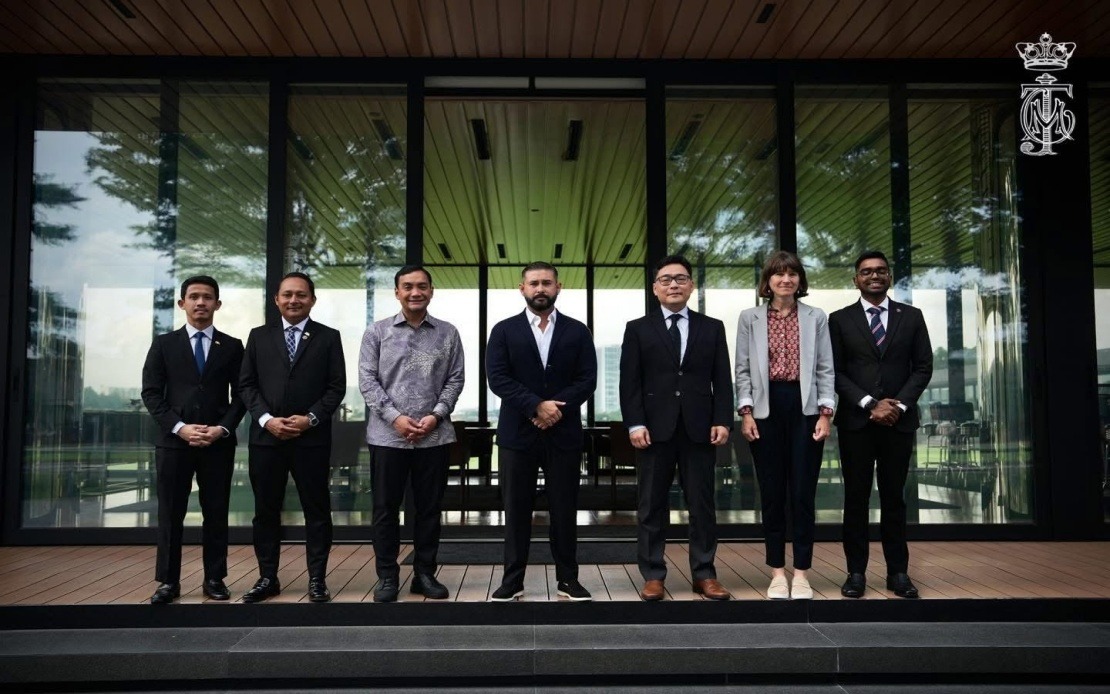
The depth of Harvard's commitment to the Johor initiative became evident following a recent meeting between the university's delegation and Tunku Mahkota Ismail, the Regent of Johor. Dr Dominic Mao, assistant director of Undergraduate Studies and a Lecturer in Molecular and Cellular Biology, and Dr Andrea Wright, assistant dean of Harvard College, travelled to the state to formalise discussions around the collaboration. This high-level engagement signals genuine institutional support rather than a peripheral outreach effort, positioning Johor as a strategically important location for the university's regional educational expansion.
Beyond student participation, the programme acknowledges that sustainable educational transformation requires investment in teacher development. Consequently, SRBJ has allocated professional development spaces for 40 educators, who will participate in active learning pedagogy workshops designed to modernise classroom instruction. These sessions aim to equip teachers with contemporary teaching techniques that foster interactive and creative learning environments—a departure from traditionally lecture-centred approaches that remain prevalent in many Malaysian secondary schools.
The structural design of SRBJ reflects a carefully balanced educational philosophy that responds to multiple stakeholder expectations. The institution maintains rigorous English language competency without diminishing the Malay language's importance, addressing parental concerns about cultural and national identity while preparing students for global communication demands. Simultaneously, the curriculum prioritises science, technology, engineering and mathematics (STEM) subjects, directly aligning with Malaysia's long-standing strategic emphasis on developing knowledge-economy skills and competing in technology-driven sectors.
Integrating international-standard competency assessments into SRBJ's evaluation framework represents another distinctive feature of this collaboration. Rather than operating parallel assessment systems, the partnership embeds Harvard-informed evaluation methodologies within Malaysia's Ministry of Education compliance requirements. This approach avoids creating a disconnected elite track while genuinely internationalising the academic standards experienced by participating students, potentially establishing a replicable model for other Malaysian schools seeking global educational engagement without institutional fragmentation.
For Malaysian context, this initiative arrives at a particularly opportune moment. Discussions around education quality and competitiveness have intensified as employers across Southeast Asia report skills gaps among graduates, particularly in critical thinking, cross-cultural communication, and adaptive problem-solving. Johor's partnership with Harvard offers a practical demonstration of how state-level governments can broker partnerships with world-class institutions to pilot innovative approaches, potentially generating evidence and experience that inform broader national education policy discussions.
The Tunku Mahkota's personal involvement in receiving the Harvard delegation reflects broader state-level commitment to positioning Johor as an education hub within Southeast Asia. This positioning carries economic implications beyond immediate student benefits, as it attracts international educational investment, develops local expertise in global best practices, and potentially positions the state to offer consulting or training services to neighbouring regions seeking similar educational modernisation.
Practically speaking, the January 2027 implementation timeline provides adequate preparation period for curriculum adaptation, teacher training completion, and institutional readiness. The 100-student pilot size represents a manageable scale for initial assessment of programme effectiveness, outcomes tracking, and iterative refinement before potential expansion across Johor's broader secondary school system or adoption by other Malaysian states.
This collaboration also underscores a broader shift in how elite international universities approach educational impact in Southeast Asia. Rather than limiting engagement to undergraduate recruitment or limited outreach programmes, Harvard's investment in developing leadership competencies among Malaysian secondary school students suggests commitment to influencing educational trajectories at formative stages. For Malaysian policymakers and educators observing this partnership, the precedent suggests that securing meaningful global university partnerships requires articulating clear institutional vision, demonstrating serious commitment to educational innovation, and positioning local initiatives within internationally recognised frameworks.
The success of this initiative will likely be measured not merely through academic performance metrics but through the longer-term trajectories of participating students—their university choices, career pathways, and whether they retain the critical thinking and leadership competencies cultivated through PSIL. Such longitudinal outcomes will determine whether this represents a transformative educational model worthy of scaling or a well-intentioned but ultimately limited international programme.