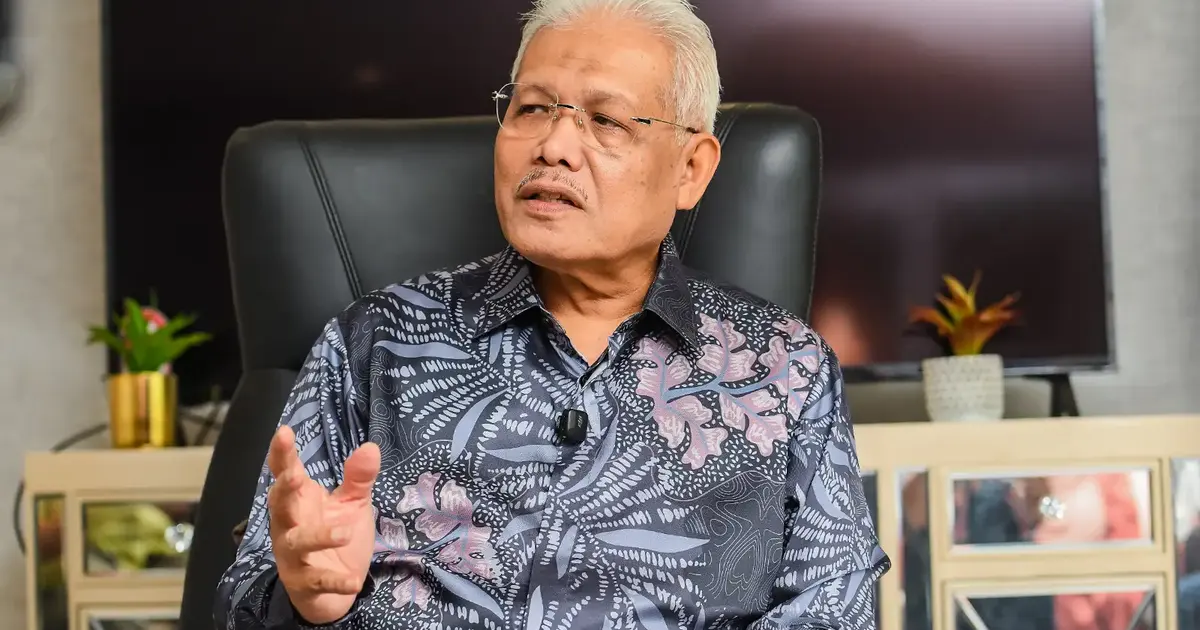
The PAS-led Perikatan Nasional coalition is making a strategic gambit by repositioning Hamzah Zainudin as a central figure in its political machinery, with political analysts viewing this manoeuvre as the bloc's attempt to cultivate a more centrist and inclusive image ahead of the sixteenth general election. Observers argue that Hamzah, whose political profile differs markedly from the more religiously-oriented positioning of some PN allies, represents the coalition's calculated effort to appeal to urban and middle-class voters who may harbour reservations about the Islamist direction of the alliance.
The elevation of Hamzah comes at a critical juncture for PN, which has struggled to translate its 2022 electoral gains into sustainable governance legitimacy. Political commentators suggest the coalition recognises that maintaining its support base requires expanding beyond the core constituencies that propelled it to opposition status. By placing Hamzah in a prominent campaign role, PN leadership appears to be signalling a willingness to present multiple ideological facets to the electorate, thereby softening perceptions of the coalition as monolithic or ideologically rigid.
Analysts note that PN's emphasis on Hamzah as the face of its general election campaign reflects deeper calculations about voter demographics and regional sensitivities. The coalition faces a paradoxical challenge: while its core support derives significantly from constituencies aligned with PAS's Islamic governance agenda, winning back federal power requires demonstrating moderation to crucial swing voters in urban centres and multiethnic areas. Hamzah's political persona, characterised by pragmatism and administrative experience, offers PN a vehicle for transmitting moderate messaging without alienating its Islamic-oriented base.
The strategic positioning of Hamzah also addresses PN's image problem in economically advanced regions such as the Klang Valley and central Johor, where voters have historically favoured parties perceived as technocratic and growth-oriented. Political observers suggest that PN calculated that deploying Hamzah would help neutralise concerns among these constituencies about the coalition's competence in macroeconomic management and secular governance matters. This represents a deliberate bifurcation of PN's campaign narrative: projecting stability and administrative capability through Hamzah while allowing allied parties to address core constituencies with distinct messaging.
The coalition's alignment strategy must also be understood within the context of Malaysian electoral dynamics, where no single bloc commands permanent voter loyalty. Analysts emphasise that PN's decision to elevate Hamzah reflects acknowledgement that the political landscape has fragmented since the 2022 election, with voters increasingly volatile and issue-dependent in their electoral choices. By associating itself with Hamzah's moderate credentials, PN seeks to recapture ground it may have lost to Pakatan Harapan among professional and semi-urban voters who rejected the coalition's previous configuration.
Furthermore, observers point out that Hamzah's prominence serves PN's internal cohesion objectives alongside external positioning goals. The coalition encompasses diverse elements, from PAS's religious conservatism to Bersatu's technocratic orientation to smaller partners with varying political philosophies. Positioning Hamzah as a unifying figurehead allows PN leadership to project consensus and prevent the kind of fissures that have historically plagued multi-party coalitions in Malaysia. His role as principal campaign architect signals that PN operates through negotiated consensus rather than any single faction's dominance.
The moderate narrative that PN seeks to advance through Hamzah carries significant implications for Southeast Asian politics more broadly. Malaysia's political trajectory influences regional approaches to Islamism, secularism, and democratic governance. Should PN successfully communicate moderation while maintaining core supporter enthusiasm, it would demonstrate that Islamist-aligned coalitions can compete effectively for centrist votes without abandoning their base commitments. Conversely, any disconnect between Hamzah's moderate messaging and PN's grassroots activities could expose the coalition to accusations of electoral deceit.
Political analysts also flag that Hamzah's return reshapes the competitive dynamics between Malaysia's major political blocs. Pakatan Harapan must now contend with a more sophisticated and publicly presentable opposition that has absorbed lessons from its previous electoral contests. PN's embrace of moderate messaging through Hamzah represents an maturation of the coalition's political strategy, moving beyond reactive positioning toward proactive image construction. This development suggests that the upcoming general election will feature more intensive competition for swing voters and floating constituencies than previous contests.
The long-term sustainability of PN's moderate positioning remains uncertain, however. Political observers caution that maintaining this image requires consistent adherence to moderate rhetoric across all party components and alliance partners. Any high-profile incidents involving PN-aligned figures or organisations making divisive statements on religious or ethnic issues could undermine the narrative coherence that Hamzah's prominence is designed to establish. The coalition's credibility on moderation will be tested continuously throughout the campaign period and beyond.
Ultimately, analysts assess that Hamzah's return represents PN's recognition that winning Malaysian elections in the contemporary era demands sophisticated coalition management and multi-layered appeal. Rather than relying on single-issue or single-constituency mobilisation, the bloc is attempting to project broad-spectrum credibility. Whether this recalibration proves electorally decisive will depend on whether voters perceive Hamzah's moderate positioning as authentic party evolution or merely tactical campaign packaging designed for temporary advantage.