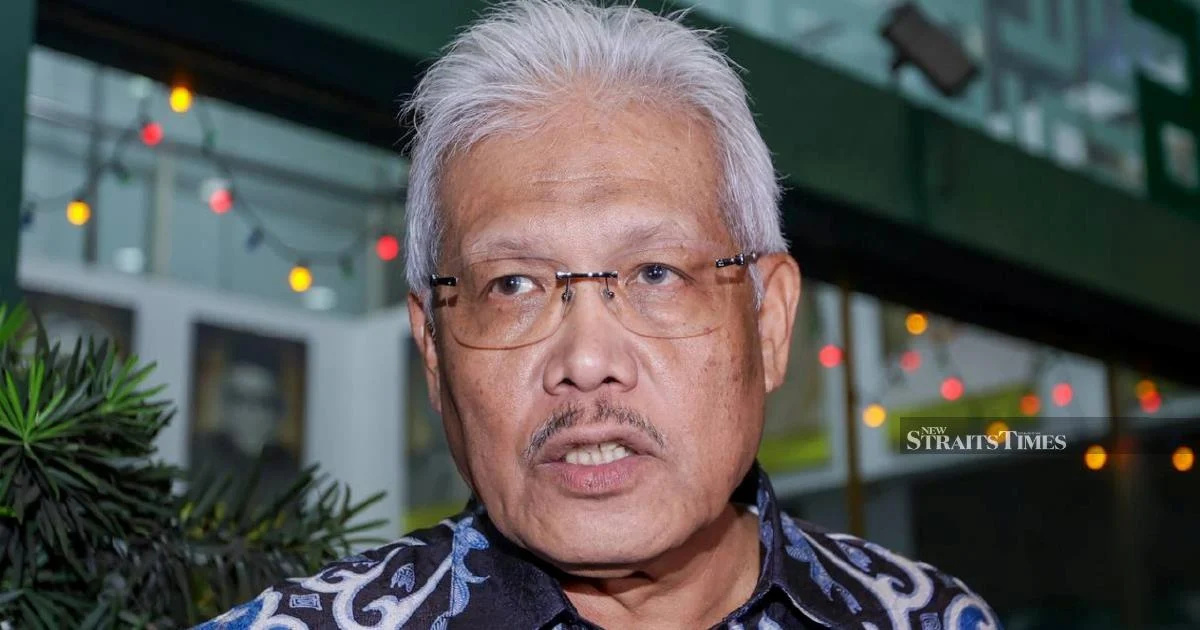
Datuk Seri Hamzah Zainudin's appointment as opposition leader will be officially communicated to the Speaker of the Dewan Rakyat before lawmakers return to the chamber for their next sitting, according to announcements made in Kota Baru. The formal documentation required to recognise his new position within Parliament's institutional framework will be processed and delivered ahead of the parliamentary session, establishing the procedural clarity needed for him to perform his duties in this elevated role.
The move represents a significant leadership restructure within Malaysia's parliamentary opposition, as the appointment carries substantial constitutional and ceremonial weight. The opposition leader position grants the holder formal recognition as the head of the non-government parties, allowing them to command parliamentary resources, secure speaking time during key sessions, and represent the alternative government perspective on national affairs. This formal acknowledgement through the Speaker ensures that Hamzah's new responsibilities are recognised across all parliamentary processes and protocols.
The timing of submitting the notice before parliament reconvenes underscores the importance of orderly institutional procedures in Malaysia's democratic system. By providing advance notification, it allows parliamentary officials to prepare necessary administrative arrangements, including seating assignments, correspondence protocols, and ceremonial adjustments that accompany a change in opposition leadership. This bureaucratic foundation ensures smooth functioning once parliament is in session.
Hamzah's elevation to opposition leader reflects the evolving political dynamics within Malaysia's non-government coalition. His appointment indicates that opposition parties have coalesced around his leadership to provide unified direction and coordinated scrutiny of government policies. The opposition leader role demands not merely parliamentary acumen but also the ability to unify diverse factions—a challenge particularly acute in Malaysia's multi-ethnic and multi-party environment where competing interests often complicate consensus-building.
Parliamentary opposition leadership in Malaysia carries responsibilities extending far beyond the chamber itself. The position requires extensive engagement with media, civil society, and the broader electorate to articulate alternative policy visions. Hamzah will need to coordinate statements across multiple opposition parties, present coherent critiques of government initiatives, and offer plausible policy alternatives that could credibly govern should the political balance shift. This ambassadorial dimension makes the formal recognition crucial for establishing his authority to speak on behalf of the entire opposition bloc.
The procedural submission to the Speaker represents Malaysia's institutional commitment to orderly political transitions, even within competitive parliamentary environments. Unlike systems where opposition leadership emerges through informal recognition alone, Malaysia's approach requires documented notification to the country's chief parliamentary official. This creates a transparent audit trail and prevents ambiguity about who legitimately holds the position, protecting both the individual and the institution.
For Malaysian politics more broadly, opposition leadership appointments signal the direction of future parliamentary contests and agenda-setting. The emphasis placed on formalising Hamzah's position suggests that opposition parties view this consolidation as a foundation for sustained challenge to government policy direction. The next parliamentary sitting will thus likely feature more coordinated opposition questioning, particularly on portfolios where the coalition believes government performance has faltered.
Regionally, Malaysia's institutional handling of opposition leadership appointments demonstrates how Southeast Asian democracies navigate power transitions and institutional recognition. The formal notice process reflects constitutional maturity and respect for parliamentary conventions even amid political competition. This procedural adherence contrasts with less institutionalised contexts where leadership succession may be contested or ambiguous, providing stability to democratic processes.
The submission of formal documentation also ensures that international observers and diplomatic missions can clearly identify Malaysia's opposition leadership structure. Many foreign governments track opposition leaders as potential future government partners, and the formal notification provides clarity on parliamentary representation. This clarity becomes particularly relevant when opposition figures engage in international diplomacy or when foreign governments need to coordinate with Malaysian opposition on cross-border issues.
Looking ahead, Hamzah's formal installation as opposition leader will test his ability to unite diverse opposition parties around coherent policy platforms. His effectiveness in this role will likely determine whether opposition unity holds through the next general election or whether factional tensions resurface. The next parliamentary sitting will provide the first substantial test of his leadership, with how he coordinates opposition questioning and policy responses signalling his strategic direction and coalition management skills.
The formal recognition also carries implications for succession planning within opposition parties. By establishing clear institutional acknowledgement of leadership structures, Malaysian politics establishes clearer pathways for rising political figures seeking to advance within their parties. This transparency about leadership hierarchies, while not eliminating internal competition, at least ensures that ambition operates within recognised institutional frameworks rather than through undefined backroom negotiations.

