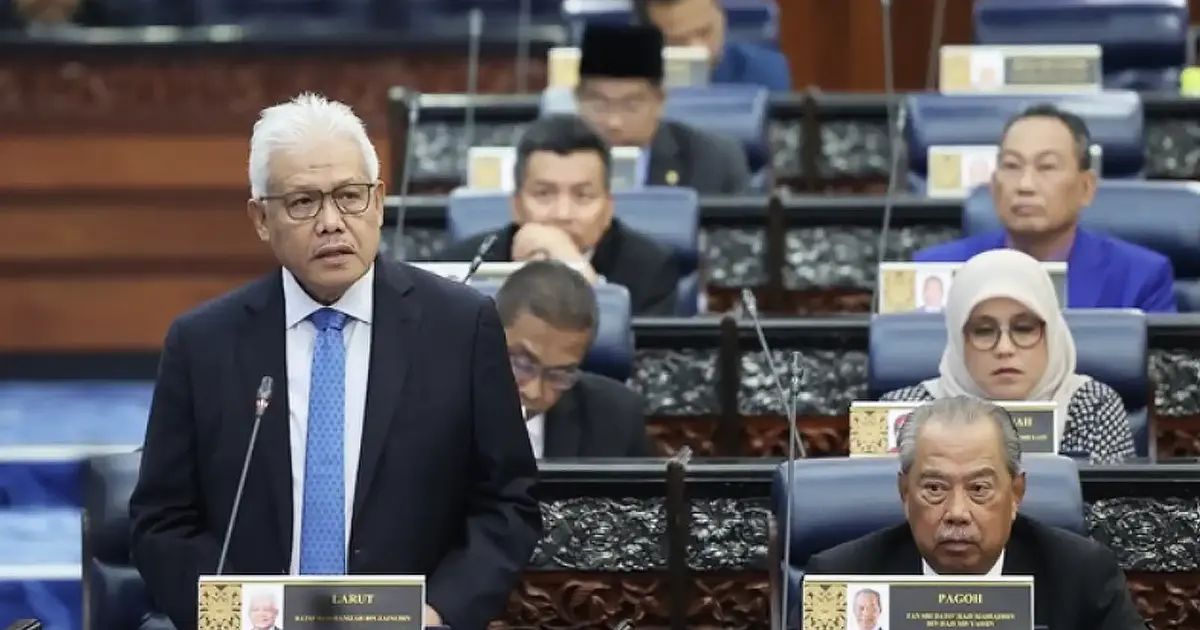
Parliamentary seating arrangements have shifted once again, with Hamzah Zainudin now occupying the opposition leader's position in the front row of the Dewan Rakyat, marking a notable change in the legislative chamber's physical hierarchy. The adjustment represents more than mere administrative shuffling—it signals evolving dynamics within Malaysia's fractious opposition coalitions and the ongoing realignment of political forces that have characterised the nation's parliament since 2020.
Muhyiddin Yassin, who chairs the Bersatu party and previously held a prominent seat adjacent to the opposition leader's spot, has been repositioned substantially lower in the seating order. His relocation by eight positions down the front row underscores shifting power balances within opposition circles, where the numerical strength and strategic positioning of parliamentary blocs carry considerable symbolic and practical weight. The Bersatu president's move is particularly significant given the party's history of navigating complex coalition arrangements and its central role in multiple government formations over recent years.
These seating changes in parliament reflect deeper reorganisations within Malaysia's opposition structures. The Democratic Action Party, Pakatan Harapan, and various independent opposition figures have been involved in ongoing negotiations about representation and positioning. Hamzah's restoration to the opposition leader's seat suggests PKR or associated opposition blocs have secured sufficient numbers or negotiating leverage to justify his prominence, though precise details about the composition of the opposition benches remain subject to continued political manoeuvring.
For Malaysian observers, parliamentary seating arrangements carry weight beyond aesthetics. The positioning of opposition leaders directly influences media visibility, symbolic authority during debates, and the practical ability to lead questioning during parliamentary sessions. Front-row placement provides enhanced television coverage during proceedings broadcast to the nation, amplifying an opposition figure's profile and their capacity to shape public discourse on key issues. Hamzah's repositioning therefore extends into the realm of political communication strategy.
The changes also illuminate the precarious nature of Malaysian coalition politics. Bersatu has oscillated between government and opposition benches multiple times, and Muhyiddin's reduced prominence may reflect either tactical repositioning or reduced parliamentary numbers within the current opposition alignment. The party's flexibility in joining different coalitions—having supported both Perikatan Nasional and Barisan Nasional at various points—has occasionally left it vulnerable to marginalisation when coalitions reconfigure.
Hamzah Zainudin's return to the opposition leader's seat may indicate that his faction or party has strengthened its position within the broader opposition framework. His background and previous roles in government make him a seasoned figure capable of conducting parliamentary business with institutional knowledge. The restoration to prominence also suggests that opposition MPs have reached consensus, however temporary, on leadership representation and procedural matters within their collective parliamentary contingent.
These modest-sounding adjustments deserve attention because Malaysian politics operates through precisely such mechanisms of positioning, symbolic gesture, and hierarchical arrangement. The seating plan in any parliament reveals crucial information about coalitional strength, which personalities retain influence, and how different factions are valued within broader groupings. When opposition figures are shuffled, it often precedes or follows substantive changes in political alignment, negotiating positions, or parliamentary strategy.
The implications for Malaysia's legislative effectiveness merit consideration as well. Clear opposition leadership and stable seating arrangements facilitate more coherent parliamentary scrutiny of government policies. Opposition leaders positioned prominently can more effectively coordinate questioning, raise substantive policy issues, and hold the administration accountable. Conversely, instability in opposition arrangements—as reflected in frequent seating changes—can fragment the watchdog function and reduce parliament's effectiveness as a check on executive power.
For Southeast Asian observers monitoring Malaysian politics, these developments illustrate how fluid and unstable coalition arrangements remain. Unlike systems with entrenched multi-party structures, Malaysian politics features actors frequently crossing coalitional boundaries, leading to regular rearrangements of parliamentary geography. These shifts, while appearing technical or minor, often signal larger negotiations about political futures, ministerial portfolios, and strategic positioning ahead of potential elections or government formation scenarios.
The repositioning of Hamzah and Muhyiddin occurs within Malaysia's broader political context of relatively evenly divided parliamentary strength between government and opposition. With neither side commanding overwhelming majorities, individual MPs and faction leaders retain considerable negotiating power, making their precise positioning and formal recognition particularly consequential. The seating changes thus represent not merely housekeeping but active recalibration of parliamentary weight and influence.
Government stability and opposition coherence both depend partly on such arrangements remaining acceptable to key stakeholders. Should opposition figures feel inadequately recognised or positioned, dissatisfaction could trigger further shifts, defections, or tactical repositioning. Conversely, stable seating arrangements help solidify coalition identities and negotiating positions, reducing uncertainty within parliamentary operations and facilitating more predictable legislative outcomes.

