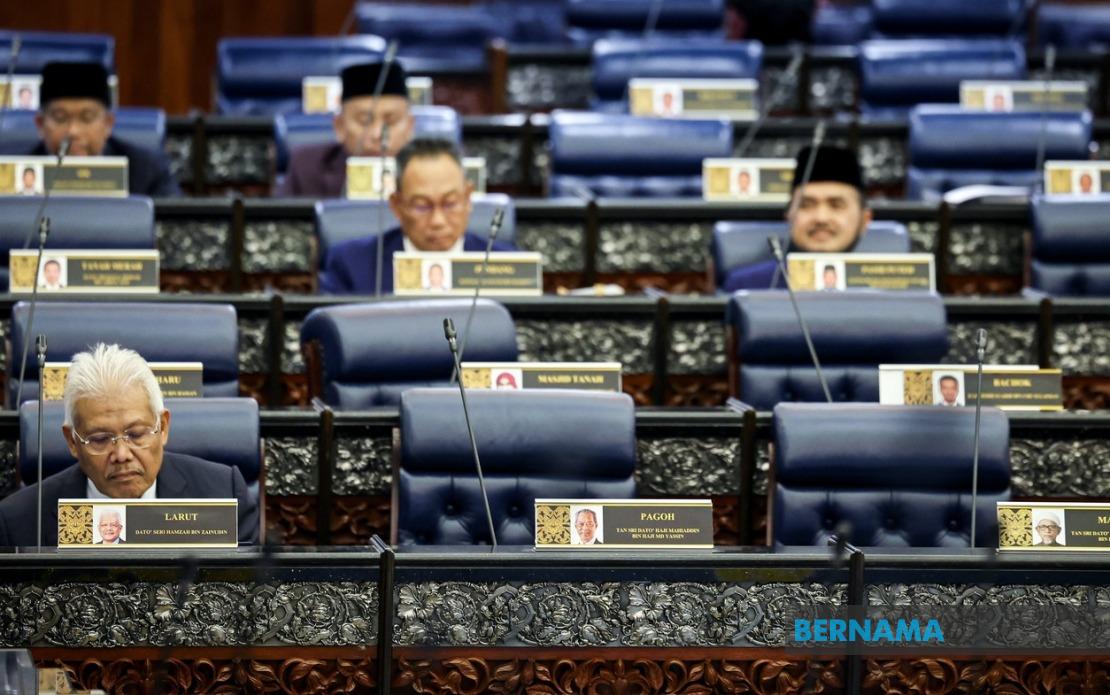
The Dewan Rakyat's chief official has formally acknowledged the return of Larut MP Datuk Seri Hamzah Zainudin to his position as opposition leader, marking a significant moment of clarity in Malaysia's parliamentary dynamics as the legislature prepares to reconvene this week. Speaker Tan Sri Dr Johari Abdul revealed to the national news agency that he has received official documentation confirming Hamzah's status, resolving any ambiguity surrounding the leadership of the parliamentary opposition ahead of an extended sitting that will run through mid-July.
The formal confirmation comes after weeks of background discussion within opposition ranks, culminating in a public acknowledgment from PAS president Tan Sri Abdul Hadi Awang during the Reset Malaysia Convention, where he announced that Hamzah had assumed control of opposition affairs once more. This restoration of authority places Hamzah in a commanding position to shape parliamentary strategy during a session that will test the resolve of both government and opposition coalitions at a time of considerable political fluidity in Malaysian politics.
Alongside this confirmation, Parliament is implementing a reconfigured seating arrangement that reflects the evolving parliamentary landscape. The updated floor plan, effective from June 19 according to Parliament's official documentation, repositions several MPs to accommodate operational and political requirements. Pagoh MP and Bersatu president Tan Sri Muhyiddin Yassin has relocated to accommodation in Block E of the chamber, a shift undertaken at his personal request, signalling potential adjustments to his parliamentary engagement as his party navigates its complicated relationship with the broader political framework.
Hamzah's position on the opposition front bench remains unchanged, where he sits alongside Kemaman MP and Perikatan Nasional chairman Datuk Seri Dr Ahmad Samsuri Mokhtar. This arrangement underscores the continued alignment between Hamzah's leadership and the broader Perikatan coalition, which maintains its organised presence in Parliament despite the fractious political environment. The front bench seating reflects Perikatan's standing as the largest opposition grouping, capable of mounting coordinated parliamentary challenges to government initiatives.
For Malaysian observers and political analysts, the formal confirmation of Hamzah's opposition leadership carries practical implications that extend beyond ceremonial recognition. The opposition leader holds substantial procedural powers within Parliament, including priority in speaking arrangements, influence over parliamentary questioning schedules, and the ability to shape narratives around government policies. Hamzah's reinstatement to this role suggests the opposition is attempting to present a unified, strategically coherent counter-government presence during a parliament that has proven increasingly volatile and unpredictable in recent years.
The timing of these arrangements coincides with intensifying national discourse on several fronts, from economic management to reform initiatives, making this parliamentary session particularly consequential. With the legislature scheduled to sit from June 22 through July 16, members will grapple with legislation, budgetary matters, and policy scrutiny during a period when public attention to parliamentary affairs remains elevated. The clarity of opposition leadership provides structural stability that has been periodically absent from Malaysian Parliament in recent cycles.
Muhyiddin's relocation to Block E, while presented as a personal request, nonetheless invites speculation about shifting political calculations within Bersatu and the broader opposition coalition. The Pagoh member's prominent role in Perikatan leadership places him in a delicate position between factional interests, and his willingness to adjust his physical parliamentary position may reflect tactical recalibration as the opposition prepares for sustained engagement with government business. His continued prominence within Perikatan ranks ensures that any shifts in his positioning carry wider implications for opposition cohesion.
The Dewan Rakyat calendar designates this sitting as the Second Meeting of the Fifth Session of the 15th Parliament, a designation that places it within the regular rhythms of Malaysia's legislative cycle while acknowledging the parliament's extended duration. This extended sitting period provides ample opportunity for comprehensive parliamentary work across multiple issue areas, though it also extends the pressure on members across multiple weeks of engagement and debate. Opposition members will need to marshal resources and focus to maintain effective scrutiny across such an extended timeframe.
Parliament's formal documentation and communication systems, overseen by Speaker Johari and his administrative team, have processed these various adjustments with the procedural efficiency expected of Malaysia's legislative institution. The Speaker's direct confirmation to news media about Hamzah's status demonstrates institutional commitment to transparency regarding parliamentary arrangements, even when political sensitivities might otherwise encourage discretion. Such openness contributes to public understanding of parliamentary mechanics and leadership arrangements that can otherwise remain opaque to wider audiences.
As Malaysian Parliament settles into its June sitting, these arrangements establish frameworks within which government and opposition will negotiate, debate, and contest policy for the next several weeks. Hamzah's confirmed leadership provides the opposition with organizational clarity and strategic direction, while the revised seating layout reflects Parliament's ongoing adaptation to political realities. Together, these developments suggest a legislature preparing to function with defined structures and established relationships, even as the underlying political landscape continues to shift beneath the surface.

