The attendance of Sabah Chief Minister Datuk Seri Hajiji Noor and senior leaders from the Gabungan Rakyat Sabah (GRS) at the 2026 PKR National Congress in Melaka underscores a significant deepening of political cooperation between Malaysia's federal government and the East Malaysian state, marking a notable development in the country's coalition politics ahead of the next general election cycle.
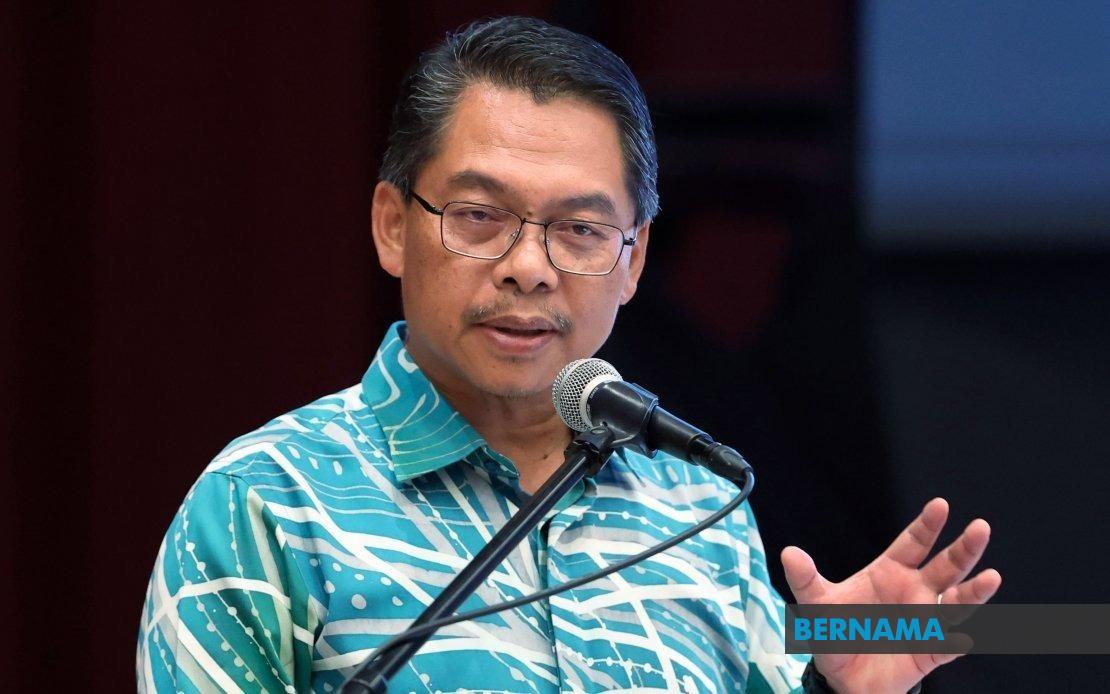
Datuk Mustapha Sakmud, chairman of Sabah PKR's leadership council and minister in the Prime Minister's Department overseeing Sabah and Sarawak affairs, characterised the presence of Hajiji and his counterparts as a manifestation of genuine partnership that transcends traditional party lines. The symbolic importance of this cross-party representation at the congress reflects the pragmatic governance model that Prime Minister Datuk Seri Anwar Ibrahim has sought to cultivate since taking office, wherein regional cooperation supersedes narrow partisan interests. For observers of Malaysian politics, the attendance signals confidence in the stability of the federal-state relationship and a willingness among both GRS and PKR to prioritise collective development agendas over electoral competition.
Mustapha articulated a broader vision for this partnership, emphasising that the cooperation spans multiple governance dimensions beyond electoral considerations. Development outcomes, economic growth, and improvements to public infrastructure constitute the operational framework through which Sabah and the federal government intend to deliver tangible benefits to constituents. This approach resonates particularly in Sabah, where infrastructure gaps, connectivity challenges, and economic diversification remain persistent policy concerns that frequently dominate public discourse. By positioning development as the central objective of federal-state collaboration, both administrations are attempting to build a narrative wherein political differences become secondary to shared goals of prosperity and service delivery.
The substantive priorities articulated by Mustapha reveal the specific areas where this cooperation will be tested. Ensuring that economic opportunities reach Sabahan communities, upgrading basic amenities in rural and urban areas, and addressing quality-of-life issues constitute the measurable standards against which this partnership will be judged by voters. The emphasis on translating political stability into developmental outcomes reflects lessons learned from previous administrations, where partisan conflict sometimes resulted in resource misallocation and delayed implementation of federal programmes in states governed by opposition parties.
A particularly salient dimension of this cooperation concerns the Malaysia Agreement 1963 (MA63), the constitutional document underpinning Sabah and Sarawak's participation in the Malaysian federation. Mustapha committed PKR to continued advocacy for implementation of MA63 provisions in a manner that respects Sabah's constitutional position and special status within the federation. This commitment holds considerable importance for Sabahan political consciousness, as MA63-related grievances—encompassing matters of revenue sharing, immigration autonomy, and state legislative prerogatives—remain emotionally resonant issues that cut across party affiliations. By explicitly acknowledging these concerns at a PKR national forum, the party signals its recognition that federal governance requires sensitivity to East Malaysian constitutional expectations and historical understandings.
The specific contingent of GRS leaders present at the congress represented a cross-section of Sabah's state executive council, including Deputy Chief Minister I Datuk Seri Dr Joachim Gunsalam and several portfolio-holding ministers responsible for rural development, youth affairs, education, and creative industries. This breadth of representation suggests that the coordination between GRS and the PKR-led federal government is institutionalised rather than driven by individual personalities alone. The presence of GRS deputy secretary-general Datuk Mohd Razali Mohd Razi and Balung assemblyman Syed Ahmad Syed Abas further indicated that party-level structures are engaged in the partnership framework, not merely executive-level officials.
Mustapha's statement that political differences should not impede constructive dialogue on matters affecting Sabah's interests touches upon a fundamental tension in Malaysian federalism. Historically, federal-state relations have been complicated when different political coalitions control these tiers of government. The narrative being advanced here suggests a maturing of Malaysian political discourse wherein competing parties acknowledge that certain governance objectives—infrastructure development, economic competitiveness, and institutional functionality—transcend partisan competition. Whether this represents a sustainable evolution in political culture or a temporary accommodation of electoral circumstances remains to be tested as the nation approaches its next general election.
Prime Minister Anwar Ibrahim's formal officiation of the congress, themed 'Memugar Reformasi, Membina MADANI,' provided the institutional platform for these demonstrations of unity. The MADANI framework, which emphasises inclusive development and institutional reform, appears to be gaining traction among coalition partners as an operational philosophy capable of accommodating diverse regional interests. The willingness of Sabahan leaders from a different political formation to participate prominently in a PKR national forum suggests that the MADANI messaging may have resonated beyond the party's traditional support base, at least among East Malaysian elites concerned with pragmatic governance outcomes.
For Malaysian federalism more broadly, the Sabah-federal government coordination model demonstrated at the PKR congress illustrates how multi-party coalitions might function more effectively when regional considerations are elevated in decision-making hierarchies. Sabah's geographic remoteness from Peninsular Malaysia, its distinct legal and constitutional framework, and its demographic characteristics create governance challenges that generic federal policies cannot adequately address. The implicit recognition by both GRS and the MADANI government that these particularities require collaborative solutions rather than imposed mandates potentially offers a template for managing similar dynamics in Sarawak and other federalism contexts within Malaysia's complex political architecture.

