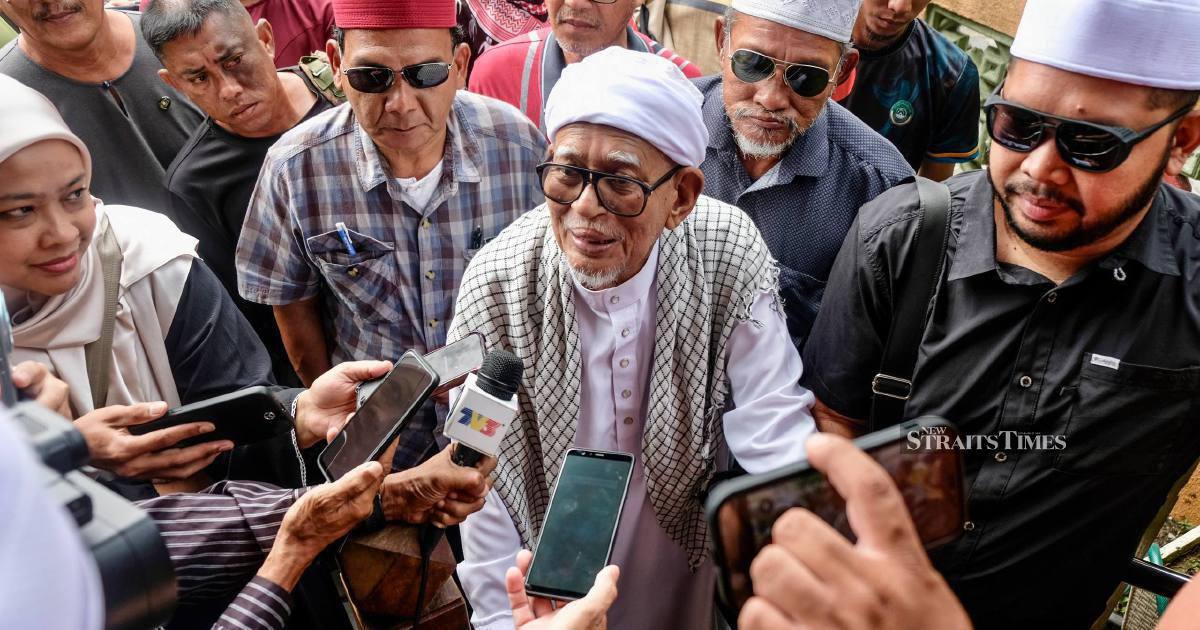
PAS president Tan Sri Abdul Hadi Awang has expressed disappointment over Prime Minister Datuk Seri Anwar Ibrahim's decision to skip the special parliamentary sitting convened to examine the Royal Commission of Inquiry report into the troubled pilgrimage fund Lembaga Tabung Haji. The Marang MP contends that the premier's attendance was essential given the gravity of the findings and the far-reaching implications for the institution that has long served as the custodian of Malaysian Muslims' savings for the Hajj pilgrimage.
The TH RCI report represents the culmination of months of detailed investigation into the governance failures and financial irregularities that plagued the fund, which at one point faced potential insolvency despite managing vast sums on behalf of pilgrims. Hadi's intervention underscores the political sensitivity surrounding the inquiry's conclusions and suggests that opposition figures view the PM's absence as a strategic misstep that diminishes parliamentary accountability on such a critical matter.
Tabung Haji has occupied a unique place in Malaysian public consciousness, serving as a savings vehicle for approximately 8.8 million members seeking to fulfil one of Islam's five pillars. The fund's near-collapse several years ago shocked stakeholders and prompted calls for comprehensive investigation into how institutional safeguards had been breached. The RCI was established to examine precisely these failings, making the parliamentary sitting an important moment for the government to publicly address the recommendations and outline remedial measures.
Hadi's criticism reflects broader parliamentary dynamics where opposition parties can leverage such occasions to highlight government accountability. By drawing attention to the PM's absence, the PAS leader implicitly questioned whether the executive was taking the inquiry's conclusions with adequate seriousness. This framing is particularly potent in Malaysian politics, where perceptions of leadership engagement shape public confidence in institutional reform efforts.
The significance of the parliamentary sitting extends beyond immediate accountability rituals. The RCI findings are expected to propose structural changes, governance reforms, and potentially accountability measures for officials implicated in TH's mismanagement. Parliamentary debate on these recommendations serves multiple functions: legitimising reform processes, signalling political will for implementation, and allowing lawmakers to scrutinise executive commitments to action.
Anwar's absence raises questions about the government's prioritisation of various parliamentary business. Whether the PM attended to other pressing matters or delegated responsibility to a minister remains unclear, but the optics matter considerably in Malaysian politics where demonstrating personal concern for critical national matters carries symbolic weight. For religious and conservative constituencies who view TH as integral to their Hajj aspirations, prime ministerial attendance would have conveyed commitment to protecting Islamic institutional integrity.
The TH situation has long held political resonance across Malaysia's diverse constituencies. The fund's troubles emerged during a period of heightened scrutiny of public institutions, and its near-collapse prompted concerns about governance standards across government-linked companies. That the issue intersects with Islamic affairs and pilgrimage adds another dimension, making it particularly sensitive for a Muslim-majority nation's leadership to visibly engage with remedial processes.
Tabung Haji's recovery trajectory since the acute crisis period has been monitored closely by both stakeholders and observers concerned with institutional reform. The RCI report likely contains specific findings about past management decisions and recommendations for preventing future misadventure. Parliamentary examination of these findings creates public record while allowing the legislative branch to exercise oversight over executive follow-through on reforms.
Hadi's intervention also reflects PAS's strategic positioning within Malaysian politics. As a party with strong Islamic credentials and grassroots networks, PAS maintains particular standing when commenting on Islamic institutional matters. The party's criticism of the PM's parliamentary attendance can be understood partly as an attempt to position itself as more vigilant on issues affecting Muslim communities, particularly those dependent on TH's services.
The broader context involves Malaysia's journey toward strengthening parliamentary governance and institutional accountability. The parliamentary sitting on the TH RCI report represented an opportunity for the legislative branch to demonstrate its capacity for robust examination of executive institutions and their performance. Political leaders' attendance at such proceedings communicates faith in parliamentary processes and commitment to transparent governance.
For Southeast Asian observers tracking Malaysia's governance evolution, incidents such as this illuminate the ongoing tensions between executive prerogatives and parliamentary expectations. Democratic systems require visible leadership engagement with critical accountability mechanisms, and departures from such norms attract legitimate questioning from opposition figures and civil society analysts.
The TH case also serves as a reminder of the stakes involved in institutional governance across the region. Large public funds managing retirement and lifecycle savings demand robust oversight, transparent management, and decisive action when failings emerge. The parliamentary sitting and subsequent implementation of RCI recommendations will indicate whether Malaysia can translate investigation into meaningful institutional reform.

