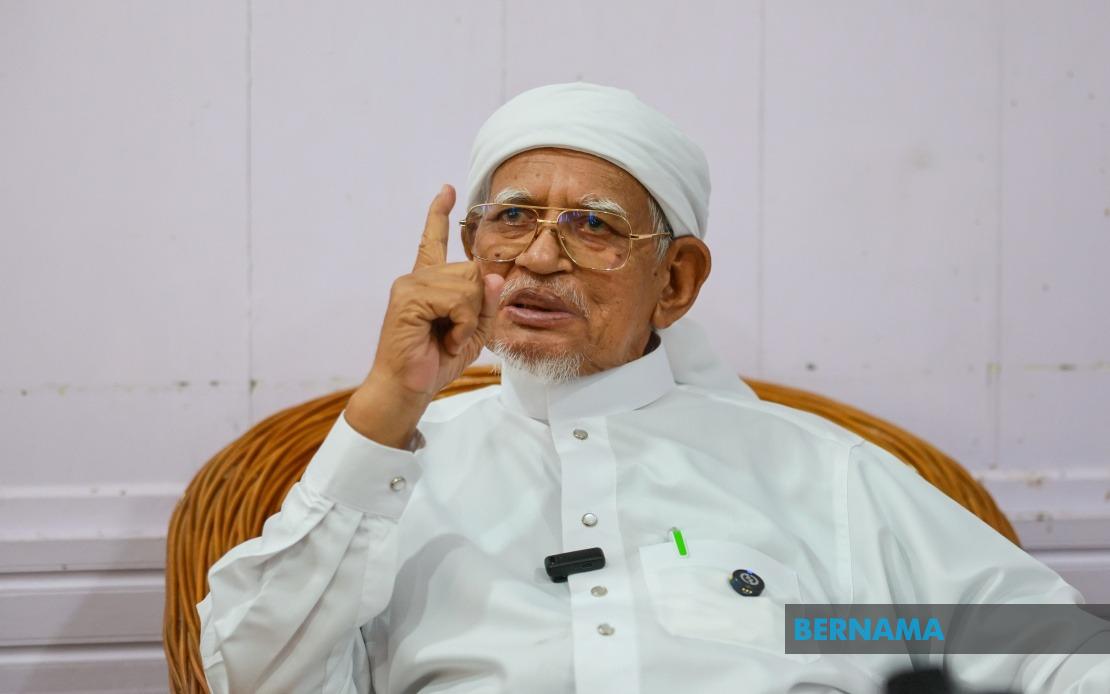
The internal rupture within Perikatan Nasional deepened on Wednesday when PAS president Tan Sri Abdul Hadi Awang declared that Bersatu had automatically forfeited its membership in the coalition after expressing plans to establish an alternative political alliance. Speaking at the Rusila Mosque in Marang, Abdul Hadi contended that no formal notification was necessary since Bersatu's membership termination occurred the moment the party publicly signalled its intention to pursue coalition arrangements elsewhere.
This stark assertion represents a significant escalation in the ongoing tensions between PN's component parties, particularly between PAS, which holds dominant influence in the coalition, and Bersatu, which has been increasingly isolated within the partnership. Abdul Hadi's comments came in response to reports that Bersatu president Tan Sri Muhyiddin Yassin intended to construct a new political bloc comprising multiple parties following outcomes from the Negeri Sembilan state election. The PAS leader's interpretation suggests that such public declarations constitute an implicit withdrawal from PN, negating any requirement for formal procedural steps.
However, Bersatu swiftly challenged this unilateral interpretation through its secretary-general Datuk Seri Mohamed Azmin Ali, who issued a forceful rebuttal contesting Abdul Hadi's authority to make such determinations. Azmin emphasised that the party's status within PN remains legally intact, grounded in his reading of the coalition's constitutional framework. According to Azmin's position, no automatic forfeiture mechanism exists within PN's governing documents that would strip a member party of its standing based solely on public statements about exploring alternative alignments.
The constitutional dispute centres on Clause 7A of the Perikatan Nasional Constitution, which Azmin cited as the legitimate pathway for resolving membership questions. Under this provision, only the coalition's presidential council possesses the authority to adjudicate matters concerning component party membership status. Azmin stated that this council body has not yet convened to formally address Bersatu's position, implying that any declaration regarding the party's expulsion would be premature and procedurally invalid without such deliberation.
This disagreement reflects deeper structural vulnerabilities within PN as a political coalition. Unlike more formally institutionalised alliances, PN appears to lack clear enforcement mechanisms and consensus-building procedures for managing internal disputes. The absence of established protocols governing membership transitions leaves room for conflicting interpretations of what constitutes grounds for expulsion or voluntary withdrawal. Azmin's invocation of constitutional procedure suggests Bersatu intends to fight any effort to remove it through technical means rather than accepting Abdul Hadi's assertion of automatic severance.
The Malaysian political landscape has witnessed recurring coalitional instability since the 2022 transition that brought PN into prominence following the collapse of the Perikatan Nasional government. Component parties have maintained competing interests and divergent policy priorities, creating persistent friction beneath the surface of public unity. Bersatu's recent manoeuvres toward forming alternative partnerships indicate the coalition may be fracturing along pre-existing fault lines as individual parties prioritise their electoral prospects over collective cohesion.
Azmin's announcement that Bersatu would lodge a formal complaint with the Registrar of Societies signals the party's determination to pursue institutional and legal remedies rather than acquiesce to what it characterises as Abdul Hadi's overreach. This escalation suggests both parties may be seeking external validation for their respective constitutional interpretations, transforming what might otherwise remain an internal coalition matter into a question requiring regulatory oversight. The Registrar's potential involvement could establish precedent for how political coalitions manage membership disputes in Malaysia's regulatory environment.
The timing of this rupture carries significance for Malaysian politics generally. State elections and the broader electoral cycle create pressure on coalition members to differentiate themselves and pursue individual advantage. Bersatu's apparent calculation that breaking away or repositioning itself offers electoral benefits reflects the coalition model's fundamental fragility when members perceive greater advantage in alternative arrangements. This dynamic has consistently plagued PN since its inception, with party leaders repeatedly threatening or executing moves toward different political configurations.
For observers monitoring PN's sustainability, this public conflict demonstrates that Abdul Hadi's PAS now possesses sufficient confidence or motivation to directly challenge Bersatu's remaining influence within the coalition. Previously, such grievances might have been managed through private negotiations or behind-the-scenes manoeuvring. The willingness to make unilateral public declarations about membership status indicates either escalating confidence that PN can function without Bersatu or increasing acceptance that the coalition's cohesion has already become irretrievable. Either interpretation suggests PN faces prolonged internal instability as component parties navigate competing strategic interests heading toward future electoral contests.

