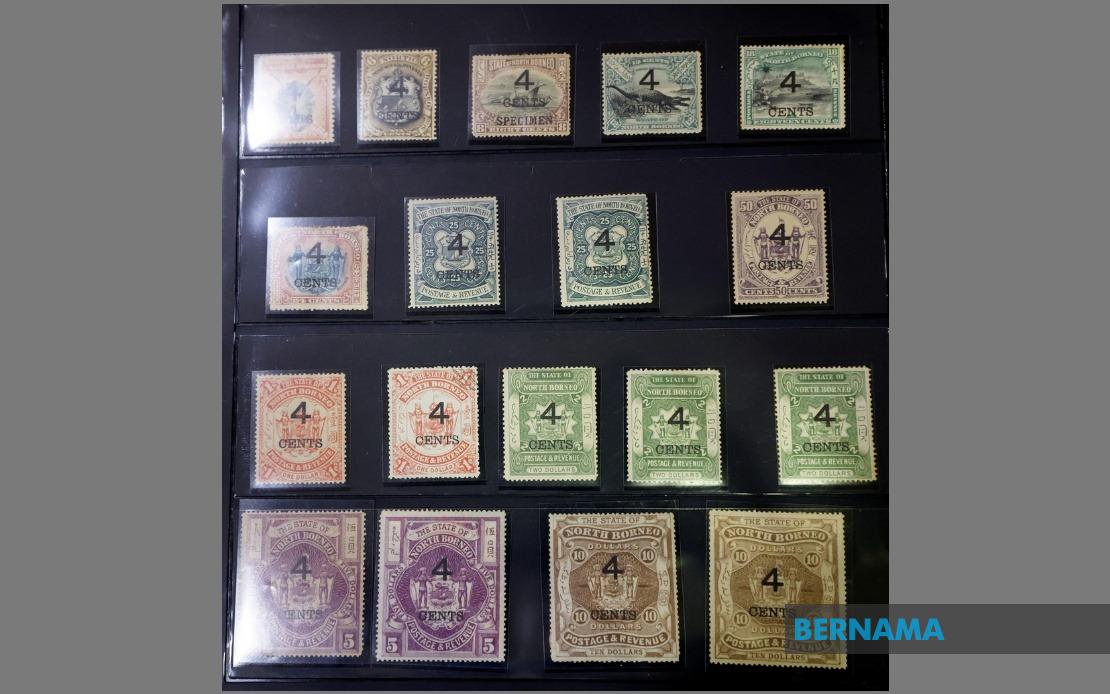
The postal history of North Borneo, captured in stamps spanning from 1883 to 1963, is facing an uncertain future as these fragile documents become increasingly scarce and difficult to obtain. Collectors and heritage enthusiasts in Kota Kinabalu are sounding the alarm about the need to safeguard what Dr Shari Jeffri, founder and president of the Borneo History Association, describes as a "living archive" that embodies the region's evolution across multiple historical periods. The urgency of preservation efforts has intensified as fewer people engage with stamp collecting, a hobby that once captivated multiple generations and served as a gateway to understanding local and imperial history.
Dr Shari, 56, views the philatelic collection not merely as objects of commercial or aesthetic value but as tangible witnesses to Sabah's past. Each stamp represents a snapshot of the era in which it was issued, revealing information about governance structures, cultural identity, economic activities, and technological advancement. The declining interest among younger generations represents a critical juncture where knowledge and artefacts risk disappearing into obscurity. His observations reflect a broader trend across Malaysia and Southeast Asia, where traditional hobbies that connected people to material culture and history are being superseded by digital pursuits, leaving crucial historical records vulnerable to loss and decay.
Recent surveys of antique dealers around Kota Kinabalu revealed the escalating difficulty in locating these stamps, with prices rising sharply depending on individual specimens' age, condition, and scarcity. Notably, researchers discovered an album containing a six-cent stamp featuring Queen Elizabeth II with a Dusun woman, alongside a ten-cent denomination depicting logging operations, both issued between 1954 and 1961. These particular specimens illustrate how stamp designs evolved to reflect Sabah's multicultural society and economic foundations, offering visual documentation of the territory's self-representation during different developmental phases.
Dr Shari's personal journey into philately began at age seven, though his serious collecting pursuits commenced during secondary school years. His collection represents a family inheritance, with much of it originating from his late grandfather, who worked at the Recreation Club Jesselton during the 1920s and was inspired by British officers who practised stamp collecting. This intergenerational transmission of knowledge and artefacts exemplifies how heritage preservation traditionally occurs within families, yet such informal mechanisms prove increasingly unreliable as modern lifestyles and housing patterns disrupt continuity. His family's legacy became a foundation for four decades of active collecting and scholarly investigation into North Borneo's postal systems and territorial history.
Among Dr Shari's most prized possessions are two two-cent stamps from the landmark 1883 issue, distinguished by their brown sailing boat design and postmark impressions. For serious collectors, the 1883 series represents a fundamental requirement for any respectable North Borneo collection, as these inaugural stamps established the visual language and administrative framework for subsequent denominations and designs. The 1883 issue exemplifies how stamps functioned as instruments of imperial governance, introducing standardised postal systems and creating the first official visual identity for the British North Borneo Chartered Company's territory. Each specimen tells a story extending beyond postage payment, encapsulating political intentions, technological capabilities, and artistic sensibilities of the Victorian era.
The design evolution of North Borneo stamps demonstrates how visual symbolism shifted to reflect changing perceptions of the territory and its governance. Early issues featured generic imperial imagery including lions, boats, and tigers, common across British colonial possessions, but from 1894 onwards, designs transitioned towards showcasing the region's distinctive natural heritage. Flora, fauna, and wildlife became dominant themes, representing a deliberate effort to establish Sabah's unique visual identity within the broader British Empire. A notable redesign in 1935 further crystallised Sabah's self-presentation, while denominations expanded from two sen to one dollar, reflecting the complexity of the postal system and the range of shipping and commercial needs within the territory. This progression in design philosophy reveals shifting administrative priorities and changing perceptions of the colonial possession's significance.
Authentication and preservation present significant challenges that require specialised knowledge and rigorous methodology. Dr Shari has consulted with regional experts Voon Kyam Foh and Tan Chun Lim based in Singapore, whilst also referencing authoritative catalogues such as Commonwealth & British Empire Stamps. Stamp paper composition, particularly the presence of adhesive layers, serves as a crucial indicator of authenticity and value. Specimens bearing complete postal cancellations—displaying comprehensive information including mailing dates, post office names, times, and locations—are considered especially valuable and rare, as they provide verifiable documentation of postal operations. Storage conditions prove equally critical to preservation; Dr Shari emphasises that acid-free albums are essential to prevent fading and deterioration, a maintenance burden that requires both financial investment and sustained commitment across decades.
The practical implications of preservation extend beyond individual collections to national and regional archival institutions. Sabah's government bodies, museums, and heritage organisations face mounting pressure to acquire and properly house these irreplaceable documents before they disappear into private collections or are lost to environmental damage. Unlike digital records that can be duplicated and distributed across multiple secure locations, original stamps represent unique artefacts that cannot be replaced once destroyed. The concentration of these items in private hands raises questions about long-term accessibility and public benefit. Without coordinated efforts to establish institutional collections and conservation standards, significant aspects of Sabah's postal and colonial history risk remaining fragmentary and inaccessible to researchers, educators, and future generations seeking to understand the territory's complex past.
The decline in stamp collecting represents a cultural shift with broader implications for how communities relate to material history and local heritage. Previous generations encountered stamps regularly through everyday correspondence, facilitating organic familiarity with postal systems and their visual language. The digital revolution, whilst enabling unprecedented global communication, has eliminated the tactile and visual encounters that once sparked curiosity about distant places and historical periods. Younger Malaysians may possess greater access to information about North Borneo's history through online resources, yet lack the sensory and personal connection that holding a century-old stamp provides. This disconnection between contemporary experience and historical materiality poses challenges for heritage institutions attempting to engage diverse audiences and foster appreciation for regional history.
The broader Southeast Asian context reveals similar vulnerabilities affecting postal histories across the region. Colonial-era stamps from the Philippines, Indonesia, Thailand, and other nations face comparable preservation challenges as collector populations age and decline. Regional cooperation on conservation standards, expert exchange, and institutional collaboration could strengthen individual nation efforts whilst building collective capacity to safeguard shared heritage. The North Borneo stamps represent not only Sabah's particular history but also illustrate broader patterns of imperial administration, economic development, and cultural adaptation that characterise the colonial experience across Southeast Asia. Preserving these artefacts contributes to regional historical understanding and provides comparative materials for scholars examining how different colonial administrations exercised control and represented territories visually.
Despite the displacement of letter-writing by digital communication, North Borneo stamps retain profound significance as historical documents and cultural artefacts. They occupy a unique position at the intersection of postal history, imperial studies, numismatics, and cultural heritage. The designs, denominations, postmarks, and physical compositions of these stamps encode multiple layers of information about Sabah's past, from administrative structures and economic activities to cultural identities and technological capabilities. Ensuring their survival requires integrated approaches combining individual collector dedication with institutional support, conservation expertise, and public engagement. Dr Shari's decades-long commitment exemplifies the passion required for preservation, yet such individual efforts prove insufficient without broader societal commitment to safeguarding material heritage. Moving forward, Sabah's communities, government bodies, and heritage institutions must collaborate to establish secure repositories, develop professional conservation protocols, and cultivate renewed interest among younger generations in the stories that these remarkable stamps tell about their homeland's historical journey.

