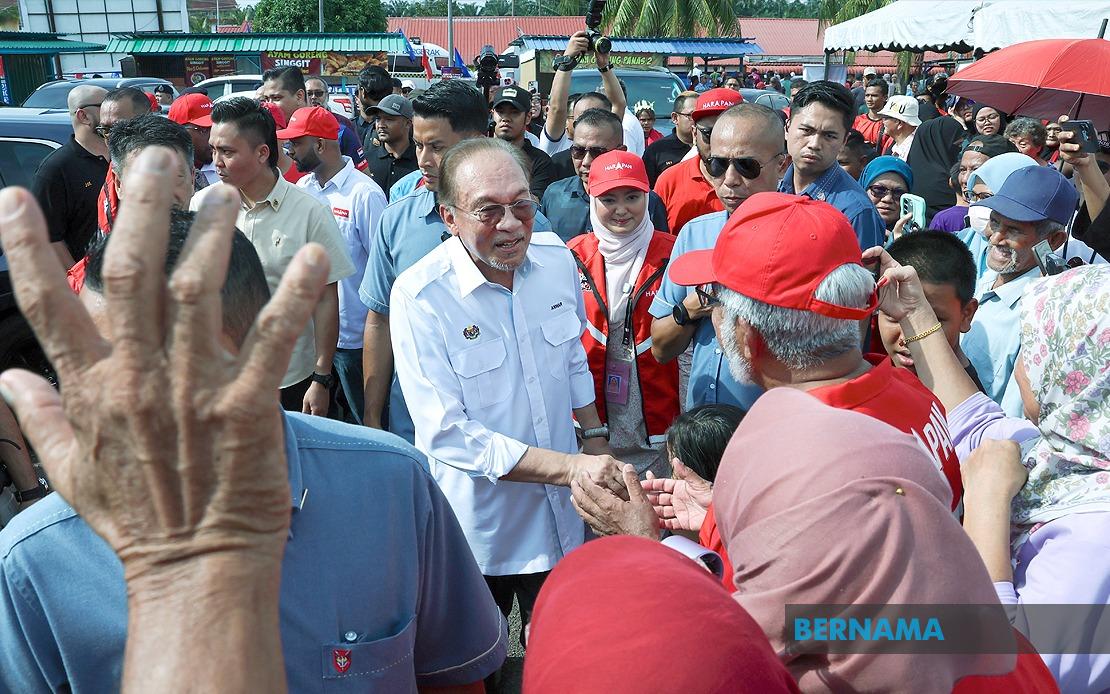
In a touching testament to familial devotion, a 58-year-old grandmother from Kampung Pudu in Segamat, Johor, mounted her motorcycle and navigated through an oil palm estate to grant her young grandson's cherished wish of encountering Prime Minister Datuk Seri Anwar Ibrahim in person. The journey undertaken by Rosimah Mohammad with nine-year-old Muhammad Afif Ikhwan transformed what could have been a simple village outing into a defining moment that the boy will treasure for years to come, capturing the essence of how ordinary gestures of parental care can intersect with national leadership in unexpected ways.
Muhammad Afif had harboured an earnest desire to meet the Prime Minister, a sentiment that had grown into genuine admiration over time. When an opportunity arose to see Anwar at a programme being held in Felda Palong Timur near Segamat on a Sunday in early July, Rosimah made the decision to take her grandson to the event. The anticipation consumed the young boy so thoroughly that sleep eluded him the night before, as excitement and nervous energy kept him awake while he contemplated the possibility of encountering his political idol.
Upon arriving at the venue, the pair positioned themselves strategically near the pathway to the stage, positioning Muhammad Afif where he would have the clearest view of the Prime Minister as he made his way through the crowd. Rosimah's strategy proved sound. As Anwar progressed along the route greeting members of the public, the determined nine-year-old managed to navigate through the assembled crowd and extended his hand towards the Prime Minister. What happened next exceeded even the grandmother's most optimistic hopes for the day.
Anwar not only acknowledged the boy with a handshake but took the remarkable step of inviting Muhammad Afif onto the stage to stand alongside him during his speech. For Rosimah, witnessing her grandson's reaction at that precise moment represented the culmination of her efforts. She observed firsthand the profound joy and astonishment that washed over the child as he found himself standing on stage with the nation's leader, an experience that transformed from an imagined scenario into lived reality in mere moments.
The human interest aspect of the story resonated sufficiently that word of Muhammad Afif's dream and its realisation reached the Prime Minister's office. Recognising the significance of what had transpired, Anwar instructed his team to make a follow-up gesture. PKR deputy information chief Siti Aishah Shaik Ismail was dispatched to the family's home in Kampung Pudu as an emissary representing the Prime Minister, arriving the day after the initial encounter.
This return visit carried symbolic weight beyond the physical gifts presented, which included a bicycle, a school bag, and a pair of shoes. The gesture signalled that Anwar had taken personal note of the encounter and considered it sufficiently meaningful to warrant direct acknowledgement through his office. The choice to send an official representative rather than merely sending items via post demonstrated a level of intentionality that spoke to the Prime Minister's appreciation for the family's effort and the boy's admiration.
What emerged from Rosimah's account of events in the days following was evidence of how profoundly the meeting had imprinted itself on Muhammad Afif's consciousness. The boy had begun a nightly ritual of hugging the shirt he had worn during his encounter with the Prime Minister, a tactile way of maintaining connection to what remained the most significant day of his young life. For a nine-year-old, this repetitive gesture represented a form of processing and preserving an experience that far exceeded ordinary childhood moments.
The narrative carries particular resonance within the Malaysian context, where stories of ordinary citizens' interactions with political leadership often gain cultural currency. The image of a grandmother from a modest village background taking extraordinary measures to facilitate her grandson's aspirations reflects deeply held values within Malaysian society regarding family bonds and the importance of supporting children's dreams. Such stories underscore how political figures, regardless of ideological stripe, remain symbols of national identity and achievement in the eyes of younger generations.
For rural communities in states like Johor, where agricultural estates dominate the landscape and economic opportunities may be more limited than in urban centres, the narrative also carries implications about accessibility and representation. The fact that a rural boy from Segamat could encounter the Prime Minister speaks to the continued relevance of ground-level political engagement, even as digital communication increasingly shapes political interaction. Rosimah's motorcycle journey through an oil palm estate became, in effect, a metaphorical bridge between village life and national leadership.
The subsequent visit by PKR's deputy information chief to the family home represents standard political practice of capitalising on positive human interest narratives, yet it also demonstrates a willingness within the Prime Minister's office to acknowledge and reward genuine expressions of admiration from ordinary citizens. The presentation of practical gifts rather than purely ceremonial items suggests consideration for the family's actual circumstances and needs.
Muhammad Afif's experience also invites reflection on the formation of political consciousness among Malaysian youth. At nine years old, the boy's admiration for the Prime Minister had already crystallised sufficiently to become a defining personal wish. This early political engagement, facilitated through his grandmother's determination and the Prime Minister's responsiveness, may well influence his own civic consciousness as he matures, creating a positive association between ordinary citizens and governmental accessibility.
Ultimately, the story transcends its surface details of a motorcycle journey through an estate and a chance meeting at a public event. It illustrates how dedication to children's aspirations, combined with a responsive political environment, can create moments that extend far beyond the initial encounter. For Muhammad Afif, the experience of standing on stage beside the nation's leader, carrying memory through a well-worn shirt embraced each night, represents more than a single episode—it has become woven into his developing understanding of what is possible and achievable in Malaysia.

