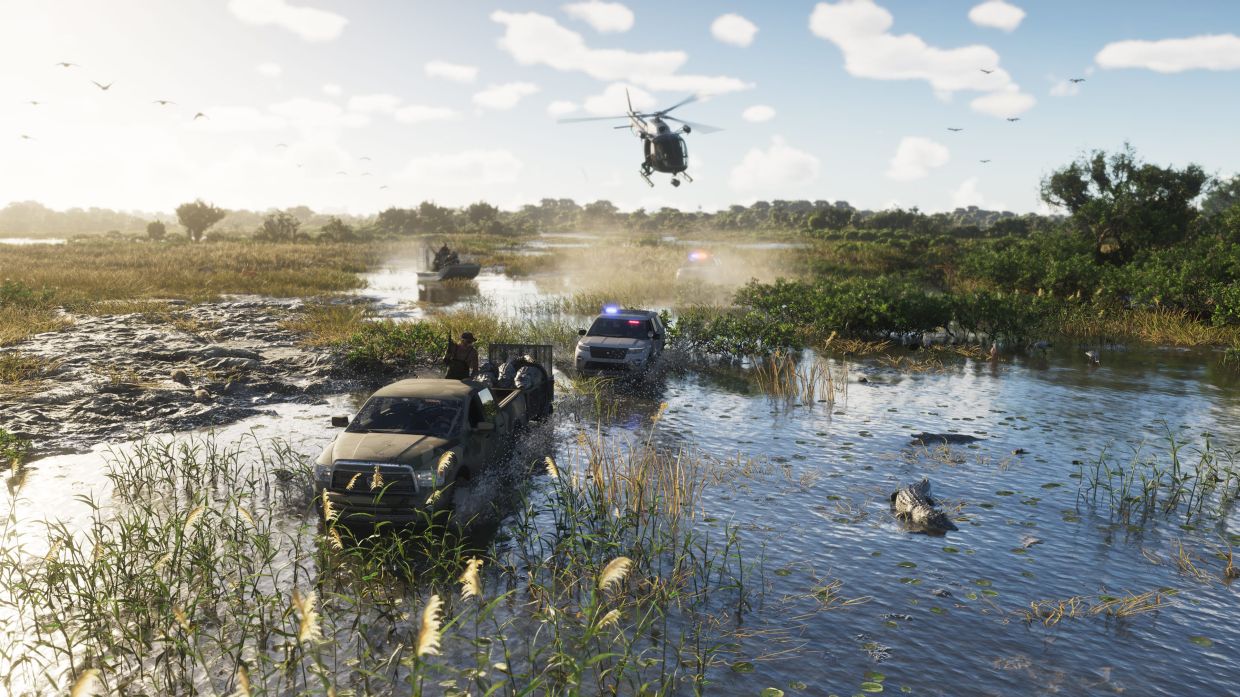
Rockstar Games and Netflix unveiled an official preview of the highly anticipated Grand Theft Auto VI on August 27, marking a carefully orchestrated damage-control response to weeks of unauthorised footage circulating online. The move came after leaked clips began appearing as early as August 18, forcing the developer to pivot from its original release strategy and partner with the streaming platform to control the narrative around one of the gaming industry's most closely guarded projects.
The preview introduces players to the game's protagonist, Jason, alongside a new female character named Lucia. The opening sequence captures them fleeing a drug operation with Jason carrying a crimson duffel bag, establishing the criminal partnership that forms the story's backbone. Screen interface elements reveal players will have the option to make the characters interact physically, suggesting a deeper relationship mechanic than previous instalments. Rockstar has deliberately positioned this duo as a modern interpretation of Bonnie and Clyde, evoking the legendary American outlaws whose bank robberies and violence made them folk anti-heroes before their fatal encounter with law enforcement in the 1930s.
The preview content showcased the franchise's signature gameplay elements across several sequences: high-speed vehicle pursuits through urban environments, scenes set within adult entertainment venues, tense rooftop encounters between characters, and multiple armed confrontations. These vignettes provide sufficient variety to appeal to the franchise's core demographic while maintaining enough mystery to preserve the full game's revelations. The official release demonstrated that Rockstar was willing to leverage Netflix's distribution capabilities, with the company's announcement prompting significant traffic that reportedly caused service disruptions for some regional Netflix users during midday hours on August 27. YouTube would receive the same preview content hours later, ensuring maximum reach across digital platforms.
The developer's frustration with the leak was palpable in an official statement released shortly after the unauthorised footage surfaced online. Rockstar described the situation as "heartbreaking," emphasising that the uncontrolled preview severely deviated from their meticulously planned unveiling schedule. The company acknowledged that six years of development and creative effort had been compromised by premature exposure to unfinished material, undermining the carefully timed marketing strategy that typically builds anticipation for major franchise releases.
In response to the breach, Rockstar's parent company, Take-Two Interactive, mounted an aggressive legal offensive. By August 21, the company had secured court orders from two federal judges in New York, compelling Microsoft and Discord to surrender data that could identify individuals responsible for disseminating the leaked content. The subpoena requests had been filed the previous day and subsequently approved through the standard court procedure, as confirmed by documents reviewed by international media. This approach represents an escalation in how the gaming industry protects intellectual property, moving beyond cease-and-desist letters to formal judicial intervention requiring technology platforms to facilitate investigations.
The unauthorised leaks were attributed to an online account operating under the pseudonym Cyberleek, whose operators have framed their actions as a principled disclosure intended to expose questionable practices within the gaming industry's business ecosystem. This framing suggests the leak was motivated by ideology rather than financial gain or personal vendetta, positioning the perpetrators as whistleblowers rather than opportunistic hackers. However, Rockstar's legal pursuit indicates the company views the situation as straightforward intellectual property theft regardless of the leaker's stated motivations.
The controversy surrounding Grand Theft Auto VI extends beyond the leak itself. Take-Two's decision to forgo physical copies entirely—limiting distribution to digital platforms exclusively—frustrated collectors and players who prefer owning tangible media. This strategy forces consumers into the digital ecosystem while eliminating the secondary market for used physical copies, which typically generates revenue for retailers and provides cheaper access for price-conscious gamers. The approach has become increasingly common in the industry but remains controversial among traditional gaming communities across Southeast Asia and globally.
Compounding fan dissatisfaction, Take-Two introduced a premium pricing tier offering enhanced content, a practice that divides the player base between standard and enhanced experiences. Such differentiation strategies, while economically rational for publishers seeking to maximise revenue per user, often alienate core audiences who view them as exploitative. In Malaysia and the broader Southeast Asian region, where purchasing power varies significantly across income brackets, tiered pricing can amplify accessibility concerns even as it expands potential revenue.
The unexpected enthusiasm from American military recruitment demonstrates the franchise's cultural penetration and cross-demographic appeal. A unit of the United States Army reportedly offered enlisted soldiers a four-day leave package in exchange for reenlisting for additional years of service, using Grand Theft Auto VI as an incentive. Of 130 eligible personnel, twenty soldiers reportedly accepted the offer, which required a minimum two-year service extension. This approach reflects how major cultural products have become strategic tools in military recruitment, leveraging gaming's appeal to younger demographics to support personnel retention objectives.
For Malaysian and Southeast Asian audiences, the Grand Theft Auto franchise carries significant cultural weight. The series has consistently generated controversy in the region's more conservative media environments, with various governments and advocacy groups questioning the moral implications of interactive crime simulation. Malaysia's regulatory framework remains relatively restrictive regarding gaming content, though enforcement inconsistency creates ambiguity for publishers and consumers alike. The global controversy surrounding Grand Theft Auto VI's development, theft of intellectual property, and aggressive corporate response reflect broader tensions within the gaming industry regarding creative control, consumer access, and corporate power.
The official Netflix release represents Rockstar's attempt to seize narrative control from leakers while simultaneously expanding distribution beyond traditional gaming platforms. By partnering with a global streaming service with 250 million subscribers, Rockstar ensures mainstream media exposure that extends far beyond hardcore gaming audiences. This strategy implicitly acknowledges that gaming has transcended niche entertainment status to become mainstream cultural product requiring sophisticated multimedia marketing approaches. The leaked content, conversely, demonstrated both the vulnerability of major corporate intellectual property and the determination of online communities to distribute content outside official commercial channels.
The incident encapsulates contemporary tensions within entertainment industries: the difficulty of maintaining secrecy around major projects, the asymmetry between corporate legal resources and individual leakers, and the fundamental challenge of controlling information in an interconnected digital ecosystem. For Take-Two and Rockstar, the ultimate success metric will not be preventing leaks but achieving sufficient commercial performance to justify the reported development expenditure. For consumers, the question remains whether official channels will provide sufficient value to justify premium pricing against competing entertainment alternatives.

