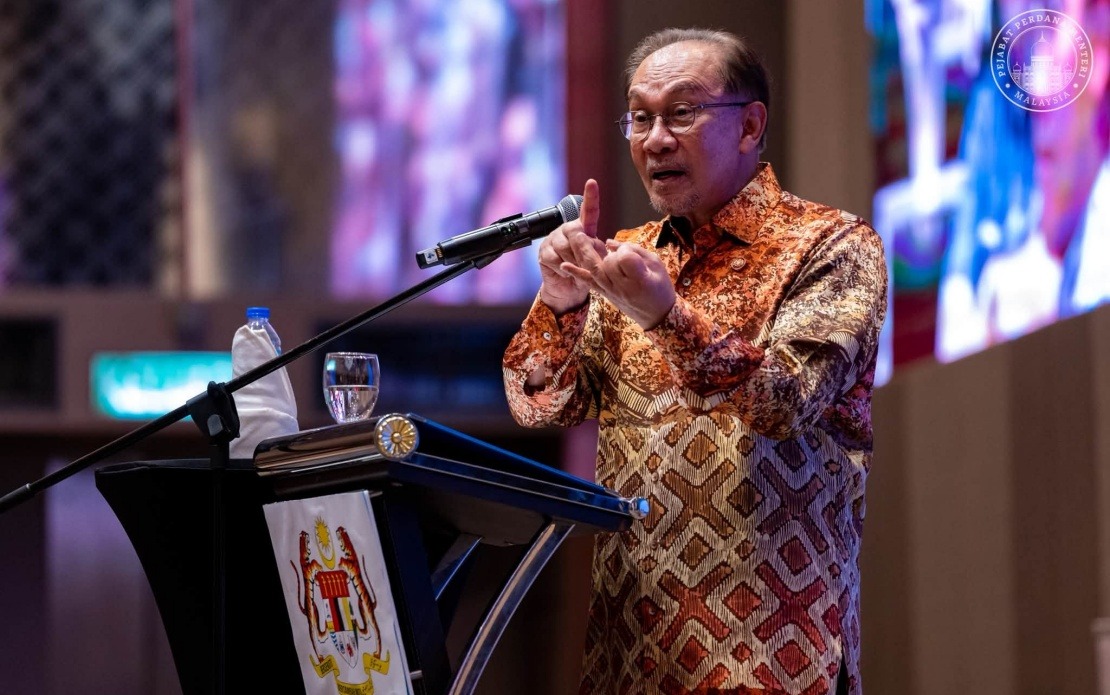
Prime Minister Datuk Seri Anwar Ibrahim has committed the government to leveraging its full capacity in supporting Malaysian youth as they navigate an increasingly intricate and demanding landscape of contemporary issues. This pledge emerged following a series of direct engagements with young people, including the "Temu Anwar" dialogue session and the inauguration of the 2026 International Youth Assembly (HAMKA) held in Klang, Selangor. The Prime Minister's remarks underscore a growing recognition within government circles that youth engagement and targeted policy responses remain critical to national cohesion and stability.
The contemporary environment confronting Malaysia's younger generation has become markedly more complicated, characterised by rapid technological change, shifting economic opportunities, and intensifying ideological debates across digital platforms. Within this context, Anwar's emphasis on ensuring that intellectual discourse among youth remains anchored in evidence, reasoned argument, and civility—rather than emotion-driven responses or sectarian loyalty—reflects concerns about polarisation trends. His framing suggests that the government views its role not merely as a provider of services or employment but as a custodian of the values and intellectual culture that should define public discourse.
The specific mention of listening to youth viewpoints and advice carries particular significance in Malaysian governance. Young people have increasingly articulated frustrations regarding economic mobility, mental health support, access to quality education, and meaningful participation in policy formation. By publicly documenting these consultations, the Prime Minister signals that youth concerns are being elevated as a priority consideration in cabinet-level deliberations, a departure from earlier administrations that often treated youth engagement as ceremonial rather than substantive.
Anwar's invocation of Abdul Malik Karim Amrullah—the historical Islamic scholar and intellectual known by his pen name Hamka—provides important contextual framing for the government's youth strategy. Hamka, who lived from 1908 to 1981, was celebrated throughout Southeast Asia as a bridge-builder between traditional Islamic scholarship and modern thought, emphasising that knowledge, intellectual courage, and openness to ideas were not contradictory to religious faith. By connecting the HAMKA assembly to this legacy, the government appears to be articulating a vision where Malaysian youth can embrace both spiritual and intellectual dimensions without experiencing tension between the two.
The emphasis on courage in expressing diverse viewpoints and the cultivation of intellectual openness carries implications for how the government may calibrate its approach to youth activism and civil society engagement. Rather than viewing youthful dissent or unconventional opinions as threats to be suppressed, the framing suggests a preference for channelling energetic youth perspectives into constructive dialogue and policy inputs. This represents a potentially significant shift from earlier approaches and may influence how security and home ministry officials handle youth-led advocacy movements going forward.
Malaysia's demographic composition places particular weight on youth policy effectiveness. A substantial proportion of the population remains under the age of forty, and their economic participation, social stability, and political engagement will substantially determine the country's trajectory over the coming decades. The government's capacity to translate commitments into concrete programmes—whether in mental health services, entrepreneurship support, skills development, or democratic participation—will test the credibility of such pledges.
The timing of these pronouncements is noteworthy, arriving amid broader regional conversations about youth disaffection across Southeast Asia. Countries including Thailand, Myanmar, and the Philippines have witnessed youth-led movements challenging established power structures and institutional arrangements. Malaysia's experience with its own youth mobilisations, particularly following the 2018 political transition, suggests that government receptiveness to youthful engagement—or its absence—shapes political stability and institutional legitimacy.
However, the translation of Prime Ministerial rhetoric into budgetary allocations and institutional reforms remains uncertain. Government commitments to work "within available capacity" introduce a qualifier that acknowledges resource constraints but may also serve as a hedge against overly ambitious expectations. Malaysian youth will ultimately evaluate government sincerity through the prism of concrete outcomes: whether mental health funding increases, whether education curricula evolve to reflect changing labour market demands, whether platforms for youth participation expand, and whether economic opportunities genuinely broaden for this demographic.
The HAMKA assembly itself represents an attempt to create structured spaces for youth dialogue and intellectual exchange. Such forums can serve valuable functions in identifying emerging concerns, testing policy ideas, and building civic engagement among younger citizens. The quality of such engagement, however, depends substantially on whether government officials approach these sessions as genuine consultation exercises or as public relations opportunities. The distinction carries weight for how younger Malaysians perceive their agency within the political system.
Looking forward, the government's commitment will be measured against its willingness to accommodate youth voices even when their conclusions challenge established orthodoxies or bureaucratic preferences. True support for young people navigating complex contemporary challenges implies accepting that their solutions and perspectives may diverge from conventional wisdom. This requires institutional flexibility and a genuine openness to intergenerational dialogue that some government structures and officials may find uncomfortable.

