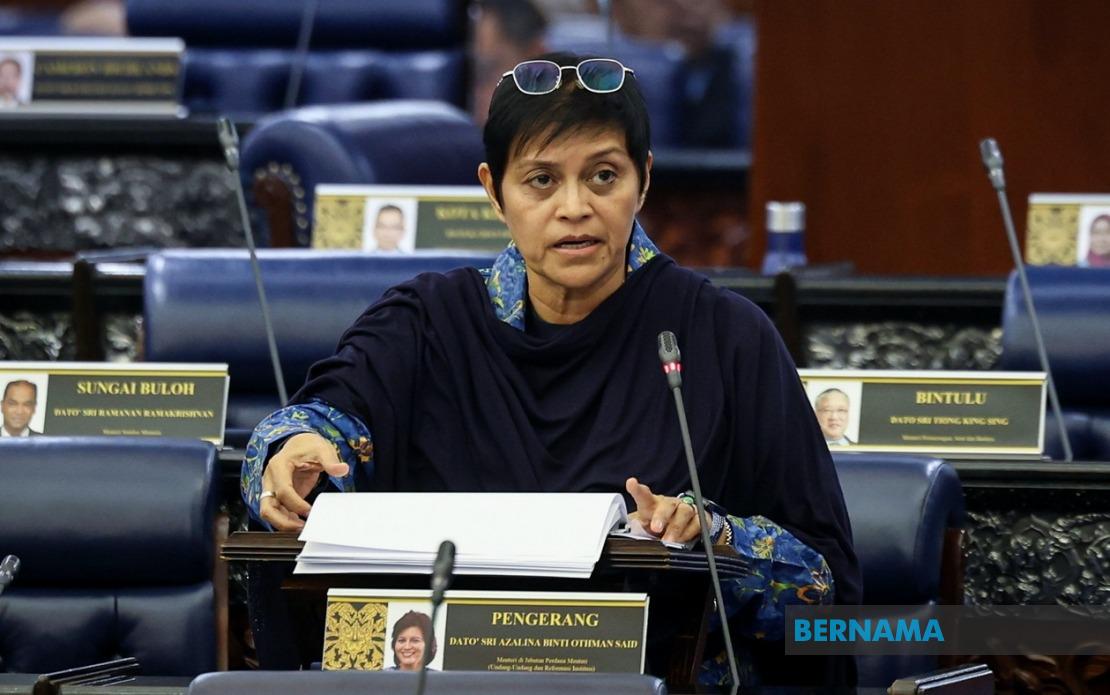
A pivotal institutional reform will reach Parliament's floor as the government tables a Special Select Committee report proposing the separation of the Attorney General and Public Prosecutor positions. The tabling, announced by Datuk Seri Azalina Othman Said, Minister in the Prime Minister's Department (Law and Institutional Reform), represents a watershed moment in the MADANI Government's broader agenda to strengthen Malaysia's judicial framework and restore public confidence in the justice system.
The separation of these two critical roles addresses longstanding concerns about the concentration of prosecutorial power within a single office. Historically, Malaysia's Attorney General has wielded both executive and prosecutorial functions, a structure that critics have argued can create potential conflicts of interest and undermine the independence of prosecutions. By divorcing these responsibilities, the government intends to establish clearer institutional boundaries and accountability mechanisms within the justice sector.
During seven intensive committee sessions, members developed seven substantive proposals aimed at fortifying the Public Prosecutor institution's autonomy, integrity and answerability to the public. These recommendations move beyond symbolic gestures, instead targeting the structural and procedural foundations that underpin prosecutorial decision-making. The committee's work reflects growing recognition within policymaking circles that institutional independence cannot be asserted through rhetoric alone but must be embedded in constitutional architecture and legislative safeguards.
Under the proposed framework, the Judicial and Legal Service Commission (SPKP) would nominate the Public Prosecutor for appointment by the Yang di-Pertuan Agong, without involvement from the Prime Minister or Cabinet. This adjustment removes the prosecutorial leadership from the executive branch's direct control, a significant shift in governance practice. The nomination pathway has been further refined to incorporate parliamentary scrutiny, ensuring elected representatives can examine and potentially challenge candidates before the commission finalizes its recommendation to the King.
A constitutional amendment to Article 145A, Clause 18 of the Federal Constitution will formalize this new appointment mechanism. Under the revised process, the SPKP submits its candidate to the Speaker of the Dewan Rakyat, who tables the nomination before a House Select Committee for detailed examination and discussion. Only after parliamentary consideration recommends the candidate does the commission formally advise the Yang di-Pertuan Agong to make the appointment. This multi-stage process introduces democratic and parliamentary safeguards while preserving the constitutional prerogatives of the monarchy.
The committee has also recommended establishing a fixed, non-renewable seven-year tenure for the Public Prosecutor. This limited term differs markedly from arrangements that permit indefinite extensions or discretionary reappointments, which can create pressure for prosecutors to remain responsive to political interests. A defined, single term encourages independent judgment unfettered by career advancement incentives tied to political favor. It also ensures regular renewal of the institution's leadership, preventing entrenchment and promoting fresh perspectives on prosecution policy and practice.
Another cornerstone of the reform involves drafting a Code of Ethics specifically governing Public Prosecutors. Such a code establishes professional standards and conduct expectations tailored to prosecutorial work, distinguishing the ethics framework from broader civil service guidelines. By crystallizing values such as fairness, impartiality, confidentiality and integrity into explicit standards, the code provides prosecutors with clear guidance and gives the public measurable benchmarks against which to evaluate institutional performance. Implementation of ethical codes is particularly important in jurisdictions where prosecutorial discretion remains extensive and subject to limited appellate review.
The committee has advocated for expanded parliamentary authority to enact legislation strengthening the Public Prosecutor's institution. Currently, many aspects of prosecutorial organization and procedure derive from conventions, executive directives or court precedent rather than statutory law. Placing such matters within Parliament's legislative domain ensures that any future changes to the institution's structure or function must traverse public democratic processes rather than being adjusted through administrative fiat. This elevation of prosecutorial governance to the legislative plane reinforces institutional permanence and public ownership of reform.
Azalina emphasized that these changes represent more than administrative reshuffling. The reform aims to construct a prosecution service demonstrating genuine independence, transparent decision-making processes and robust accountability mechanisms. For Malaysian citizens and investors, perceptions of prosecutorial impartiality directly influence confidence in the rule of law and the fair administration of criminal justice. When prosecution decisions appear influenced by political considerations or ministerial pressure, public trust erodes and the legitimacy of judicial outcomes comes into question.
The proposed reforms also carry significance for Malaysia's regional standing and international perceptions. Neighboring countries and the global business community scrutinize the independence of a nation's courts and prosecutorial systems when assessing investment climate and governance standards. A visibly independent Public Prosecutor's office enhances Malaysia's reputation for upholding principled rule of law, potentially improving its competitive position in attracting legitimate foreign investment and partnerships.
Implementing these recommendations will require careful legislative drafting and coordination between parliamentary and executive branches. The timing of amendments, scope of the Public Prosecutor's jurisdiction compared to other enforcement agencies, and practical mechanisms for parliamentary oversight will all require detailed attention during the legislative process. International examples offer guidance, though Malaysian circumstances demand locally calibrated solutions reflecting constitutional traditions and institutional realities.
The MADANI Government frames this reform as foundational to its institutional legacy, aiming to establish stronger, more resilient public institutions worthy of citizen confidence across generations. Whether the report's recommendations achieve full parliamentary adoption and subsequent implementation will test the government's commitment to institutional independence when implementation may constrain executive convenience. The report's tabling tomorrow will reveal Parliament's appetite for this transformative reform of Malaysia's prosecutorial architecture.

