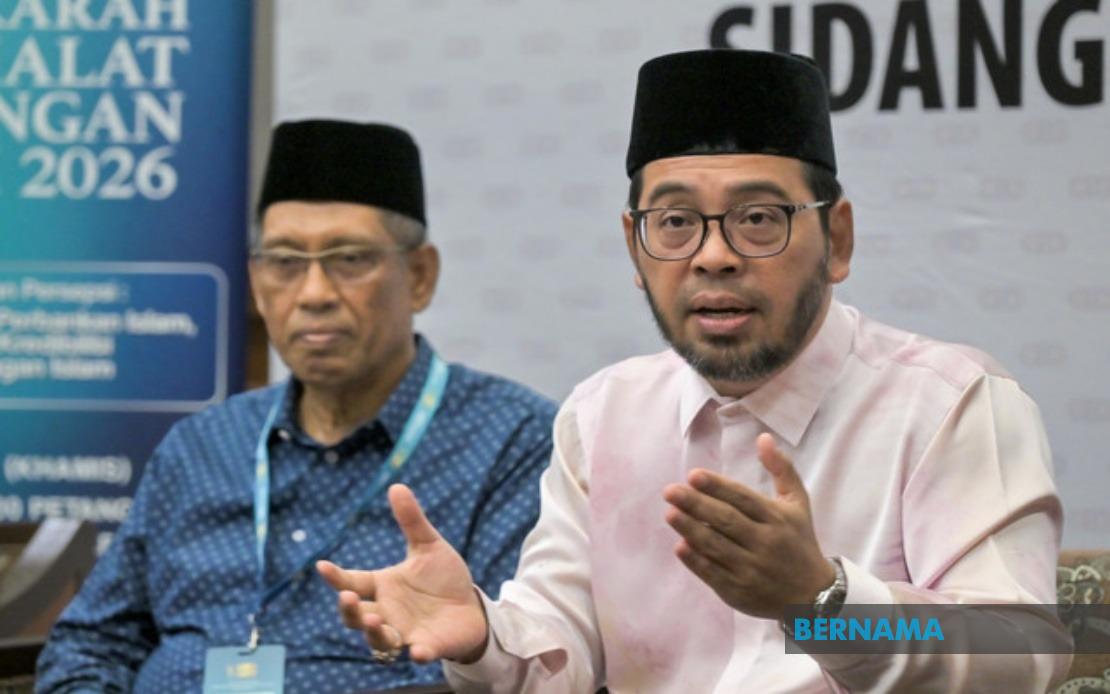
Malaysia's government has pledged to accelerate implementation of the remaining quarter of recommendations issued by the Royal Commission of Inquiry into Lembaga Tabung Haji, signalling renewed momentum in ongoing institutional reforms. Minister in the Prime Minister's Department (Religious Affairs) Dr Zulkifli Hasan announced the commitment while addressing reporters on the sidelines of an Islamic financial discourse event in Kuala Lumpur on July 30, emphasizing that authorities remain receptive to structural changes that reflect contemporary operational demands and governance best practices.
The 211-page RCI report, published by the Department of Islamic Development Malaysia (JAKIM), examined Tabung Haji's management and operational performance during the 2014 to 2020 period, culminating in a comprehensive set of 25 recommendations designed to fortify institutional resilience. According to Zulkifli, three-quarters of these suggestions have already been operationalized, a completion rate that has positioned the pilgrimage fund on an improved trajectory in managing hajj deposits and overall operations. This substantial progress was further validated when Tabung Haji earned the Diamond Award for global excellence in hajj management during the 1447H/2026M hajj season, cementing its reputation among international peers.
The government's openness to further reform extends specifically to governance restructuring proposals contained within the RCI findings. Zulkifli signalled receptiveness to suggestions that would redistribute institutional responsibilities, particularly regarding the separation of financial, fund, and investment management functions into distinct operational domains. One significant recommendation under consideration would realign the scope of the Religious Affairs Minister's authority to focus specifically on hajj-related management, while transferring financial stewardship to the Finance Minister's purview—a recalibration intended to enhance accountability and specialized expertise within each portfolio.
The reform trajectory carries substantial significance for Malaysia's standing within the global Islamic finance ecosystem. Zulkifli underscored that continued advancement in Tabung Haji's governance and operational efficiency directly supports Malaysia's competitive positioning in the World Islamic Economy Index, a ranking system that evaluates nations based on their Islamic financial sector development and institutional sophistication. As Southeast Asia's largest Muslim-majority country and a regional financial hub, Malaysia's success in modernizing religious financial institutions contributes to broader perceptions of the country's governance quality and innovation capacity.
The policy framework underpinning these reforms reflects a broader institutional philosophy that treats regulatory recommendations as catalysts for strengthening rather than burdensome obligations. During his remarks, Zulkifli characterized the implementation process as an ongoing opportunity to elevate institutional performance, noting that substantial work remains to sustain and amplify the institution's positive trajectory. This constructive framing attempts to reposition reform narratives away from deficit-focused discourse toward aspirational institutional development.
Concomitant with these governance discussions, Zulkifli emphasized the importance of platforms like the Muzakarah Muamalat Kewangan Islam (MMKI), which convenes financial experts, academics, and industry practitioners to deliberate contemporary challenges within Islamic banking and finance sectors. He characterized such dialogues as essential mechanisms for identifying emerging trends, assessing global developments, and charting strategic directions for Malaysia's Islamic finance industry. The MMKI initiative, co-established by Co-opbank Pertama (CBP), functions as a reference platform enabling industry participants to develop sophisticated financial products and solutions tailored to community needs.
The emphasis on collective expertise and cross-sector collaboration reflects recognition that institutional reform operates within complex operating environments shaped by technological innovation, regulatory evolution, and shifting consumer expectations. By institutionalizing forums where academic researchers, practising bankers, and policy officials interact, the government demonstrates awareness that sustainable reform requires continuous knowledge exchange and adaptive governance approaches. Such platforms become particularly valuable in Islamic finance sectors where normative religious principles must be harmonized with contemporary commercial realities.
For Malaysian pilgrims, these institutional improvements carry tangible implications regarding the safety and management of their accumulated hajj savings. The RCI investigation had examined operational vulnerabilities and management deficiencies during the 2014-2020 period, findings that prompted systematic corrective measures now bearing fruit through enhanced governance structures and oversight mechanisms. Accelerated implementation of remaining recommendations should further strengthen depositor protections and fund management transparency.
The government's commitment to expedited reform also responds to public expectations that emerged following the RCI investigation's preliminary findings. By articulating a clear timeline and demonstrating tangible progress on three-quarters of recommendations, authorities attempt to restore stakeholder confidence in institutional competence and governance credibility. The Diamond Award recognition provides external validation of these improvements, offering reassurance to the estimated millions of Malaysian Muslims who maintain savings accounts with Tabung Haji as part of their hajj pilgrimage preparation.
Implications extend beyond Tabung Haji itself, establishing precedent for how Malaysian government institutions approach reform recommendations from inquiries and commissions. The relatively high completion rate suggests bureaucratic capacity to implement complex institutional changes, though the deliberate pace regarding the final quarter indicates that authorities remain cautious about structural modifications requiring legislative amendments or substantial organizational reconfigurations. Future governance decisions regarding ministerial authority redistribution and financial management separation will signal the depth of government commitment to comprehensive institutional redesign.
Regionally, Malaysia's experience in reforming pilgrimage fund management offers instructive lessons for other Muslim-majority nations developing Islamic financial infrastructure. As both a destination for hajj pilgrims and a contributor to global Islamic finance standards, Malaysia's institutional improvements amplify its soft power within international Islamic finance governance discussions. The accelerated reform trajectory positions the country as a jurisdiction seriously committed to aligning religious financial institutions with contemporary governance expectations and stakeholder protection standards.

