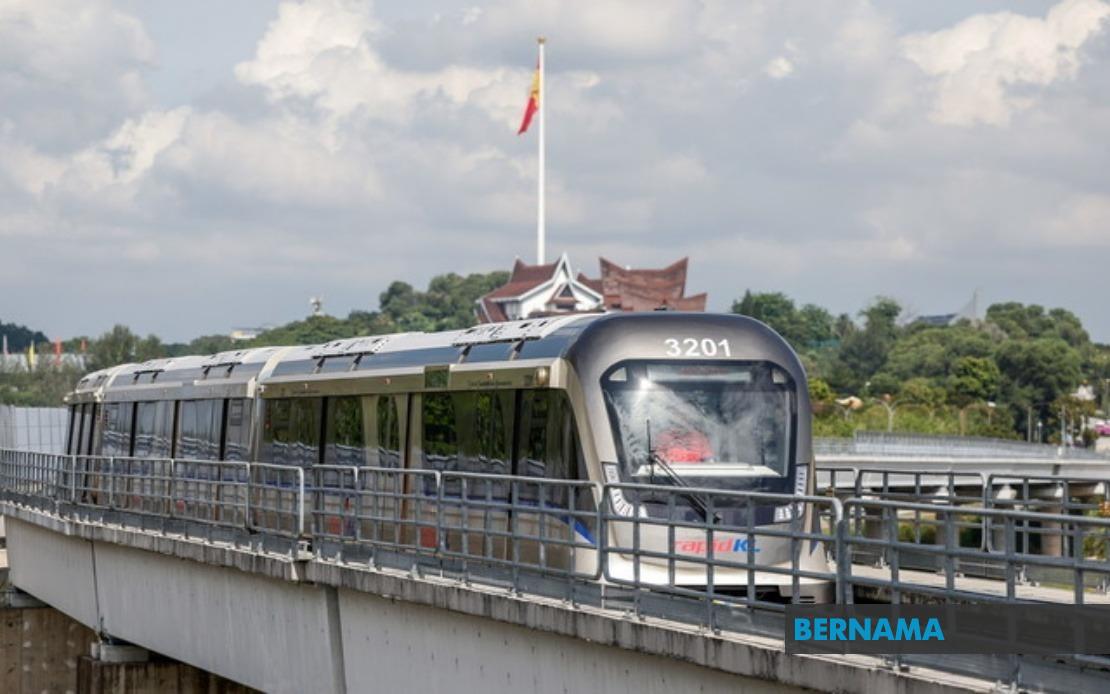
Transport Minister Anthony Loke has announced that the MADANI Government intends to seek a meeting with Sultan Sharafuddin Idris Shah, the Sultan of Selangor, to provide comprehensive clarification regarding the troubled LRT3 Shah Alam Line project. The decision comes in direct response to remarks made by the Ruler about the project's mounting costs and persistent delays, signalling the administration's commitment to addressing royal concerns about public infrastructure initiatives. Loke indicated that the government takes seriously His Royal Highness' observations and recognises the need for formal engagement at the highest level to discuss the project's trajectory and remedial measures.
The LRT3 project has become emblematic of the complications that bedevil large-scale infrastructure development in Malaysia, particularly when political transitions affect continuity and momentum. When the Federal Government changed in 2018, the LRT3 initiative encountered a suspension lasting over 18 months, effectively stalling progress and incurring additional financial burdens. The subsequent COVID-19 pandemic compounded these difficulties, introducing a further 19-month delay that extended into 2021. Throughout these interruptions, the project underwent substantial modifications that fundamentally altered its scope and ambition. The original design specifications were trimmed, with station sizes reduced and the planned number of train carriages significantly cut. Most tellingly, five stations that had been earmarked for the alignment were entirely cancelled, representing a meaningful reduction in the project's coverage and intended public benefit.
Sultan Sharafuddin's intervention carries particular significance because it reflects concern at the highest institutional level about how public resources are being deployed. The Ruler carefully distinguished between infrastructure projects pursued for national prestige and those genuinely intended to serve the welfare of ordinary citizens. His remarks implicitly questioned whether the LRT3, with its successive compromises and ever-extending timeline, still delivers meaningful public value or has been progressively hollowed out by bureaucratic obstacles and political uncertainty. This royal perspective represents more than ceremonial observation; it constitutes an implicit directive that major government projects must be transparent about their real-world benefits and realistic about their implementation timelines. For the MADANI administration, the meeting will provide an opportunity to reset expectations and demonstrate that governance decisions are informed by substance rather than political expedience.
The demand for greater transparency around the LRT3 project reflects broader public frustration with infrastructure delays that have characterised Malaysian development in recent years. Selangor residents, who form a substantial proportion of the national electorate and economic base, have endured repeated disappointments as project timelines have slipped and specifications have been downgraded. The commuting public in the Klang Valley region, one of Malaysia's most congested urban corridors, has legitimate grounds to question whether the final version of LRT3 will meaningfully reduce traffic congestion or simply represent a heavily compromised version of the original vision. The costs associated with these delays extend beyond the immediate project budget; they include the accumulated opportunity costs of infrastructure that could have been operational years earlier, addressing genuine transportation bottlenecks that constrain economic productivity and quality of life.
Minister Loke's concurrent announcement regarding enhanced public transport services for the Johor state election demonstrates the government's broader commitment to improving transport connectivity across the nation. The Ministry of Transport coordinated with Keretapi Tanah Melayu Berhad (KTMB) to substantially increase the frequency of Electric Train Service (ETS) operations between Kuala Lumpur and Johor Bahru, with the explicit aim of facilitating voters from other states to return home for the 16th Johor State Election scheduled for July 11. This initiative recognises that enhanced transport infrastructure serves multiple societal functions simultaneously—supporting electoral participation while also benefiting regular commuters, particularly those travelling to and from Singapore who can access the expanded ETS network at intermediate stations including Segamat and Labis. The expanded service also enables voters from Peninsular Malaysia's northern regions to more conveniently return to Johor, though the effort required to arrange these logistics underscores how fragmented transport coordination remains across different modes and regions.
The Johor state election itself represents a significant political event with ramifications extending beyond the state boundaries. With 172 candidates competing for 56 state assembly seats, the contest will test the MADANI coalition's electoral appeal in one of Malaysia's largest states. Early voting is scheduled for July 7, with the main polling day on July 11, providing a clear calendar focus for government announcements and electoral activity. The timing of transport-related announcements, combined with the visible government presence at campaign events, reflects the administration's strategic emphasis on demonstrating tangible policy delivery in areas that directly affect voter experience. The presence of senior figures including Communications Minister Datuk Fahmi Fadzil and other Pakatan Harapan leadership at campaign activities indicates the national significance attached to securing a strong result in Johor.
The government's responsiveness to the Sultan's critique of the LRT3 project establishes an important precedent for how future infrastructure concerns will be handled. Rather than dismissing or minimising royal remarks, the formal commitment to seek an audience demonstrates respect for the constitutional role of state rulers in Malaysian governance and their legitimate interest in ensuring that major projects serve the public interest effectively. This approach contrasts with postures of defensive resistance that sometimes characterise government responses to external criticism. By proactively scheduling the meeting, Transport Minister Loke signals that the administration is willing to engage substantively with legitimate questions about project management and public accountability. The outcome of this meeting could influence how other states' rulers approach infrastructure accountability, potentially establishing higher standards for transparency and delivery across the nation's transport sector.
The broader context of transport infrastructure development in Malaysia reveals ongoing tensions between ambition and delivery capacity. The LRT3 represents one component of a larger network expansion vision that includes other rail projects and bus rapid transit systems designed to address the chronic congestion affecting major urban centres. However, the pattern of delays, cost escalations, and scope reductions seen with LRT3 has become distressingly familiar across multiple projects. These recurring problems suggest systemic challenges in project management, funding mechanisms, and political commitment that extend beyond any single administration or project team. Malaysian stakeholders—whether residents, investors, or development partners—have grown understandably sceptical about transport infrastructure timelines, making each announcement of delays or modifications increasingly damaging to public confidence in government planning capacity.
Moving forward, the government faces a critical challenge in demonstrating that the LRT3 Shah Alam project, despite its scaled-down specifications, will genuinely enhance mobility and reduce congestion in a congested region. The modifications to the original plan, while economically justified by budget constraints and implementation realities, must be clearly articulated as strategic choices rather than failures. The audience with Sultan Sharafuddin provides an opportunity to reset the project narrative, moving beyond recriminations about past delays and focusing instead on realistic timelines, transparent cost structures, and measurable public benefits. For Malaysian readers in other regions contemplating similar transport investments, the LRT3 experience offers sobering lessons about the importance of robust project governance, realistic planning horizons, and genuine stakeholder engagement from project inception through completion.

