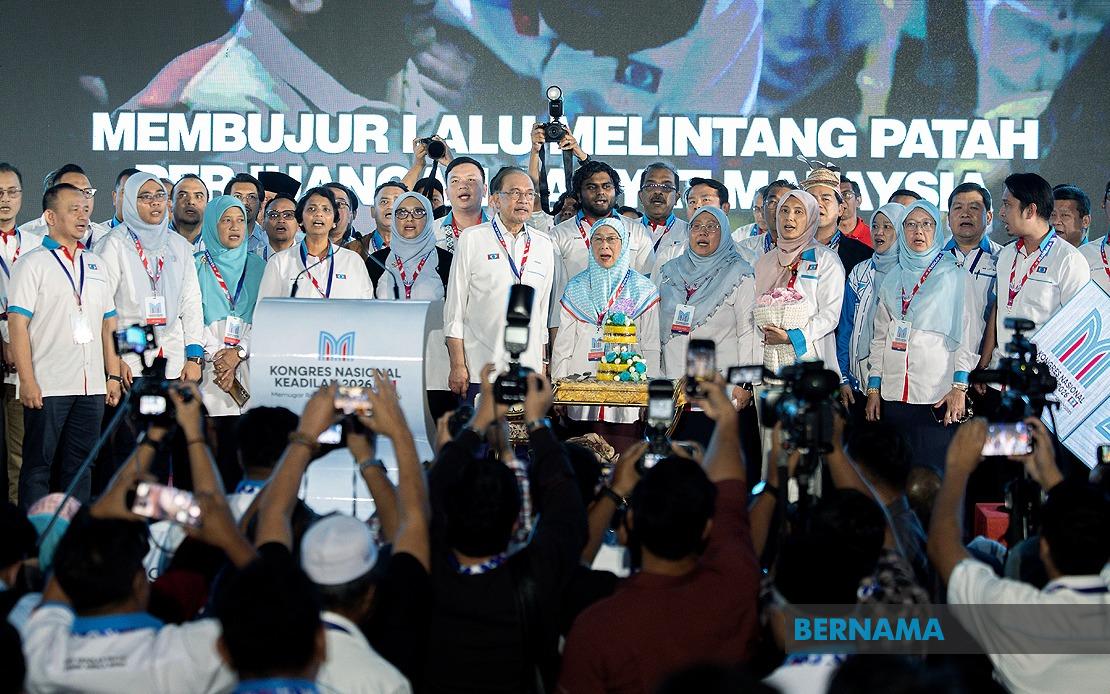
Prime Minister Datuk Seri Anwar Ibrahim has confirmed that the government intends to amend the Tabung Haji Act 1995 (Act 535) as a critical step toward reinforcing the confidence that Muslims place in the institution. Speaking in his capacity as both Prime Minister and Finance Minister, Anwar framed the legislative revision as part of a broader institutional reform agenda aimed at rectifying governance deficiencies and ensuring public institutions operate with integrity and accountability.
The amendment forms part of the MADANI Government's strategic framework to rebuild institutional credibility after a series of challenges that have tested public confidence in key governance structures. By targeting the Tabung Haji Act, the government is signalling its commitment to protecting the fiduciary responsibilities embedded within the institution, which manages savings and pilgrimage funds for millions of Malaysian Muslims. For the Muslim community in particular, this move carries symbolic weight, as Tabung Haji serves as both a financial instrument and a trust mechanism central to their religious obligations and financial planning.
Beyond the Tabung Haji amendments, Anwar articulated a comprehensive vision for institutional housekeeping that extends across multiple sectors of government. He emphasised that strengthening governance frameworks must be accompanied by systematic efforts to identify and remediate institutional weaknesses, preventing the accumulation of systemic problems that erode public trust. This two-pronged approach—legislative reform coupled with operational improvements—reflects recognition that institutional credibility depends on both formal legal structures and practical implementation of governance principles.
A particularly significant announcement pertained to the Universities and University Colleges Act (AUKU) 1971. Anwar declared that this legislation should be entirely repealed without replacement by alternative restrictions on student expression. The AUKU has long been contentious among civil society advocates and student activists, who argue it imposes unnecessary constraints on campus-based political discourse and student organising. By pledging complete repeal rather than amendment or replacement, Anwar positioned the government as willing to embrace fuller freedoms on university campuses—a move that aligns with PKR's historical advocacy for democratic liberalisation and stands in contrast to more conservative approaches to student activism.
The timing of these announcements coincided with the conclusion of the 2026 PKR National Congress, where Anwar, serving as party president, attempted to refocus the party narrative around core ideological commitments. He contended that PKR has deliberately chosen a trajectory grounded in principled governance and reform aspirations rather than opportunistic power consolidation. This framing sought to distinguish PKR's identity from accusations that the party has compromised foundational reform principles in exchange for political advantage or ministerial positions within the ruling coalition.
Crucially, Anwar expanded the scope of the government's responsibility beyond its traditional electoral base, explicitly acknowledging that citizens living in opposition-governed states deserve equitable access to public services and development resources. This rhetorical commitment to nationally-inclusive governance, regardless of state-level political allegiances, addresses long-standing tensions between federal and state governments controlled by different coalitions. Whether such pronouncements translate into concrete resource allocation mechanisms remains an open question for observers monitoring implementation of the stated principle.
The Prime Minister articulated a distinction between institutional strength deployed for public benefit versus strength instrumentalised for personal or familial enrichment. He cautioned against the weaponisation of governmental authority for factional advancement, crony capitalism, or dynastic privilege—concerns that have historically plagued Malaysian politics. By reiterating this principle during an internal party gathering, Anwar appeared to signal expectations for conduct standards among PKR leadership and party members occupying state or federal positions.
For Malaysia's Muslim-majority population, the Tabung Haji amendment carries implications extending beyond technical governance improvements. The institution manages pilgrim savings, investment returns, and fund distribution mechanisms that directly impact household financial security for middle and lower-income Muslim families planning Hajj expenses. Any restructuring of governance frameworks within Tabung Haji consequently affects financial management practices, dividend distribution policies, and internal accountability systems that shape individual household economic outcomes.
Regionally, Malaysia's institutional reform trajectory attracts attention from other Southeast Asian democracies grappling with institutional credibility and governance challenges. The emphasis on repealing restrictive legislation while simultaneously strengthening financial institution oversight presents a particular governance model that prioritises political liberalisation alongside institutional strengthening—an approach that differs from alternative models prioritising stability over democratic expansion.
The governmental commitment to institutional cleanup and principled governance, as articulated by Anwar, will require sustained political will and resource allocation throughout the legislative and administrative apparatus. Implementation timelines for the Tabung Haji Act amendment remain unspecified, though the government's positioning of institutional reform as a priority suggests advancement during the current parliamentary session. Similarly, the AUKU repeal represents a reversible yet symbolically significant policy shift that carries educational sector ramifications for student organising, campus political discourse, and university-level democratic participation.
Moving forward, observers will monitor whether rhetoric surrounding institutional integrity and principled governance translates into legislative action, budgetary commitments, and enforcement mechanisms that substantively reshape institutional practice. The stated commitment to serving opposition-controlled constituencies equitably, combined with promised institutional reforms, establishes benchmarks against which the MADANI Government's actual performance can be assessed over subsequent fiscal cycles and electoral periods.

