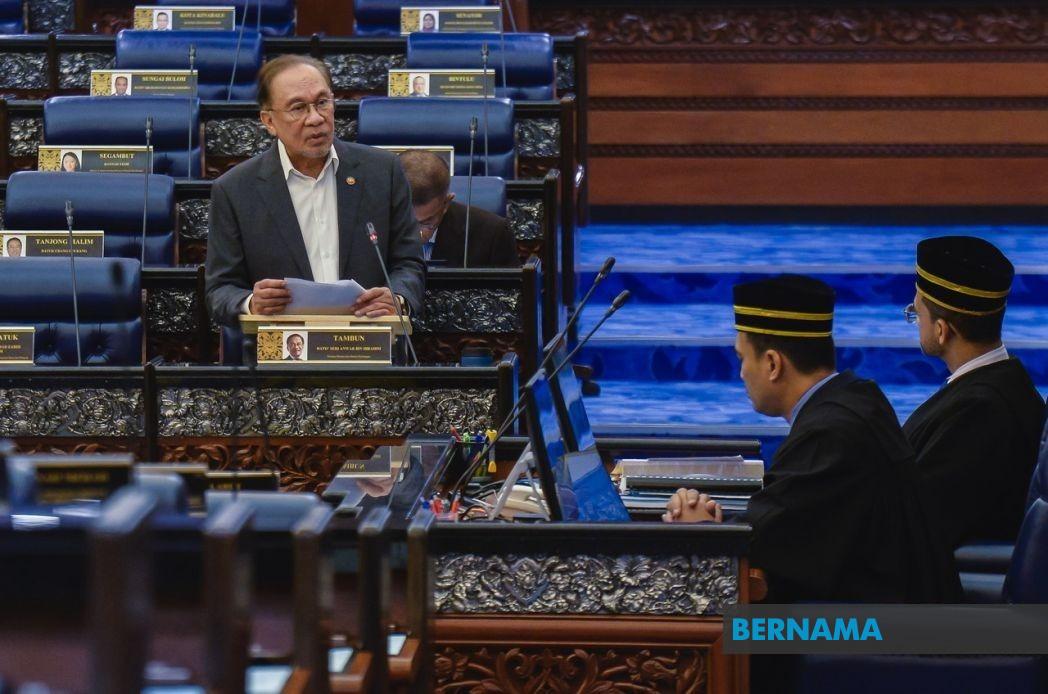
Prime Minister Datuk Seri Anwar Ibrahim has pledged that the government will conduct further investigations and engage directly with oil companies regarding claims that petrol station operators sustained losses during the recent overhaul of Malaysia's fuel subsidy system. The announcement came during Minister's Question Time in Parliament, signalling the administration's readiness to address concerns raised about the implementation of the targeted RON95 petrol and diesel subsidy mechanism. The government's proactive stance reflects growing pressure to resolve operational challenges that emerged during what was intended to be a streamlined transition to the new subsidy framework.
Anwar acknowledged the crucial role that oil companies and petrol station operators have played in facilitating the rollout of the targeted subsidy programme. He emphasised that without their cooperation and willingness to participate in the scheme, the government would have struggled to implement the reformed fuel subsidy system as effectively as it has managed thus far. This recognition underscores the delicate balance the administration must maintain with commercial stakeholders when introducing major changes to sensitive sectors like energy pricing, where margins for error can quickly translate into operational disruptions and public discontent.
The Prime Minister tasked Second Finance Minister Datuk Seri Amir Hamzah Azizan with spearheading fact-finding efforts and holding detailed consultations with representatives from the oil industry. This delegation suggests the government intends to move beyond abstract policy discussions towards concrete dialogue with key players in the fuel distribution chain. By assigning the responsibility to the Second Finance Minister rather than handling it at the highest level alone, Anwar has signalled both the seriousness of the matter and its administrative complexity, requiring technical expertise in financial arrangements and subsidy mechanisms.
The specific complaint brought before Parliament by Ipoh Timur representative Howard Lee Chuan How detailed allegations that petrol station operators incurred losses ranging between RM40,000 and RM50,000 during the subsidy transition period. These figures, if accurate, paint a troubling picture of the human cost embedded within the government's economic restructuring efforts. For small and medium-sized petrol station operators who typically operate on thin profit margins, losses of this magnitude can threaten business viability and employment sustainability, particularly in smaller towns and rural areas where petrol stations often serve as community economic anchors.
The targeted RON95 petrol and diesel subsidy scheme represents a significant policy departure from Malaysia's previous approach to fuel pricing. Rather than providing blanket subsidies available to all consumers, the new mechanism attempts to channel assistance more precisely toward those deemed most in need. This targeting approach aligns Malaysia with international best practices in subsidy reform, reducing fiscal pressure while theoretically directing support more equitably. However, the transition process has revealed practical implementation challenges that extend beyond simple policy design into the operational realities facing businesses in the distribution chain.
The government's apparent willingness to investigate and discuss the operators' claims contrasts with a harder-line approach to subsidy reform that some countries have adopted. Rather than dismissing complaints as inevitable costs of restructuring, the administration appears committed to finding collaborative solutions. This approach carries both political and economic implications for Malaysia's broader reform agenda, as success in addressing petrol station operators' concerns could build goodwill for future subsidy adjustments in other sectors such as electricity and cooking gas.
Understanding the mechanics of how operators incurred losses during the transition reveals insights into Malaysia's fuel distribution ecosystem. Petrol stations typically maintain inventory buffers to meet daily consumer demand, and disruptions to subsidy mechanisms can create mismatches between the prices at which fuel was purchased and the rates at which it can be sold. During the transition period, operators may have been caught holding stock acquired under the old subsidy arrangement while forced to sell under new pricing structures, creating inventory valuation losses that cascade through their financial statements.
The government's commitment to work towards resolving grievances represents recognition that sustainable policy implementation requires stakeholder buy-in. For Malaysia, which has long struggled with the politics of subsidy reform, demonstrating responsiveness to legitimate operational complaints can strengthen the credibility of future policy initiatives. This is particularly relevant for Southeast Asian policymakers watching Malaysia's experience, as many nations in the region grapple with similar pressures to reform generous fuel subsidies while managing political sensitivities around cost-of-living impacts.
The involvement of the Finance Ministry in these discussions highlights the interconnected nature of subsidy policy, fiscal management, and operational realities. Any compensation or adjustment mechanism devised to address petrol station operators' losses will likely require careful cost-benefit analysis to ensure it does not undermine the fiscal savings that motivated the subsidy transition in the first place. The government must balance equity concerns with budgetary constraints, a tension that will likely feature prominently in negotiations between Amir Hamzah Azizan and oil company representatives.
Moving forward, the government's handling of this issue will set precedent for how it manages similar grievances arising from other aspects of its economic restructuring agenda. If dialogue yields fair solutions that operators view as reasonable, it could facilitate smoother transitions in future policy reforms. Conversely, if the process becomes protracted or outcomes disappoint stakeholders, it may stiffen resistance to subsequent government initiatives requiring cooperation from business communities. The resolution of this specific complaint about petrol station losses thus carries implications extending well beyond the immediate fuel sector.

