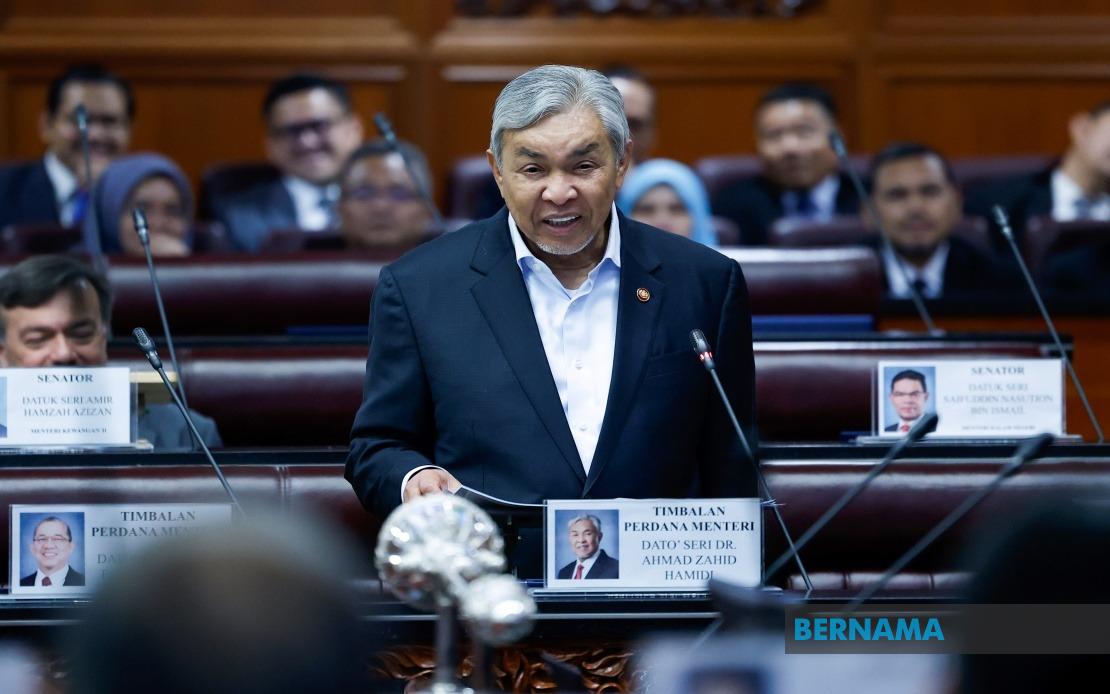
The Malaysian government is undertaking a comprehensive review of its land administration framework governing FELDA settlements, signalling a significant policy shift to address longstanding grievances among settlers and their descendants. Deputy Prime Minister Datuk Seri Dr Ahmad Zahid Hamidi, who also holds the Rural and Regional Development portfolio, disclosed in Parliament that the review encompasses multiple amendments to the Land (Group Settlement Areas) Act 1960, reflecting mounting pressures to modernise inheritance protocols and accommodate the housing aspirations of younger generations.
The proposed amendments represent a substantial departure from existing practices, particularly regarding succession arrangements on settler properties. Among the key proposals under consideration is a limit on the registration of heirs to two nominees and the appointment of a single representative to manage administrative matters on behalf of the estate. Such changes seek to streamline the often cumbersome inheritance process that has historically complicated land transfers and created administrative bottlenecks within FELDA schemes. The initiative acknowledges that current regulations, drafted over six decades ago, have struggled to adapt to contemporary family structures and modern administrative requirements.
A critical dimension of the government's review involves addressing the housing crisis faced by FELDA's second generation. Ahmad Zahid indicated that the administration is examining proposals to permit the construction of multiple housing units on a single residential lot, contingent upon adherence to planning policies and securing approvals from state and local authorities. This flexibility represents a pragmatic response to the reality that many second-generation FELDA members inherit land but lack the space or means to build separate residences, forcing them to abandon agricultural livelihoods or migrate to urban centres. The conditional allowance for multiple units on a single plot could unlock productive utilisation of existing FELDA land while retaining community cohesion.
The Deputy Prime Minister emphasised that the government remains cognisant of the escalating housing requirements among Malaysia's younger demographic, particularly within FELDA communities where land ownership has traditionally formed the foundation of family wealth and security. By permitting greater residential development on existing plots, the proposals aim to empower second-generation settlers to establish their own households without necessitating the subdivision or alienation of family land. This approach balances the preservation of agricultural heritage with the legitimate aspirations of younger Malaysians seeking homeownership within their communities.
Ahmad Zahid stressed that any amendments must achieve equilibrium among multiple stakeholders—including current settlers, their heirs, subsequent generations of FELDA participants, state governments, and broader national development priorities. This delicate balancing act underscores the political sensitivity surrounding FELDA reform, as changes to inheritance rights or land usage patterns affect not only individual families but also state revenue streams, agricultural productivity targets, and land-use planning frameworks. The government's commitment to consultation and stakeholder engagement suggests that finalised amendments will reflect consensus-building among these varied interests rather than unilateral policy imposition.
On the progress of land title distribution, Ahmad Zahid reported that 109,104 of 112,638 FELDA settlers nationwide—representing 96.86 per cent—have received their land titles. This figure demonstrates substantial advancement in formalising property rights across FELDA communities, though the remaining 3.14 per cent of settlers still await formal documentation of their land ownership. The government, operating through FELDA in conjunction with state land authorities and district land offices, continues to prioritise expediting title issuance as a foundational step toward securing legal ownership certainty and facilitating intergenerational wealth transfer.
The administration views the completion of land title distribution as essential infrastructure underpinning broader FELDA reform objectives. Without formal title documentation, settlers and their heirs cannot effectively leverage their land assets for credit, insurance, or commercial transactions, perpetuating economic marginalisation within rural communities. The government's staged approach to title completion signals recognition that systematic, coordinated effort across multiple levels of administration remains necessary to achieve full coverage.
Parallel progress has been recorded within FELCRA Berhad, the alternative smallholder development scheme that complements FELDA. As of June 2026, FELCRA has issued land titles for 4,274 of 6,025 house site lots across 43 projects nationwide, representing approximately 71 per cent completion. The remaining 1,751 lots are currently navigating the State Land and Mines Office approval process, with FELCRA confirming its commitment to ensuring all participants obtain legal ownership rights. This steady progress, though somewhat lagging FELDA's achievement rate, reflects the additional complexity involved in administering multiple concurrent schemes across diverse geographical and administrative contexts.
The distinction between FELDA and FELCRA outcomes reflects different organisational structures and evolution timelines. Whereas FELDA settlements, established predominantly during the 1960s and 1970s, benefit from decades of administrative refinement and established state government relationships, FELCRA represents a more recent development model with different land-holding mechanisms and stakeholder configurations. The variance in title completion rates underscores that standardised approaches to land administration require adaptation to scheme-specific characteristics and state-level capacity variations.
For Malaysian stakeholders, particularly those in rural communities and younger Malaysians contemplating agricultural livelihoods, these policy developments carry substantial implications. The proposed reforms signal governmental recognition that FELDA and FELCRA schemes, once conceived as temporary agricultural settlements, have evolved into permanent communities requiring updated governance frameworks. By facilitating multiple housing units and streamlined inheritance arrangements, the government aims to retain young people within rural areas while providing economic opportunity and residential security. This represents an important shift from earlier policies that implicitly assumed agricultural consolidation and youth migration to urban centres.
The timing of these reviews assumes significance within Malaysia's broader development narrative. As urbanisation accelerates and agricultural employment declines, policies that enable young people to remain in rural communities while accessing modern living standards become increasingly valuable for regional development and social stability. FELDA settlements, encompassing over 100,000 families across substantial land areas, represent a significant national asset whose optimal utilisation requires periodic policy recalibration.
The government's emphasis on balancing multiple interests—settler welfare, generational equity, state revenue, and national development—reflects the inherent complexity of land policy reform in the Malaysian context. FELDA land exists within a constitutional framework allocating land administration to state governments, limiting federal authority and requiring cooperative governance mechanisms. The successful implementation of proposed amendments will depend upon securing state government buy-in, ensuring that reforms enhance rather than undermine state fiscal interests, and maintaining alignment between federal development objectives and state-level land administration practices.
As the government progresses through its review phase, stakeholders will scrutinise how reforms address the fundamental tension between preserving agricultural character and accommodating residential modernisation. The outcomes will substantially shape whether young Malaysians view FELDA communities as viable locations for establishing livelihoods and families, or whether structural constraints continue driving rural-to-urban migration.

