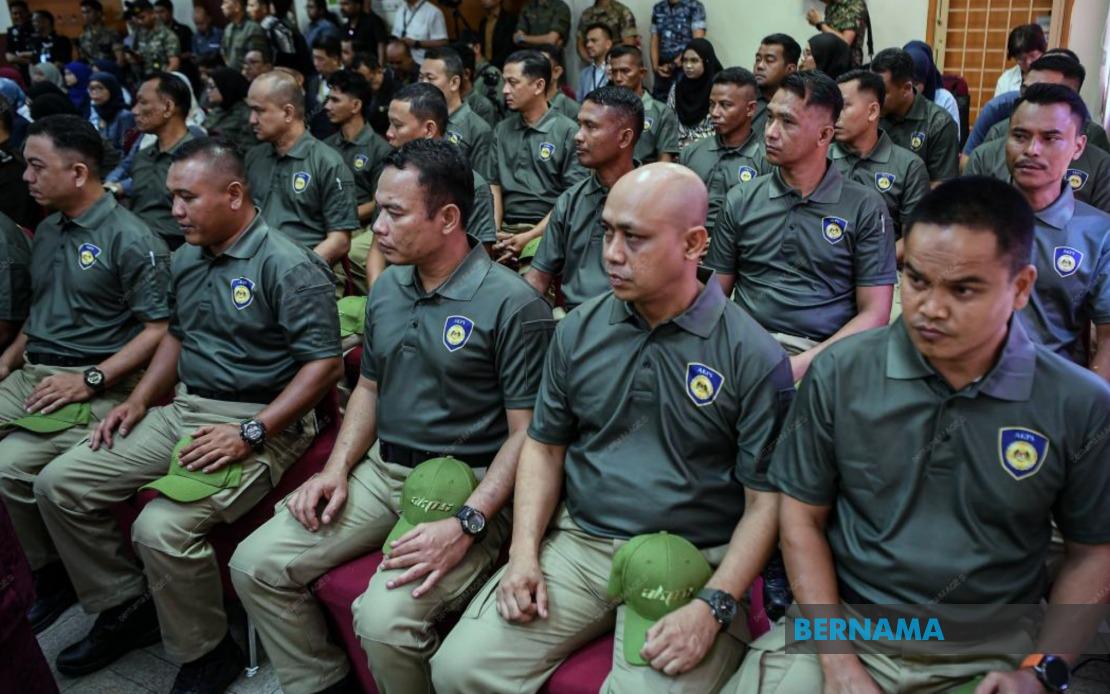
Malaysia's government has moved to calm concerns among Border Control and Protection Agency (AKPS) personnel, issuing formal assurances that staff protections remain intact as the agency implements a new service framework under the Public Service Department (PSD) from July 1 onwards. Deputy Home Minister Datuk Seri Dr Shamsul Anuar Nasarah outlined the government's commitment to preserving officer welfare during this significant institutional reorganisation, addressing worries that the scheme transition could disadvantage existing staff members across the nation's frontline enforcement operations.
The comprehensive restructuring of AKPS follows its formation through the consolidation of multiple enforcement agencies into a unified border management body. Rather than dismantling existing service protections, the government has structured the transition to accommodate two distinct pathways for affected personnel. Officers electing to transfer into the new PSD-administered scheme will encounter no impediment to their careers, whilst those preferring to maintain their original service conditions can do so without jeopardising advancement opportunities, seniority accrual, retirement provisions or entitlements. This dual-track approach reflects efforts to balance institutional modernisation with employee security.
Before the new framework commenced, AKPS filled operational positions largely through temporary assignments of officers seconded from their parent agencies. The forthcoming transition represents a formalisation of these arrangements into permanent service structures. For personnel declining formal appointment transfers into the redesignated positions, the government has established an interim framework ensuring they remain operationally attached to AKPS. However, such officers face potential reassignment back to their originating departments, subject to vacancy availability and organisational requirements as determined by their original departmental leadership and service heads. This contingency arrangement attempts to provide both flexibility and employment security during the transition period.
The AKPS mandate encompasses critical border security responsibilities across Malaysia's 122 designated entry and exit points, managing both human movement and cargo circulation into and out of the country. This network of checkpoints represents a substantial component of Malaysia's frontline immigration and customs infrastructure. Ensuring operational continuity and staff stability throughout the administrative reorganisation therefore carries implications extending beyond individual officer welfare to encompass national security operations and border management efficiency. Any disruption to staffing or morale could potentially compromise border processing capacity during peak travel periods.
Staffing figures unveiled during parliamentary questioning reveal that as of mid-June, AKPS had successfully recruited 6,824 personnel to fill the 8,403 authorised positions across the agency structure. The remaining 1,579 vacancies represent a meaningful shortfall affecting operational capacity, though government representatives characterised the recruitment gap as temporary rather than systemic. Officials indicated that collaborative efforts involving AKPS leadership, the Home Ministry, PSD authorities, and contributing agencies were progressing steadily to address the vacancy positions. This incremental recruitment approach, whilst potentially extending the stabilisation timeline, permits more careful vetting and placement matching.
The financial incentives accompanying AKPS appointments represent an attempt to attract and retain qualified personnel to these roles. Officers accepting positions within the restructured agency receive supplementary remuneration packages including additional annual salary increments and a RM200 service incentive allowance. These financial enhancements specifically target positions at Malaysia's international entry points, where operational demands are most intensive. The government's rationale emphasises maintaining optimal service delivery standards at critical border locations where passenger and cargo processing throughput substantially impacts Malaysia's travel infrastructure and trade facilitation.
The appointment of Deputy Home Minister Shamsul Anuar as the parliamentary spokesman on this issue reflects the government's prioritisation of border security matters and institutional stability. His detailed responses to parliamentary questioning, particularly from PN-Padang Besar MP Rushdan Rusmi regarding civil servant welfare, indicate sustained political attention to enforcement personnel concerns. The Home Ministry's active engagement in reassuring both serving officers and elected representatives suggests recognition that institutional credibility depends partly on demonstrating tangible commitment to employee protections during major organisational transitions.
For Malaysian civil servants more broadly, the AKPS restructuring presents a contemporary case study in managing service scheme transitions at scale. With thousands of enforcement personnel affected, the precedent established through this transition may influence approaches to future public sector reorganisations. Stakeholders across the civil service will monitor whether the government's assurances regarding promotion prospects, seniority recognition, and benefit preservation materialise equitably in implementation. Any perception of inequitable treatment or broken undertakings could affect morale across other enforcement agencies and wider public administration.
The timing of this transition also reflects broader government priorities regarding border security enhancement and institutional consolidation. The creation of AKPS itself represents an acknowledgment that unified command structures may improve inter-agency coordination at entry points, historically an area where procedural inconsistencies or jurisdictional overlap have occasionally created bottlenecks. By consolidating multiple enforcement agencies under single leadership, the government aims to streamline border operations and enhance response capabilities to security challenges. Service scheme harmonisation supports this consolidation objective by establishing consistent terms and conditions across the unified workforce.
Regional considerations also merit attention, as Malaysia's border management capabilities carry implications for broader Southeast Asian security architecture and regional travel facilitation. Maintaining stable, professional enforcement personnel at international entry points supports Malaysia's positioning as a credible regional partner in addressing transnational security challenges including human trafficking and contraband movements. The government's emphasis on service continuity and personnel stability thus extends beyond domestic civil service management to encompass Malaysia's international standing and contribution to regional security cooperation frameworks.

