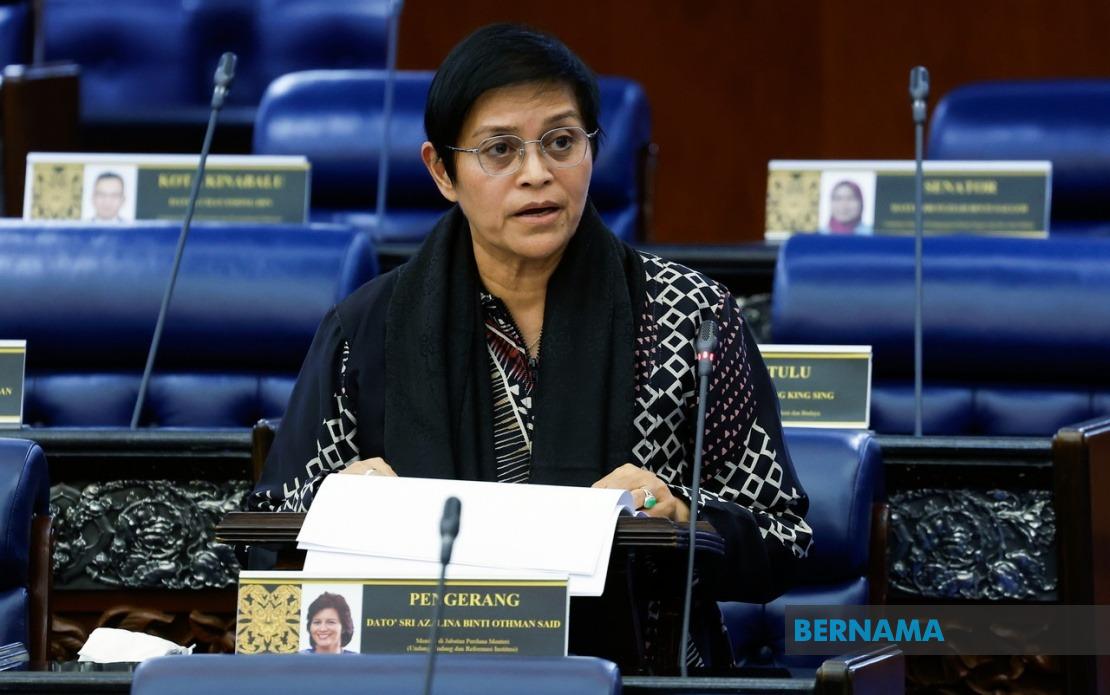
The Malaysian government is taking seriously allegations surrounding corporate mafia activities that may have compromised institutional integrity and public trust, according to Datuk Seri Azalina Othman Said, the Minister in the Prime Minister's Department (Law and Institutional Reform). Speaking in Parliament, Azalina emphasised that the government recognises the gravity of such claims and the need for a thorough institutional response, signalling political commitment to addressing concerns that have featured prominently in public discourse regarding the conduct of major corporations and their influence over state institutions.
Azalina outlined her position in response to a parliamentary question raised by RSN Rayer, the Member of Parliament for Jelutong from the Pakatan Harapan coalition, who sought clarification on the current status of investigations into the alleged corporate mafia case and whether the government would consider establishing a Royal Commission of Inquiry (RCI) to examine the matter comprehensively. The minister's reply indicates the government's willingness to engage with calls for institutional inquiry mechanisms while maintaining procedural standards.
The minister stressed that all ongoing investigations must be permitted to operate with complete independence and transparency, guided strictly by legal frameworks and established operational procedures. This declaration carries particular significance in the Malaysian context, where questions about investigative impartiality and institutional autonomy have periodically surfaced in public debate. By emphasising independence, Azalina appeared to address implicit concerns about potential political interference, though such assurances will likely require sustained demonstration through actual investigative outcomes.
Azalina articulated a principle that decisions emerging from investigations should rest exclusively on evidence-based findings, considerations of justice, and adherence to the rule of law. This formulation attempts to insulate the investigative process from pressure or partisan interests that might seek to influence outcomes. However, the gap between principle and practice in Malaysia's institutional landscape means that such commitments require consistent institutional follow-through to achieve public credibility.
Regarding the proposed Royal Commission of Inquiry, Azalina explained that Malaysia's legal framework governing such commissions derives from the Commissions of Enquiry Act 1950 (Act 119), which establishes the constitutional and procedural parameters for establishing these investigative bodies. Understanding this statutory foundation is essential for stakeholders seeking to comprehend both the possibilities and limitations of using an RCI as a mechanism for addressing corporate mafia allegations.
The minister outlined the standard operating procedures required to establish an RCI, beginning with the relevant ministry preparing a Cabinet memorandum that frames the matter as one of serious public interest warranting formal inquiry. This initial stage functions as a filtering mechanism, requiring government consensus that an issue possesses sufficient gravity and public significance to justify the resources and profile associated with a Royal Commission. The threshold of public interest thus remains a critical consideration in determining whether corporate mafia allegations will receive this formal treatment.
Following Cabinet approval, the Prime Minister must seek an audience with the Yang di-Pertuan Agong to obtain royal consent for establishing the commission. This requirement reflects Malaysia's constitutional monarchy framework, where the Agong's assent provides formal legitimacy to the inquiry. The involvement of the national institution adds constitutional weight to the investigative process and distinguishes RCIs from ordinary government inquiries, potentially enhancing their perceived independence and authority.
Once royal consent is secured, the practical establishment of the RCI involves determining its terms of reference, identifying appropriate commission members, and setting a timeframe for the inquiry's completion. These elements are subsequently formalised through publication in the Federal Government Gazette, providing public notice and legal standing to the commission's work. The terms of reference prove particularly crucial, as they establish the investigative scope and boundaries, potentially determining whether the inquiry can adequately address corporate mafia allegations or whether its parameters remain too narrow to yield meaningful findings.
Azalina indicated that the government remains receptive to considering the establishment of an RCI or alternative investigative mechanisms if circumstances warrant such action. This qualified openness suggests that the government has not precluded the RCI option but neither has it committed to establishing one immediately. The decision appears to remain contingent on various factors, including investigative findings from existing authorities and evolving assessments of public interest.
The minister further specified that any decision regarding an RCI proposal would be made in accordance with established legal procedures and statutory requirements. Additionally, such consideration would incorporate the factual findings and latest developments emerging from investigations currently underway by relevant authorities. This language indicates that the government's approach prioritises completing existing investigations before determining whether more formal inquiry mechanisms are warranted, potentially reflecting concerns about the costs, timeline, and public expectations associated with Royal Commissions.
For Malaysian observers and civil society actors concerned about corporate governance and institutional integrity, Azalina's parliamentary response provides a measured acknowledgment of the issues while preserving government flexibility regarding institutional responses. The articulation of commitment to independent, transparent, and law-guided investigations suggests an openness to accountability mechanisms, though the absence of firm timelines or specific undertakings means that implementation remains subject to ongoing political considerations.
The corporate mafia allegations have resonated with the Malaysian public partly because they touch on broader questions about the intersection of business power and state institutions. The government's positioning itself as committed to procedural regularity and evidentiary standards may serve to contain immediate political pressure while allowing time for investigative processes to unfold. Whether this approach satisfies stakeholders seeking more expedited or institutional responses remains to be seen as investigations progress and the government reassesses whether additional formal inquiry mechanisms are warranted.

